
I didn’t arrive at this kind of system by chasing narratives. I arrived here by watching where things kept going wrong.
The more time I spent observing on-chain behavior, the clearer one pattern became to me: capital doesn’t just lose because of bad decisions. It loses because the environment forces those decisions too early. Exposure, more than volatility, has become one of the quiet pressures shaping outcomes.
A blockchain built on zero-knowledge proofs doesn’t try to impress me at the surface level. I see it more as a response to something that has been broken for a while. Not loudly broken, but subtly inefficient in ways that compound over time.

I’ve seen positions that should have worked get closed at the worst possible moment. Not because the thesis failed, but because visibility changed the game around them. When everyone can see everything, strategies stop being strategies. They become signals.
And once something becomes a signal, it invites reaction.
That reaction is where value starts leaking.
I’ve watched traders hesitate before deploying capital, not because they lacked confidence, but because they knew what visibility would cost them. I’ve seen liquidity sit idle, not out of fear of the market, but out of awareness of how exposed participation has become.
That kind of hesitation doesn’t show up in metrics. But I know it’s there because I’ve felt it myself.
Zero-knowledge changes how I think about that.
It doesn’t remove truth. It doesn’t distort outcomes. What it does is separate validation from exposure. And that separation gives me something I don’t often get in DeFi: the ability to act without immediately becoming part of someone else’s strategy.
That alone shifts behavior.
When I know my position isn’t instantly visible, I don’t feel the same pressure to constantly adjust. I can hold longer. I can think in terms of structure instead of reaction. The system stops pushing me toward short-term decisions just because it can.
That’s a quiet change, but it runs deep.
I’ve also spent enough time around liquidations to understand how predictable they’ve become. It’s not just leverage that creates risk. It’s visibility layered on top of rigid systems. When positions are exposed, they become coordinates. And once they become coordinates, they can be targeted.
I’ve seen price move in ways that didn’t feel organic, only to later realize it wasn’t. It was structured around what could be seen.
In a system where that visibility is reduced, I notice something subtle but important: pressure becomes less precise. It doesn’t disappear, but it loses some of its sharpness. That alone can be the difference between a position surviving or being forced out at the worst time.
I don’t see that as a feature. I see it as a correction.
There’s another layer to this that I think most people overlook — the capital that never shows up. I’ve spoken to people, watched behavior, and even caught myself holding back, not because the opportunity wasn’t there, but because participation meant giving up too much information.
That’s a cost, even if it isn’t labeled as one.
When a system built on zero-knowledge reduces that cost, it doesn’t need to convince me to participate. It simply removes the reason I stayed out in the first place. That’s a quieter form of growth, but in my experience, it’s more durable.
I’ve also grown skeptical of governance over time.
On paper, it always looks balanced. In practice, I’ve seen it turn into a mix of signaling, short-term alignment, and performative participation. When every vote and position is visible, people don’t just act based on belief. They act based on how that action will be interpreted.
I’ve done it too.
A layer that allows participation without turning every move into a public statement changes that dynamic. It doesn’t fix governance, but it removes some of the noise that has made it less effective than it should be.
And then there’s growth — the kind that looks good until it doesn’t.
I’ve read enough roadmaps to recognize the pattern. Incentives bring in capital quickly, but that capital rarely stays. Metrics rise, narratives form, and for a moment everything looks like it’s working. But I’ve watched how quickly that fades when the underlying structure doesn’t hold.
What I find different here is the pace.
A system like this doesn’t need to expand aggressively to prove itself. It builds in a way that feels less dependent on attention. That gives it room to evolve without being constantly measured against short-term expectations.
I’ve come to value that more than speed.
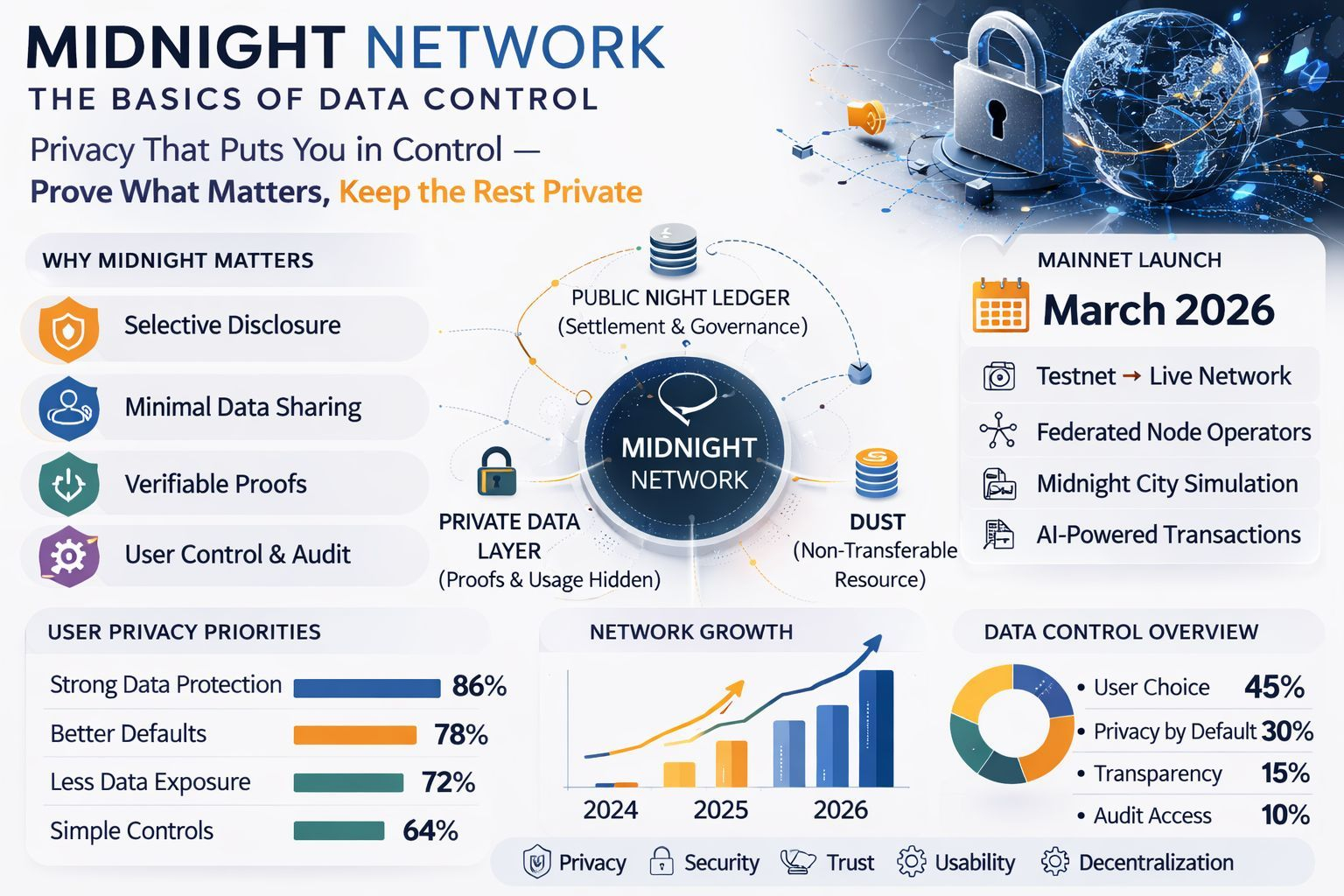
Because the projects that survive aren’t the ones that grew the fastest. They’re the ones that adapted quietly while others were still trying to prove something.
Ownership is another idea that started to feel incomplete to me over time.
I used to think holding an asset on-chain meant full control. But the more I understood how transparent everything is, the more I realized that ownership often comes with constant exposure. Every move, every balance, every shift — all visible, all trackable.
That’s not always control.
Zero-knowledge shifts that balance in a way that feels more aligned with what I expected from decentralized systems in the first place. I still own, but I decide what gets revealed. That difference changes how I think about participation entirely.
I don’t feel like I’m trading in a glass box anymore.
I don’t see this kind of blockchain as something that replaces everything else. I see it as something that corrects a blind spot. Transparency solved one problem, but it created another. This feels like an attempt to bring those two sides back into balance.
And balance is something DeFi has been missing.
I’ve watched enough cycles to know that most problems don’t show themselves immediately. They build slowly, in the background, until they reach a point where they can’t be ignored anymore. Overexposure is one of those problems.
It didn’t break the system overnight. It just kept shaping behavior in ways that slowly reduced efficiency, increased pressure, and limited participation.
A zero-knowledge-based approach doesn’t fix everything. I don’t expect it to. Markets will still move the way they always have. People will still make mistakes. Capital will still chase what it doesn’t fully understand.
But the environment those actions happen in becomes slightly more fair, slightly less forced.
And from what I’ve seen, small structural changes like that tend to matter more than big promises.

@MidnightNetwork #night $NIGHT
