
@SignOfficial When I first looked at SIGN Token, it wasn’t the design that held my attention, it was how often the same wallet had to prove the same fact across different apps. What struck me is that we keep assuming blockchains solve trust by default, when in reality they only record outcomes, not agreement between systems. The misconception is that verification is already efficient. My sense is the opposite, verification is still the quiet bottleneck, and SIGN Token is trying to reshape how that burden is handled.
On the surface, $SIGN looks like an attestation layer where proofs are attached to identities. In simple terms, an attestation is just a claim that has already been checked. Underneath, it behaves more like a shared memory of verification, where one confirmed fact can be reused instead of recomputed. That enables coordination across systems without each one repeating the same process.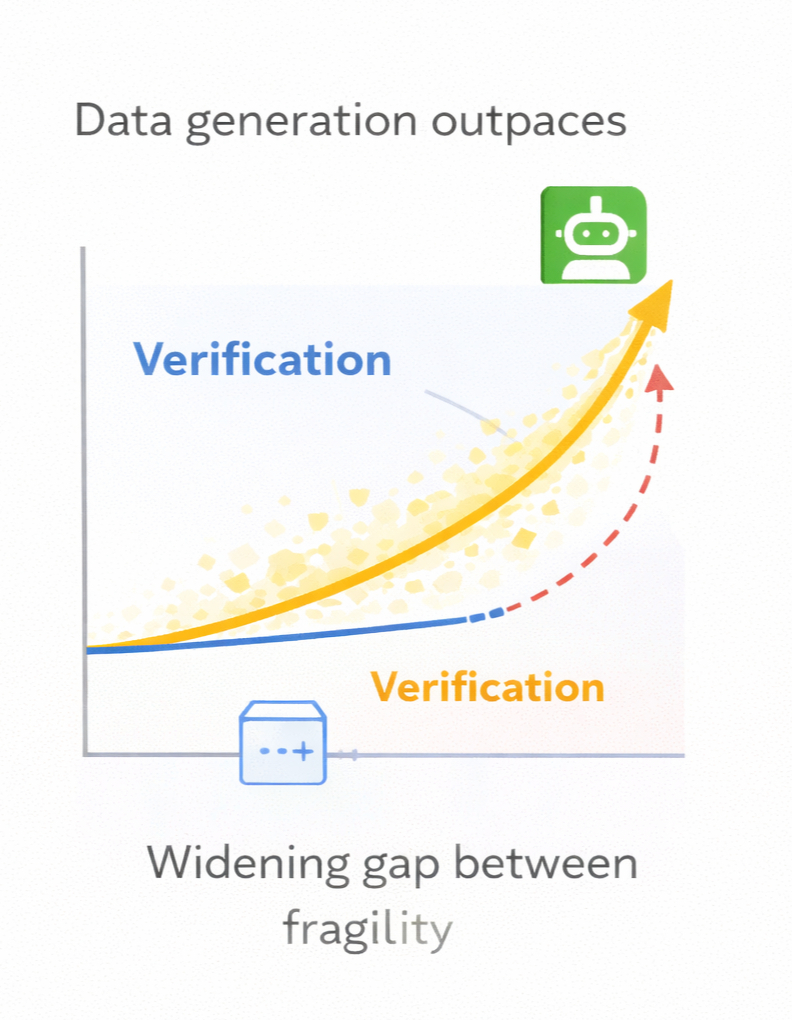
That difference matters in current conditions. Ethereum still processes around 1 million transactions per day, which signals strong demand but also highlights that blockspace remains scarce. Meanwhile, many trading pairs still sit below 5 million dollars in liquidity depth, which means systems become fragile when activity spikes. Reducing repeated verification lowers hidden pressure on both execution and coordination.
That momentum creates another effect. AI systems are generating data faster than it can be verified, shifting scarcity away from computation toward authenticity. If verification becomes reusable, it starts to act like infrastructure rather than a repeated cost. That changes how systems are designed, they begin to depend on shared proofs instead of isolated checks.
But the structure introduces risk. When a proof is reused across multiple systems, any error travels with it. Efficiency comes from reuse, but so does systemic fragility. A single incorrect attestation can scale across environments that would otherwise remain independent.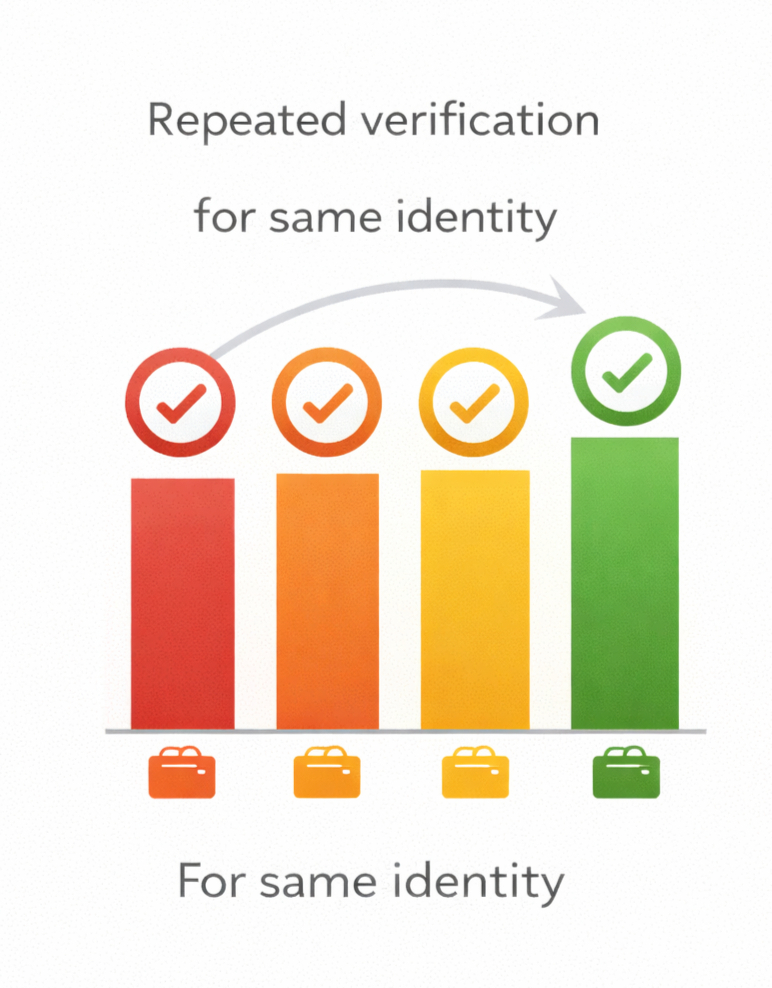
If this holds, SIGN Token is less about speeding up trust and more about deciding how much of it the system is willing to carry forward without asking again.#SignDigitalSovereignInfra