
I keep noticing the same thing whenever I look at blockchain products that talk about privacy. The conversation usually starts in the wrong place. People ask whether the system hides data, whether it protects users, whether it keeps transactions out of public view. Those are fair questions, but they also feel a little incomplete. What has started to interest me more is a simpler question. What if the real problem is not just that blockchains expose too much, but that they expose things that never needed to be visible in the first place?
That is why Midnight caught my attention.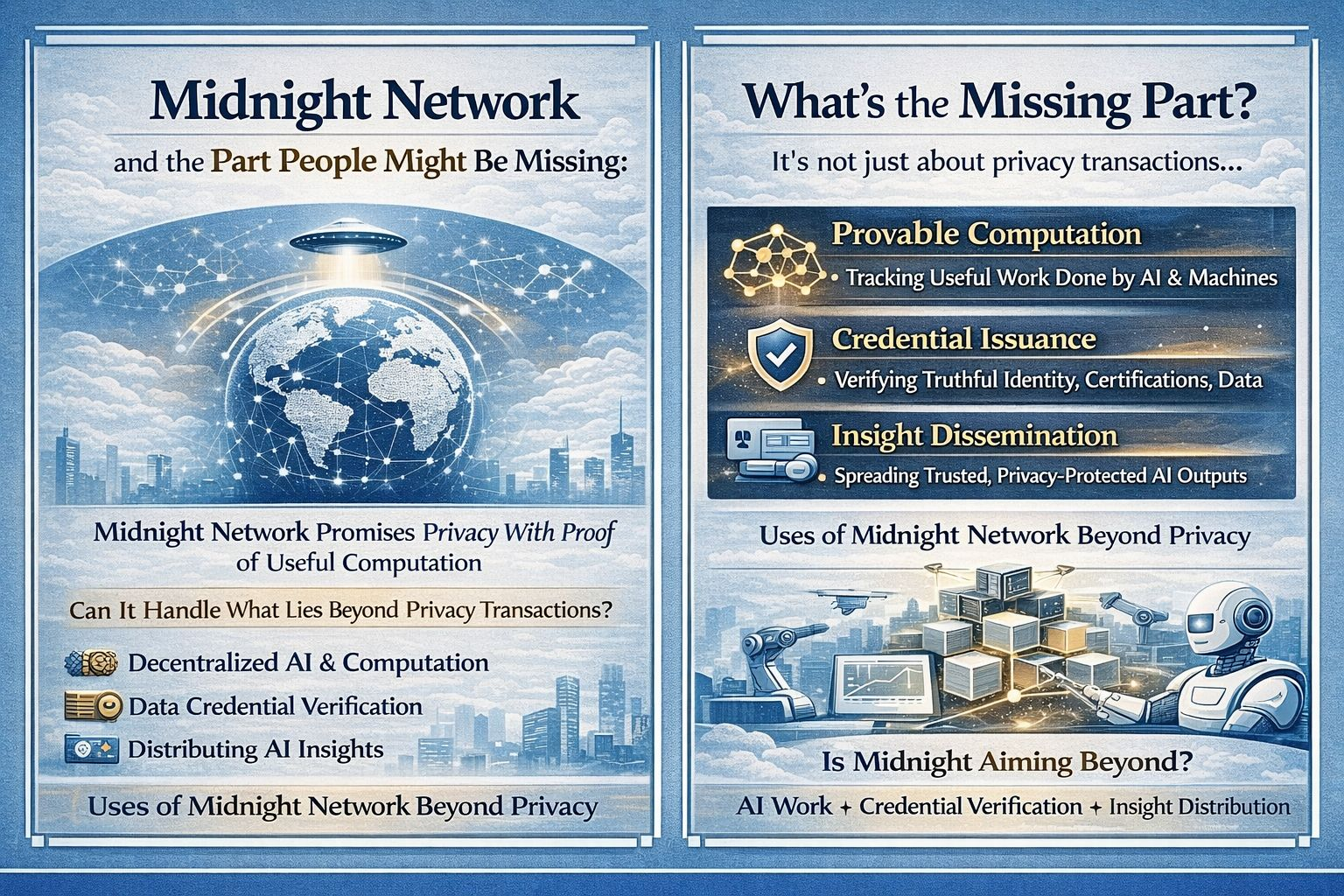 A lot of people seem to place it in the familiar category of privacy chain, as if it is mainly competing to make blockchain activity harder to inspect. I think that framing misses what is more interesting about it. Midnight does use zero knowledge technology, which basically means proving something is valid without revealing the underlying information. But what stands out to me is not just the privacy angle. It is the way the network tries to separate public accountability from private usage instead of forcing everything into the same visible system.
On the surface, the project can sound like another technically ambitious chain with a token, a privacy layer, and a roadmap. Underneath, the design is trying to solve a specific coordination problem. Midnight uses NIGHT as the public token connected to governance and network security, while DUST works as the private resource used to power transactions and applications. In plain language, that means the system is not asking one visible asset to do everything at once. It is splitting public alignment from private execution.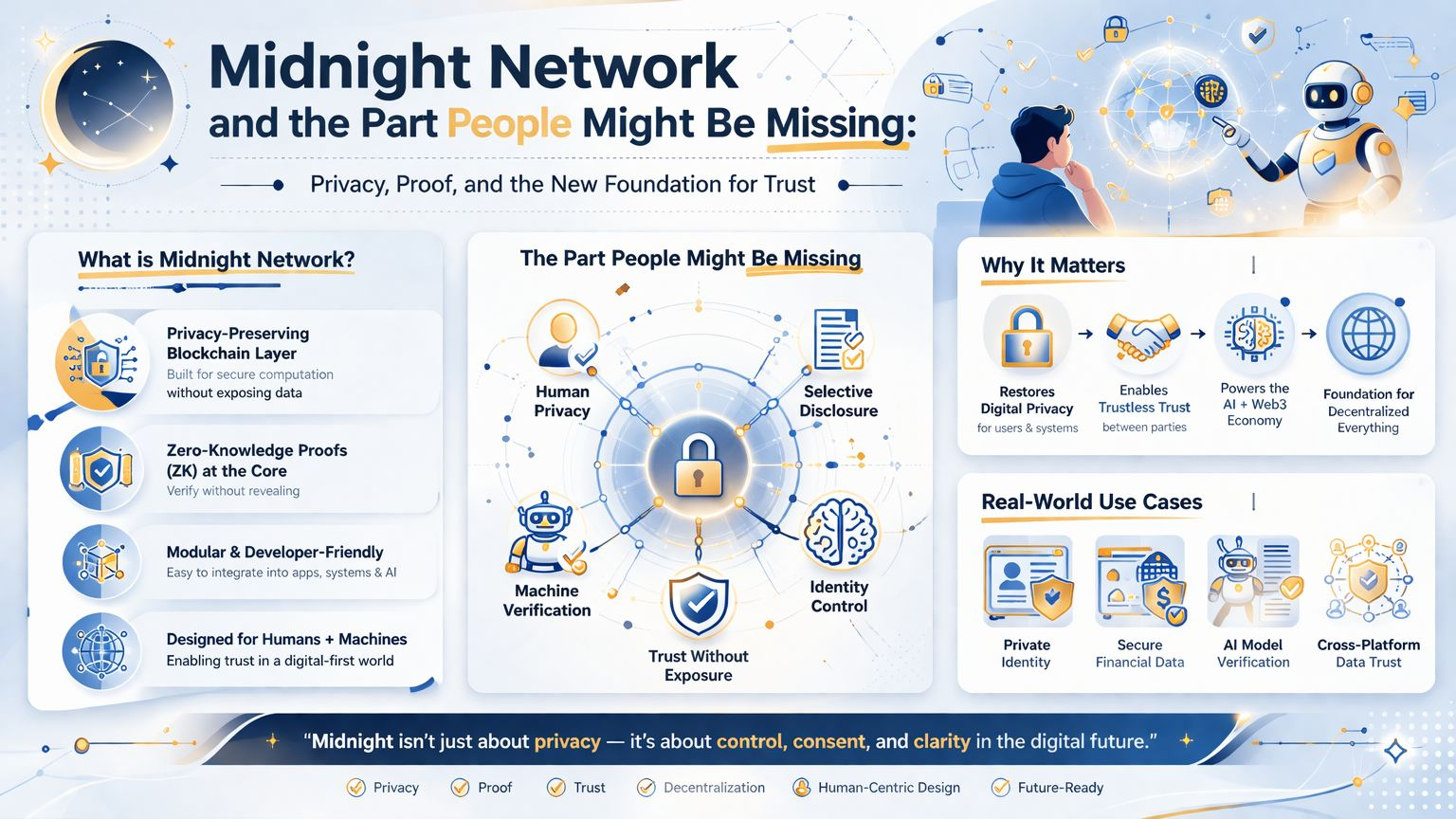 That distinction matters more than it may seem at first. In a lot of crypto systems, privacy is treated almost like a defensive shield, something you add because exposure is dangerous. Midnight feels closer to a system that treats privacy as normal infrastructure. Not secrecy for its own sake, but a way to let people and businesses use blockchain tools without turning every action into public exhaust. I think people often underestimate how limiting radical transparency can become when you move beyond speculation and into actual use.
The timing is part of why this matters now. Midnight has been moving from token distribution into its early mainnet phase in 2026, and it has also been naming infrastructure and ecosystem participants that signal the kind of environment it wants to operate in. That list includes firms like Google Cloud, Blockdaemon, MoneyGram, Worldpay, eToro, and Bullish. I do not think names alone prove adoption. Crypto has trained everyone to be careful with partnership headlines. But they do tell you something about the intended direction. Midnight is not presenting itself as a cultural rebellion against the system. It is presenting itself as infrastructure that wants to be legible to serious operators.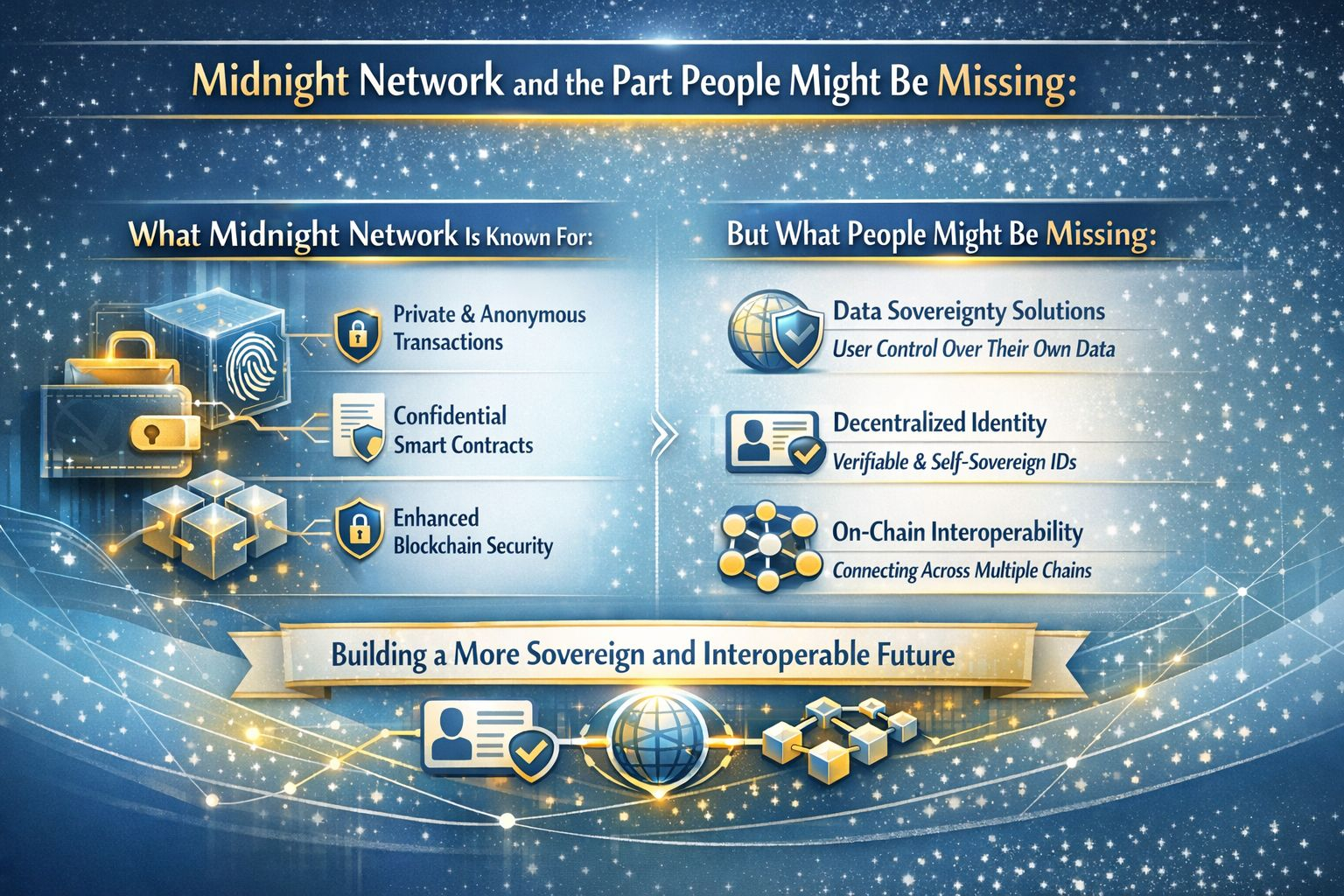 The token model is also more interesting than the usual story people tell themselves around new networks. NIGHT is not just there as a tradable symbol attached to a narrative. Its role inside the system is supposed to tie governance, security, and access to the private execution layer. That matters because tokens only make structural sense when they help coordinate behavior inside the network. Otherwise they are just financial decoration. Midnight seems to be trying to avoid that trap by giving the public asset one role and the private execution resource another.
What I keep coming back to is that this design is not only about privacy. It is about shaping incentives. If the system works the way it is intended to, users get access to private utility without turning the entire network into a dark pool, and institutions get a framework that is easier to reason about than older privacy models that looked incompatible with oversight from day one. That is probably the most practical thing about Midnight. It is not trying to win the argument by being the most ideologically pure. It is trying to make privacy usable in a setting where rules, accountability, and adoption still matter.
Of course, that middle path creates its own risk. A project like this can end up too private for some institutions and not private enough for people who want stronger resistance to oversight. That is a difficult place to occupy. And like many networks in an early stage, Midnight still has to prove that its structure leads to durable usage rather than temporary curiosity. Developer activity, token distribution, and early ecosystem momentum matter, but only if they translate into applications people actually return to.
Still, I think the deeper point is easy to miss if you only look at Midnight through the old privacy chain lens. The project may matter less because it hides information and more because it asks a more useful question about blockchain design. Not what should be visible by default, but what never needed to be exposed at all. That feels like a more serious infrastructure question, and probably a more relevant one too.
If you want, I can make this even more human and personal in a Binance Square style, with slightly rougher phrasing and a more “written by me” voice.@MidnightNetwork $NIGHT #night