
A thing I keep noticing in digital systems is that the action is rarely the hardest part. Sending money is easy. Signing up is easy. Even distributing tokens, in a narrow sense, is easy. The drag shows up one step earlier, in that awkward pause where a system asks who qualifies, who verified it, and whether another platform should trust that answer without checking everything again.
That is why I think people sometimes misread SIGN. It gets described as credential infrastructure or token distribution tooling, which is true on the surface, but a little too flat. What stands out to me is that SIGN is really working on eligibility as an infrastructure problem. My basic thesis is simple. In crypto, the bottleneck is often not settlement. It is proving entitlement in a way that can travel across systems without falling apart.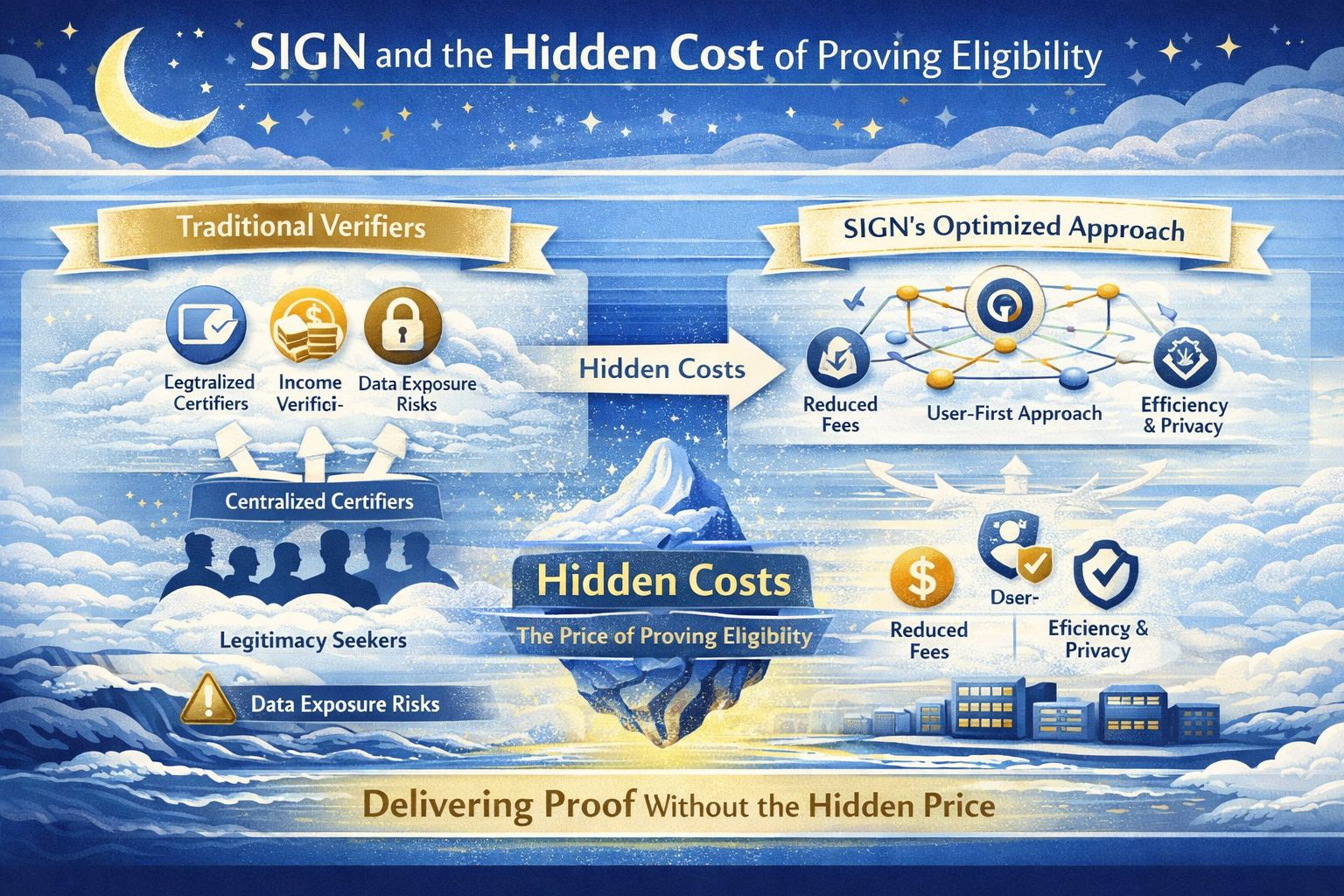 That sounds abstract until you look at how much crypto activity depends on this. Airdrops, unlock schedules, contributor rewards, access lists, grants, compliance checks, even community participation all come down to some version of the same question. Why does this wallet count. Most projects still answer that question in fragmented ways, with spreadsheets, snapshots, backend logic, and social trust glued together. It works, until it does not.
SIGN’s core product, Sign Protocol, is easier to understand if you strip away the vocabulary. A schema is just a template for a claim. An attestation is a signed record saying that a claim is true. Surface level, that looks like a cleaner way to issue credentials. Underneath, it is a way of standardizing proof, so the next application does not need to rebuild the logic from zero. That matters because portability is where trust usually breaks. The risk, though, is that standardized proof only helps if enough systems actually agree to use it.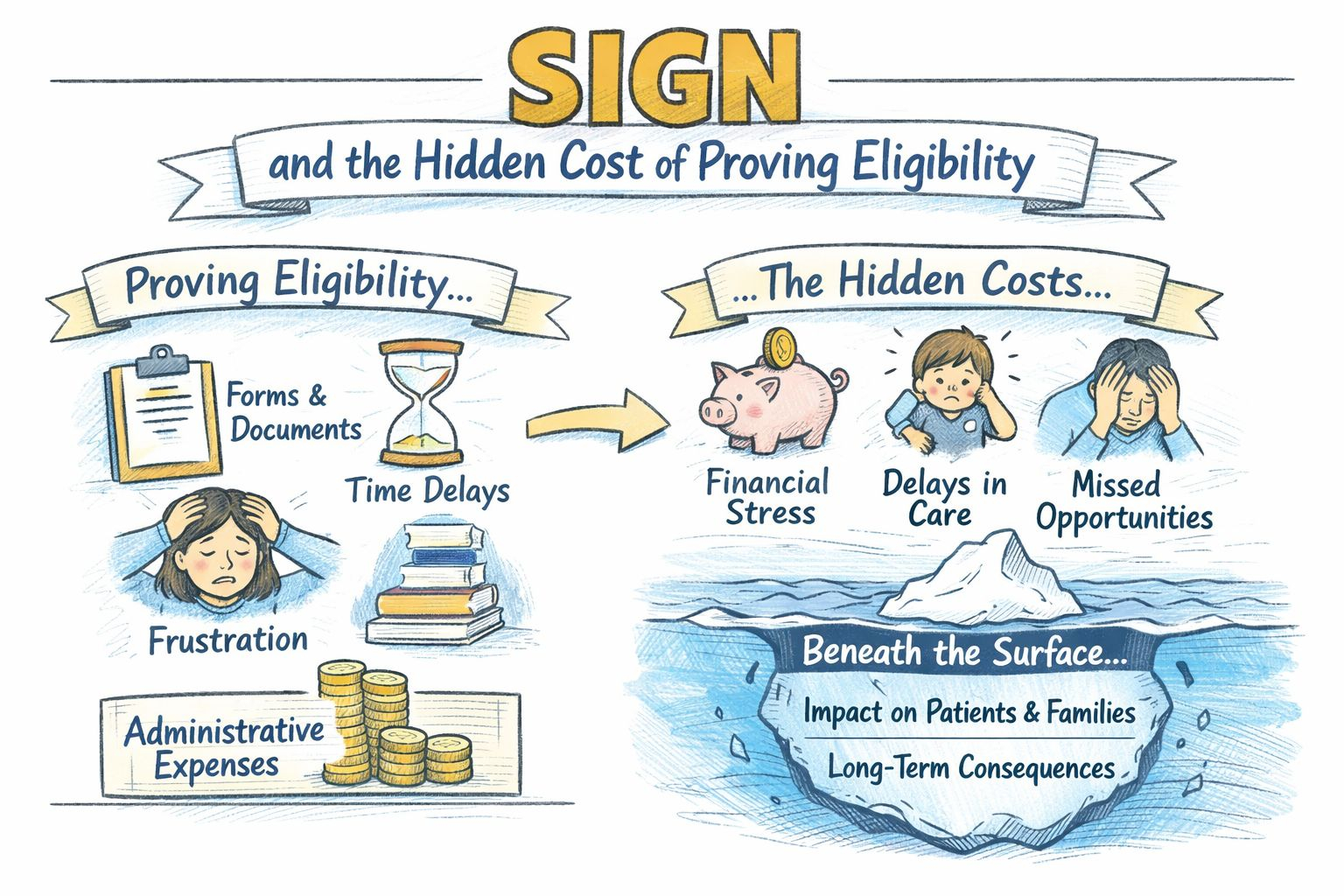
The practical expression of that idea is TokenTable. People hear token distribution and think of airdrop mechanics. I think that framing misses the more interesting part. TokenTable is really about turning distribution into something governed by verifiable rules instead of ad hoc operational judgment. The project has reportedly distributed over $4 billion in tokens to more than 40 million wallets. Those figures matter not because big numbers automatically mean deep value, but because they suggest SIGN is touching real allocation workflows where mistakes are expensive and fairness has to be legible.
That is also why the usage growth is more meaningful to me than the branding. Reports have said Sign Protocol’s schema count grew from 4,000 to 400,000 in 2024, while attestations rose from 685,000 to more than 6 million. Metrics like that can be noisy in crypto, obviously. Still, in this case they matter because they imply repetition. Not one campaign, not one headline, but a growing habit of using the system to record and verify claims. Repetition is usually where infrastructure becomes real.
The current market context makes this more relevant, not less. Crypto has been moving further toward regulated products, cash flow, tokenized assets, and infrastructure that institutions can actually plug into. That matters for SIGN because verification becomes more valuable as the industry moves from informal coordination to systems that need audit trails, repeatable rules, and cross-platform trust. In looser markets, people tolerate ambiguity. In more regulated ones, ambiguity becomes cost.
The token is where I become more careful. SIGN has recently traded at a relatively modest market cap, with a large gap between circulating supply and maximum supply, alongside active daily trading volume. Those details matter because they show the token is liquid and noticed, but they also point to future supply pressure and a valuation question that is still unresolved. A useful protocol does not always produce a clean token economy. Sometimes the system is essential and the token remains only loosely attached to the value being created.
So my view is not that SIGN is exciting because it does something flashy. It is more interesting than that. It is trying to solve one of the least glamorous and most persistent problems in digital coordination, which is how to make eligibility travel with proof. That feels small until you realize how many systems quietly depend on it. What I keep coming back to is that crypto has spent years obsessing over moving assets faster, while a lot of the real friction sits in proving who should receive them in the first place. SIGN matters because it is aimed at that quieter layer. Whether the market rewards that properly is another question, and honestly, I think that part is still open.