@MidnightNetwork When I first looked at this, I thought NIGHT was just another privacy trade wearing an infrastructure story because the market likes clean narratives. What slowed me down was the opposite. The real question is not whether privacy sounds useful. It is whether the network can turn that promise into predictable operating conditions when users, applications, and compliance demands start colliding on the same system.
That is why the split between $NIGHT and DUST matters more than most first reads admit. On the surface, it looks like token design. Underneath, it is cost design. NIGHT is the capital layer, fixed at 24 billion total supply, while DUST is a shielded, non transferable resource generated by holding NIGHT and spent on transactions and contract execution. That means usage is not paid the usual way, by constantly throwing the base asset back into the market. It gives the network a chance to make fees feel more like an operating budget than a speculative tax.
Understanding that helps explain why the usual investor shortcut can miss the point. A lot of people still ask whether utility exists, as if the answer alone settles value. It does not. The harder question is whether utility feeds back into the system in a stable enough way to support real coordination. If usage consumes a renewable resource instead of directly exhausting the token, then the network may become easier to use while the token becomes harder to model. That is not a flaw by itself, but it does mean value capture is less direct and therefore easier for the market to misread. 
The current numbers make that tension visible. Around 16.61 billion NIGHT is already circulating, or 69.2 percent of max supply, with a market cap near $720.31 million and a fully diluted value around $1.04 billion. That spread is not especially wide for crypto, which matters because it removes one easy excuse. This is not only a future unlock story. The token is already sufficiently in the market that investors now have to judge whether the system can create steady demand for coordination rather than just episodic bursts of attention.
Distribution adds even more texture. More than 4.55 billion NIGHT has been allocated through the multi phase community release, with over 3.5 billion claimed by more than 170,000 wallets in one phase and another 1 billion claimed across more than 8 million unique addresses in the open participation phase. Surface level, that reads like reach. Underneath, it also means cost bases are uneven and conviction is likely uneven too. Broad ownership can improve liquidity, but it can also create a market where supply quietly returns every time momentum fades.
You can see some of that in turnover. About $659.32 million traded in 24 hours against that roughly $720.31 million market cap. That is nearly a full day of market cap rotating in a single session, which usually signals active discovery rather than settled belief. Add the 30 day decline of about 29.27 percent and the picture becomes clearer: the market is interested, but it is still debating what kind of asset this is. Liquid, yes. Underwritten by durable habits, not yet proven.
Meanwhile the broader market is giving this debate a harder backdrop. One recent weekly flow report showed $793 million moving into bitcoin products, bringing a three week run to $2.2 billion, yet positioning remains split enough that short bitcoin products still saw inflows. Around the same time, policy progress in the United States was described as slowing, with bitcoin trading around $74,298 and expectations for a cleaner regulatory catalyst being pushed further out. That matters because in selective liquidity conditions, investors become less forgiving of token stories that do not yet show how usage turns into durable structure. 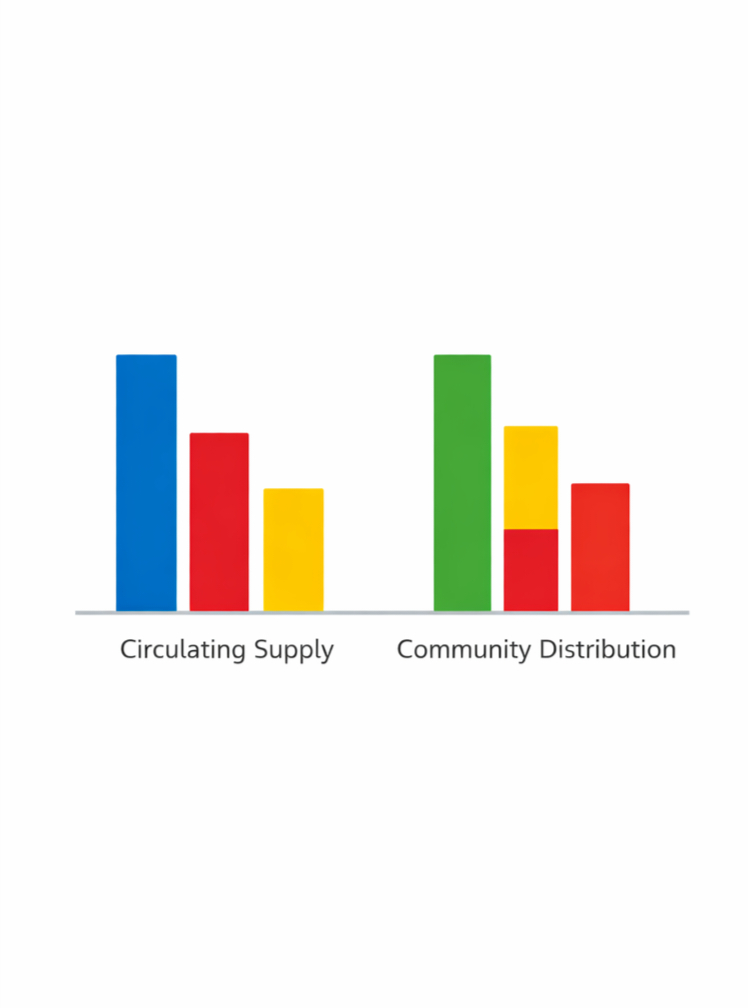
This is also why the network is entering mainnet in late March 2026 with a federated setup and seven named operators rather than pretending decentralization arrives fully formed on day one. Some will see that as compromise. Fair enough. But underneath, it reveals the actual bet: before a privacy oriented network can become socially decentralized, it may first need to become operationally dependable. Early infrastructure is often less about ideological purity and more about reducing coordination failure under pressure.
There is another layer here that I do not think the market has fully priced. The team is already stress testing the system with autonomous AI agents in a live simulation, which sounds like a demo until you think about what it implies. AI systems, tokenized assets, and regulated digital services are all pushing toward the same requirement: they need rails where verification, privacy, and selective disclosure can coexist without exposing every action by default. If that holds, then NIGHT is not really competing for attention as a narrative token. It is being asked to support a quieter thing, a network where predictability itself becomes scarce.
That is the infrastructure question investors often miss. Not whether NIGHT has utility written into the design, but whether Midnight can make privacy behave like a stable operating layer with costs people can plan around and rules serious users can live with. In a market still swinging between ETF flows, policy uncertainty, and fast rotating narratives, that is a much stricter test than hype. The token will matter only if the system can make staying feel more rational than trading.#night

Articol
NIGHT Token and the Infrastructure Question Investors Often Miss
Declinarea răspunderii: Include opinii ale terților. Acesta nu este un sfat financiar. Poate include conținut sponsorizat. Consultați Termenii și condițiile
0
23
203
Explorați cele mai recente știri despre criptomonede
⚡️ Luați parte la cele mai recente discuții despre criptomonede
💬 Interacționați cu creatorii dvs. preferați
👍 Bucurați-vă de conținutul care vă interesează
E-mail/Număr de telefon