@SignOfficial When I first looked at Sign Network, I assumed it was just another layer trying to clean up airdrops and reduce bots. What struck me later was that it is not really solving spam. It is redefining trust. The common view says trust in crypto comes from transparency, from everything being visible. What Sign is quietly testing is the opposite idea, that trust can come from selective proof rather than full exposure.
On the surface, you see credential checks, eligibility filters, and proof submissions. Underneath, the system is turning identity into a structured signal. If a campaign receives 300,000 proof submissions but only 60,000 qualify, that 20 percent pass rate is not inefficiency. It is the network assigning weight to verified participation, where identity becomes something that must be consistently demonstrated, not assumed.
That enables a different coordination layer. Instead of rewarding whoever shows up with capital, the system begins to reward those who can maintain verifiable presence across time. In markets where 24 hour trading volume often reaches 60 to 90 percent of circulating supply on active tokens, behavior is fast and shallow. Sign introduces friction. It slows entry and forces repetition, which can build steadier participation patterns but also filters out those who cannot or will not meet those requirements.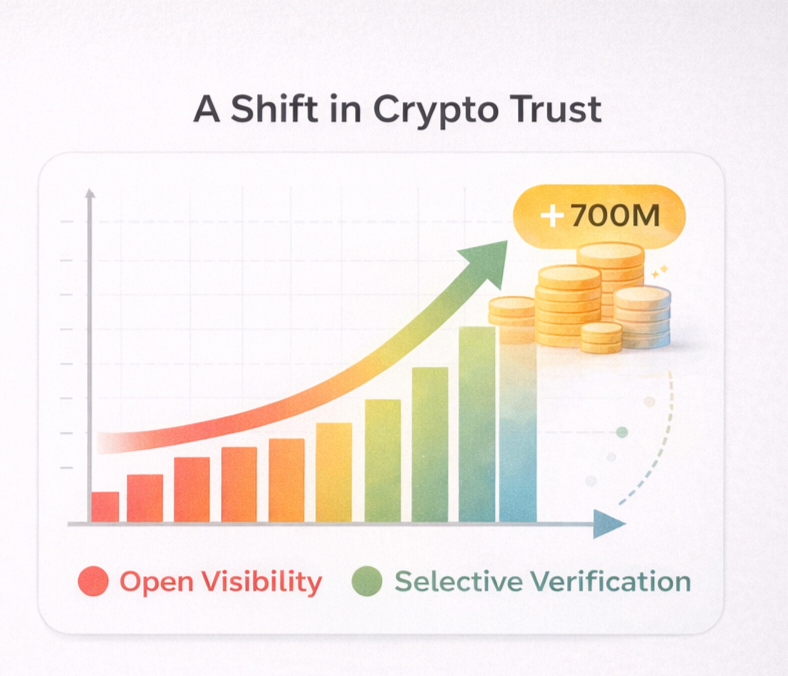
That friction carries risk. If identity becomes too central, the system can drift toward exclusion. Trust becomes gated rather than distributed. But early signs suggest that this tradeoff is aligning with a broader shift. Capital is concentrating into a smaller set of assets, with recent flows showing over $700 million moving into major products in a single week, while regulatory pressure continues to tighten around identity and compliance. In that environment, open participation is no longer the only goal. Predictable participation starts to matter more.
Understanding that helps explain why $SIGN is less about verification as a feature and more about verification as infrastructure. It is building a layer where trust is not derived from visibility alone, but from the ability to prove specific attributes at specific moments without revealing everything else. That sounds technical, but the effect is simple. It allows systems to coordinate without forcing full transparency.
Meanwhile, as AI driven systems begin interacting onchain, the need for this kind of selective trust grows. Machines do not rely on social reputation the way humans do. They rely on verifiable signals. A network that can provide those signals consistently, across millions of interactions, starts to look less like an add on and more like a foundation.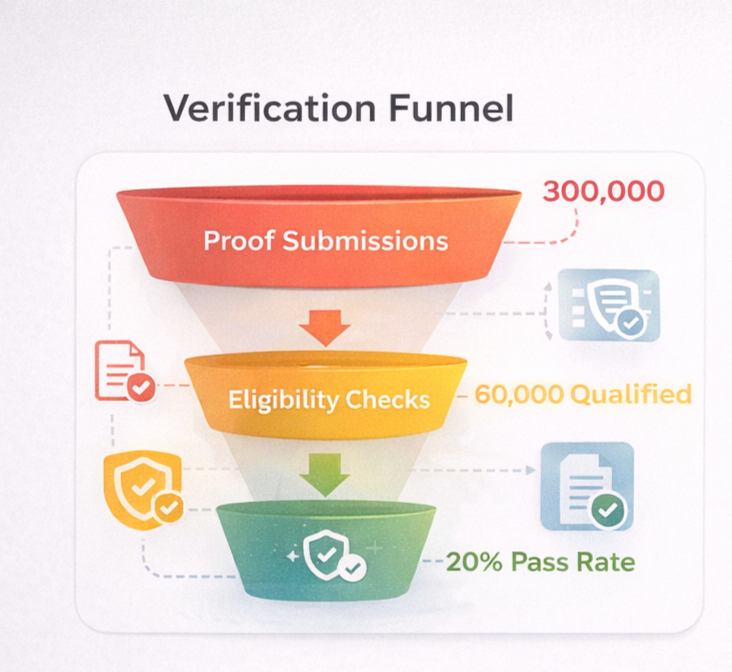
Still, the balance is delicate. If this holds, Sign could reshape how trust is constructed in crypto, moving it from open visibility toward controlled verifiability. But if pushed too far, it risks creating systems where participation is too tightly defined.
The shift is already visible. Trust is no longer just about what everyone can see. It is about what the system chooses to accept as proof.#signdigitalsovereigninfra

Articol
How Sign Network Could Reshape Digital Trust in Crypto
Declinarea răspunderii: Include opinii ale terților. Acesta nu este un sfat financiar. Poate include conținut sponsorizat. Consultați Termenii și condițiile
0
33
394
Explorați cele mai recente știri despre criptomonede
⚡️ Luați parte la cele mai recente discuții despre criptomonede
💬 Interacționați cu creatorii dvs. preferați
👍 Bucurați-vă de conținutul care vă interesează
E-mail/Număr de telefon