Here is a question nobody is asking.
powers every transaction on Midnight and DUST is generated by NIGHT — what happens to the person who has no NIGHT?
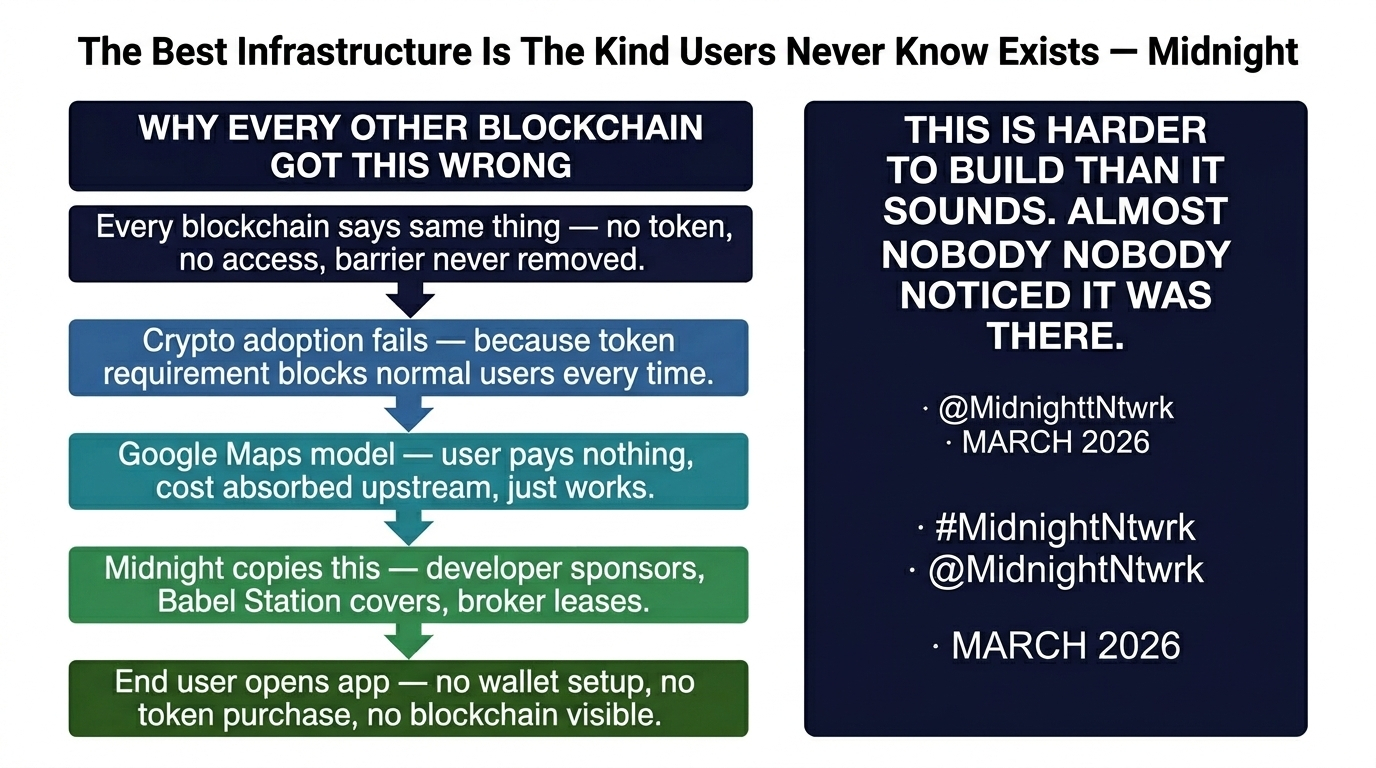
Most blockchain ecosystems answer this question badly. You need the token. No token no access. Full stop. This creates a permanent barrier between people who understand crypto and people who just want to use an application. It is one of the main reasons blockchain adoption outside the existing crypto community has been so consistently disappointing.
Midnight designed a different answer. And almost nobody has explained it properly.
The concept is called the capacity marketplace. It is not live yet in its full form. But the architecture is already built into the protocol design and it fundamentally changes who can access Midnight — and how.
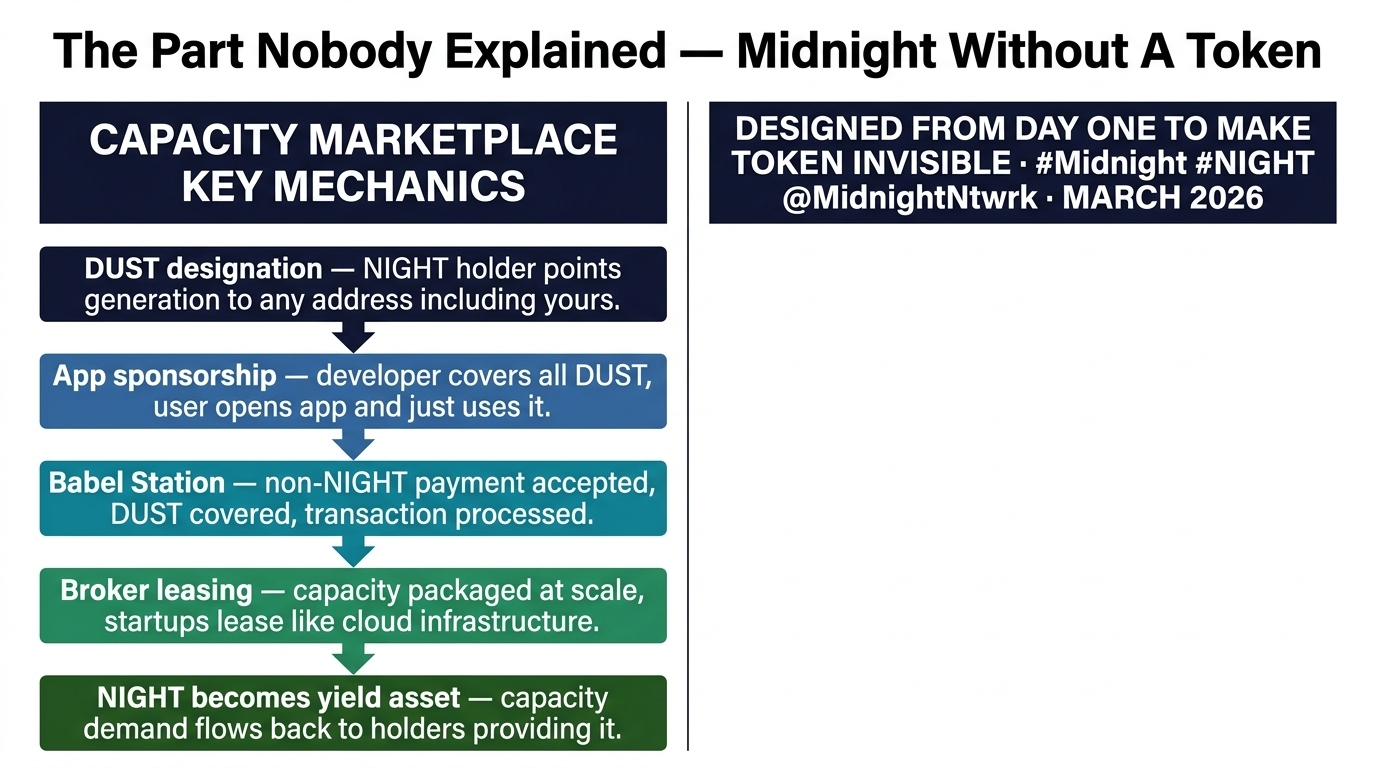
Start with the basic mechanic. NIGHT generates DUST. That DUST accumulates in a designated address. The NIGHT holder controls where that DUST goes. And here is the critical part — the NIGHT holder can point their DUST generation at any address they choose. Including an address they do not control. Including your address.
This single design decision creates an entirely new category of user. The DUST recipient. Someone who holds zero NIGHT. Pays zero tokens. But transacts freely on Midnight because a NIGHT holder somewhere designated their generation to that address. A developer building a Midnight application can absorb the entire transaction cost for every user of their app. The user opens the app. Uses it. Never sees a wallet. Never buys a token. Never knows a blockchain exists underneath.
This is not theoretical. This is how the internet already works. You do not pay a micro-fee every time you load Google Maps. Google absorbs that cost and monetizes through other means. Midnight's capacity marketplace brings that same model to blockchain for the first time at protocol level.
But it goes further than that.
Babel Stations are the next layer. A Babel Station is a service that accepts non-NIGHT payment — ETH, ADA, stablecoins, potentially even fiat — and covers the DUST cost of a transaction on behalf of the user. The user submits their transaction with a payment offer in whatever token they hold. The Babel Station operator covers the DUST. The transaction goes through. The operator collects the payment.
No NIGHT required. No DUST required. No crypto knowledge required.
Then there is broker-managed leasing. NIGHT holders lease their DUST generation capacity to brokers who package it and sell access to developers and operators at scale. A startup building on Midnight does not need to accumulate a large NIGHT position to run their application. They lease the capacity they need from a broker the same way a company leases server capacity from AWS. Pay for what you use. Scale as you grow.
The economic implications compound significantly. Every user who accesses Midnight through a Babel Station or sponsored transaction creates demand for DUST capacity. That demand flows back to NIGHT holders who are generating and leasing that capacity. NIGHT becomes not just a governance token and a block reward instrument — it becomes a yield-generating infrastructure asset for anyone willing to designate their generation capacity to the marketplace.
This is where Midnight's cooperative tokenomics get genuinely interesting. The network is designed to expand its own addressable market by removing the token requirement from end users entirely. The more accessible Midnight becomes to non-crypto users the more demand flows through the capacity marketplace the more value accrues to NIGHT holders providing that capacity.
Growth and token utility pointing in the same direction. At protocol level. By design.
The honest caveat is timing. The full on-chain capacity marketplace requires protocol upgrades that come in later roadmap phases. What exists today is the foundational mechanic — DUST designation flexibility and the ability to sponsor transactions. The full Babel Station infrastructure and ledger-native capacity leasing come later.
But the architecture is already there.
The system was designed from the beginning to make the token invisible to end users.
That is harder to build than it sounds. And almost nobody noticed it was there.