
Recently, I started reconsidering sign tokenization through a different lens specifically, how the model changes when the issuing entity is a government rather than a DeFi protocol or private investment fund.

During that process, I found myself in a detailed discussion at a financial institution with Rahul Verma and Amit Khanna, sitting across from a bank manager who was trying to understand why traditional tokenization models weren’t translating well into sovereign use cases. That conversation ended up reinforcing many of the gaps I was already starting to notice. At first, I assumed the familiar blueprint would still apply smart contracts mint tokens, a custodian holds the underlying asset, and compliance is handled through KYC checks on wallets. That model works reasonably well in private markets. But once you scale it to a national level, it starts to break.
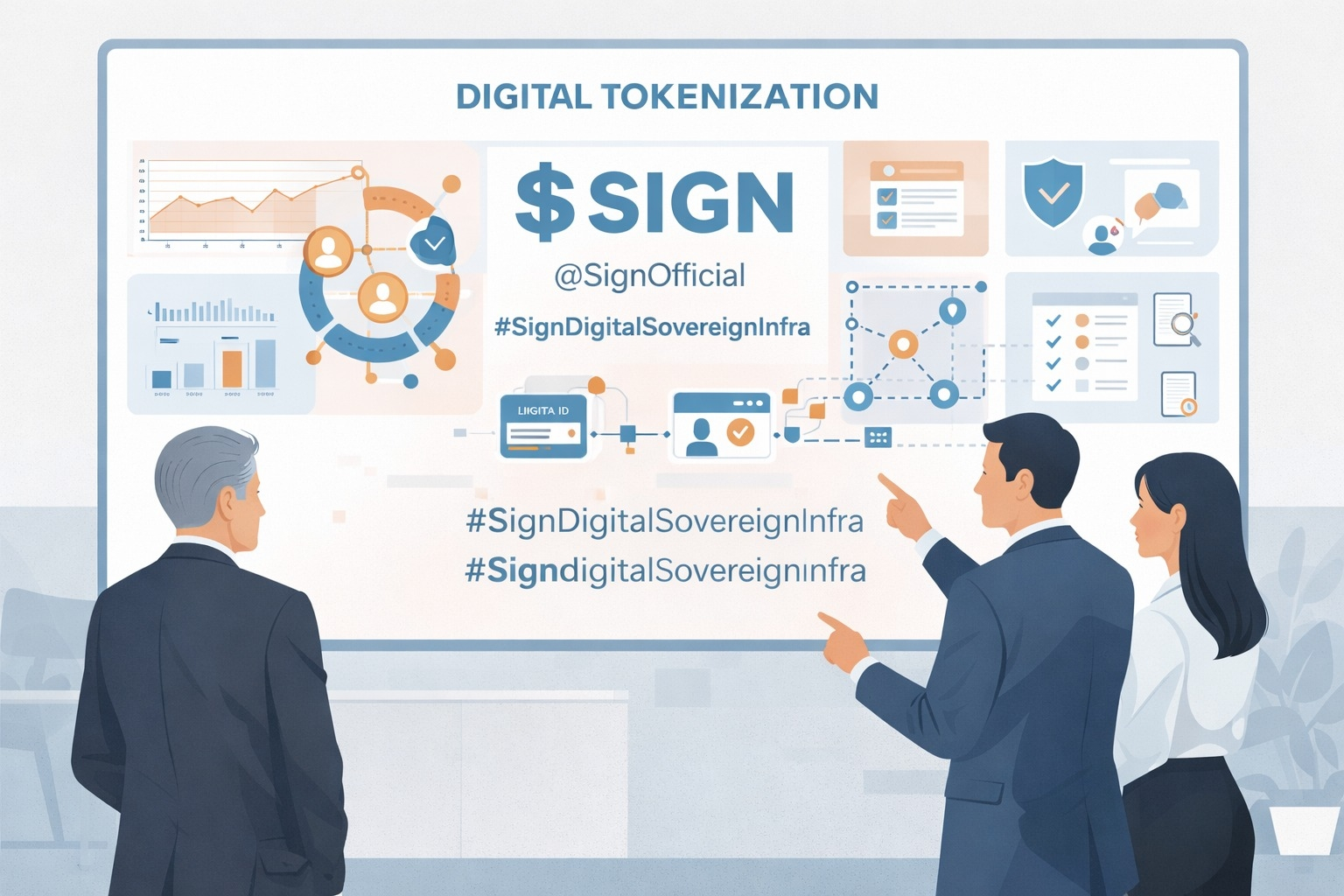
Governments don’t operate like single issuers, compliance rules are rarely static, and audit requirements evolve over time across multiple regulatory bodies. As the bank manager pointed out during our discussion, We don’t just need transactions we need accountability that holds up in audits years later. That single line reframed the entire problem. That realization pushed me to explore Sign’s New Capital System more closely. What stood out almost immediately is that it isn’t really trying to be just another tokenization platform. Instead, it positions itself as a programmable infrastructure layer for distributing capital whether that’s public benefits, grants, subsidies, or incentive programs.

That shift in framing is important. The core problem isn’t token issuance it’s controlled, accountable distribution. In this model, every disbursement is tied to a verified identity rather than just a wallet address. That alone changes the design philosophy. Systems must prevent duplicate claims, support different payout structures (one-time, recurring, and vesting), and ensure that every transaction aligns with a predefined budget. In other words, the system needs to behave more like a financial governance engine than a simple token contract. While explaining this to the bank manager, Rahul broke it down simply Think of it less like sending tokens and more like executing policy. Amit added that without a strong evidence layer, even the most efficient system would fail under regulatory scrutiny. One of the more interesting aspects is how evidence is handled. Instead of relying on raw blockchain transaction logs, each action generates a structured attestation a cryptographically signed record detailing what happened, who received what, under which rules, and when. These records are designed to be directly usable for audits, rather than requiring reconstruction after the fact. That’s a notable departure from most #sign setups, where compliance is enforced upfront but auditability often depends on off-chain indexing and interpretation later. Here, the evidence layer is built into the system itself, not treated as an afterthought. On the execution side, Sign introduces a component called TokenTable, which manages large-scale allocations and distribution schedules. Think of scenarios like nationwide subsidy programs, where thousands or even millions of recipients each have different eligibility criteria and payment timelines. TokenTable handles the logistics, while the protocol ensures that every step leaves behind a verifiable record. As the discussion progressed, the bank manager’s concern shifted toward compliance risk. That’s where the architecture becomes even more compelling. Instead of static wallet-based checks, authorization is tied to identity credentials. If a recipient’s eligibility changes say they no longer qualify for a program that status can be updated at the credential level, and the system adapts accordingly. This creates a dynamic compliance model, where eligibility is continuously validated rather than assumed. Still, Rahul pointed out a key challenge: integration. Government systems are rarely unified. Different agencies control different datasets, and aligning identity systems with capital distribution layers is not trivial. Amit agreed, noting that institutional coordination often becomes the biggest bottleneck, not the technology itself. There’s also the question of regulatory acceptance. Generating structured, tamper-proof attestations is technically impressive, but whether those records are recognized as legally valid audit evidence depends on jurisdiction. That requires coordination with regulators, not just good engineering something the bank manager acknowledged as a long-term process. as per the article, provide me the heading. Even with these limitations, the broader takeaway from that meeting was clear: scaling sign infrastructure to the level of governments requires a fundamentally different approach. It’s not just about tokenizing assets it’s about building systems that can manage distribution, enforce eligibility, and produce verifiable evidence at every step. By the end of the conversation, all three of them agreed on one thing: the real innovation in #Sign isn’t just tokenization it’s the shift toward designing capital systems around accountability and traceability from day one. And that perspective changes the conversation entirely.