


While retail was panicking in early March, institutions quietly poured nearly $2 billion into Bitcoin ETFs over four straight weeks. This is the longest buying streak of 2026. BlackRock’s IBIT alone dominated the action.
If you think institutions aren't coming, you are wrong. They are already here and they are dominating. They are accumulating quietly and already building a stash. The big picture has shifted. Between the SEC’s March 17 guidance and major bank expansions, crypto is no longer an "alternative" asset. It is a cornerstone of the modern financial system. Here is exactly why institutional adoption is accelerating right now and what it means for prices and the next bull leg.
II. The Current ETF Landscape
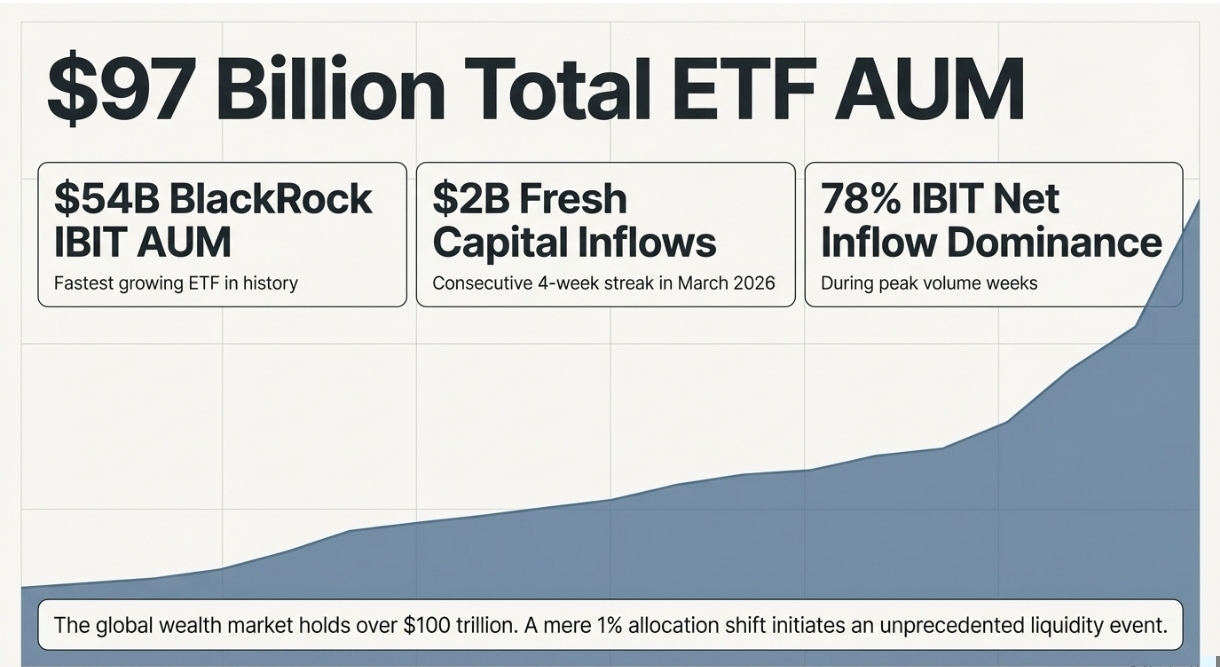
The data tells a clear story. Bitcoin ETF assets under management have climbed to roughly $97 billion in total. BlackRock’s IBIT accounts for over $54 billion of that. It remains the fastest-growing ETF ever launched.
We saw some nerves in February after minor outflows. The rebound in March has been massive. Over the last four weeks, we saw a $2 billion streak of fresh capital. In the busiest weeks, IBIT was taking over 78% of all net inflows.
It is a Bitcoin story, but it is also an Ethereum story. Ethereum ETFs are gaining serious ground. BlackRock’s staked Ether fund launched with high volume and shows no signs of slowing. Investors want the yield that comes with Ethereum. They want it through a regulated ticker.
Top ETFs by the Numbers (March 2026)
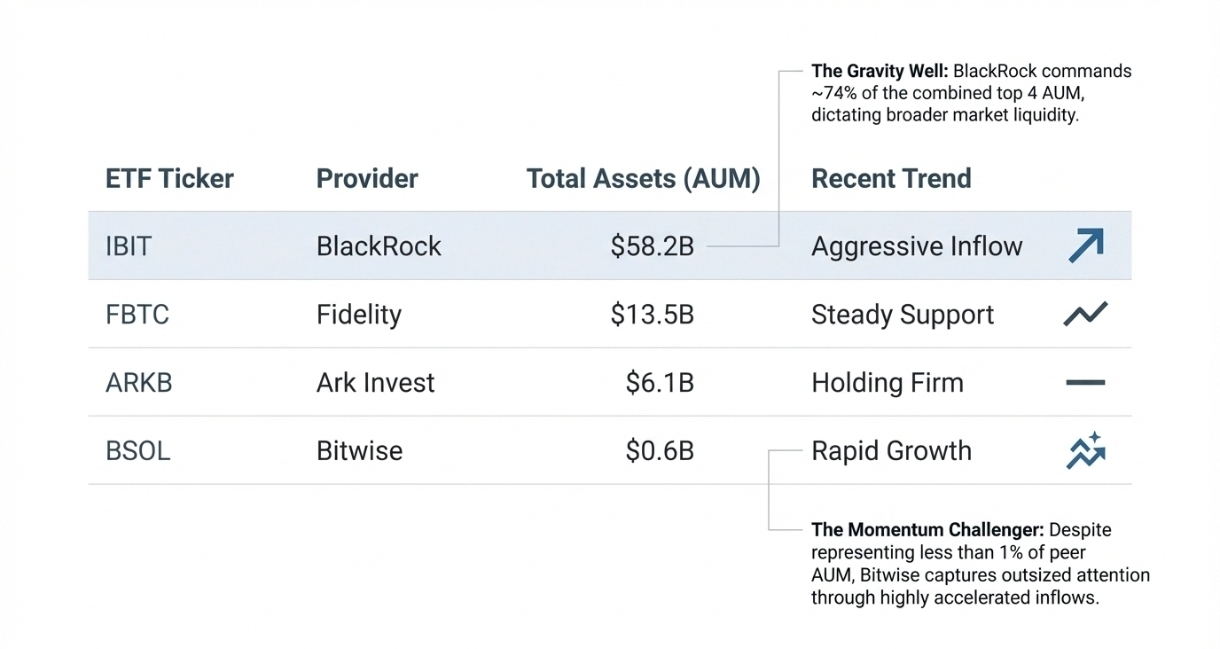
These figures represent a structural shift. This is not "hot money" looking for a quick trade. This is managed capital moving into long-term positions. To understand the scale, you have to look at the global wealth market. There is over $100 trillion sitting in managed accounts. Even a 1% shift into these ETFs represents an inflow that the crypto market has never experienced. We are seeing the beginning of that shift right now.
When an institution like BlackRock sees this much demand, they build an entire ecosystem. We are seeing the secondary effects of this liquidity everywhere. Trading volumes on regulated exchanges are hitting record highs. The spread between buying and selling prices is shrinking. This makes it cheaper and easier for the next wave of big money to enter.
III. SEC’s March 17 Commodity Classification
On March 17, 2026, the legal fog finally lifted. The SEC issued guidance that changed the game. In plain English, Bitcoin, Ethereum, and 16 other major assets are now officially classified as commodities. They fall under the CFTC instead of the SEC.
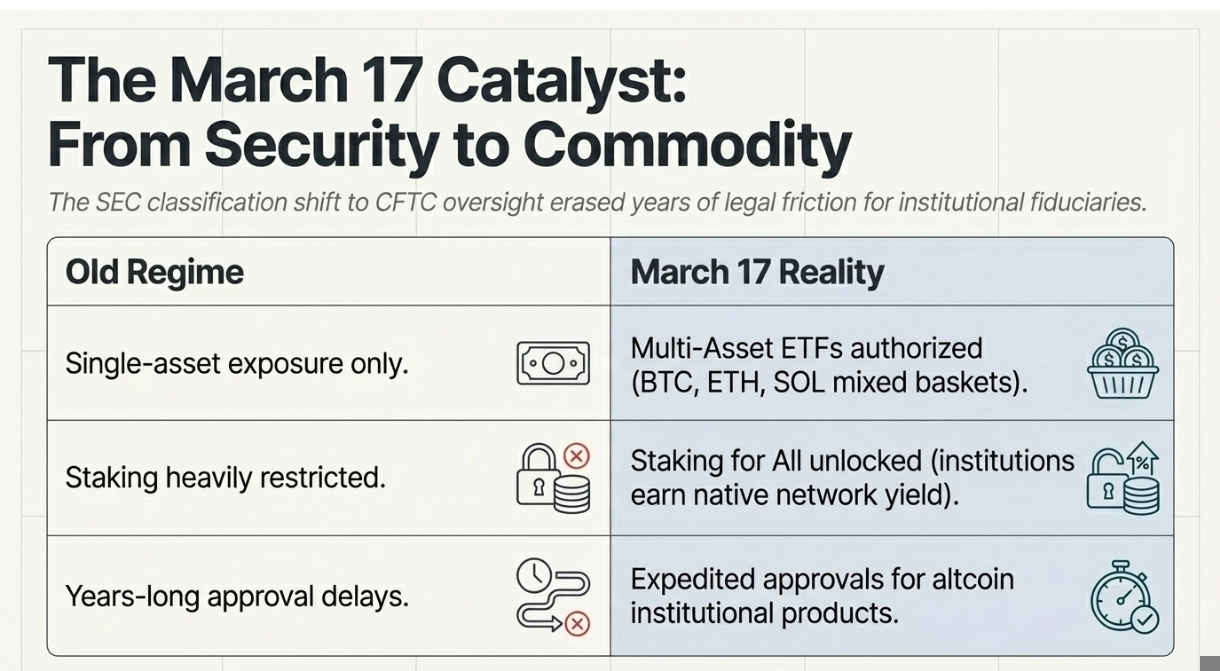
This is the biggest event of the year because it removes years of legal gray area. For a long time, pension funds and 401(k) managers stayed away. They were afraid of regulatory crackdowns or lawsuits. That fear is gone.
This classification unlocks several things:
Multi-Asset ETFs: Funds can now hold a mix of BTC, ETH, and SOL in one basket.
Staking for All: Institutions can now stake their assets to earn extra yield for their shareholders.
Faster Approvals: The path for new altcoin ETFs is now much shorter.
This ruling opened the floodgates for trillions of dollars in retirement money that was previously locked out. Before this ruling, a compliance officer at a major pension fund would have flagged crypto as too risky. Now, that same officer sees a clear green light from the federal government. This change in permission is more important than any price chart. It allows the world's largest pools of capital to treat crypto like they treat gold or oil.
This classification helps clarify how these assets are taxed and reported. For a multi-billion dollar fund, knowing the tax rules is just as important as the asset's performance. The March 17 guidance provided the rulebook that Wall Street was waiting for.
IV. Wall Street Is All-In: The Banks are Moving
The big banks are leading the charge. BlackRock is the most obvious example. Beyond their IBIT fund, they have launched tokenized treasuries like the BUIDL fund. You can now find these tokenized assets on Uniswap. They are merging the efficiency of crypto with the safety of U.S. government debt.
Morgan Stanley is also making big moves. They have expanded crypto access for everyone using E*Trade and filed for their own specialized Bitcoin ETF. Other giants like Wells Fargo, Bank of America, and Vanguard have opened up their distribution channels. Their wealth managers are now actively discussing these allocations with high-net-worth clients.
It is not just banks. Corporate treasuries and sovereign funds are buying. The Indiana retirement fund recently reported a major position. Sovereign funds like Mubadala are also rumored to be building their own stashes. One bank statement recently noted that digital assets are a necessary hedge rather than a venture bet.
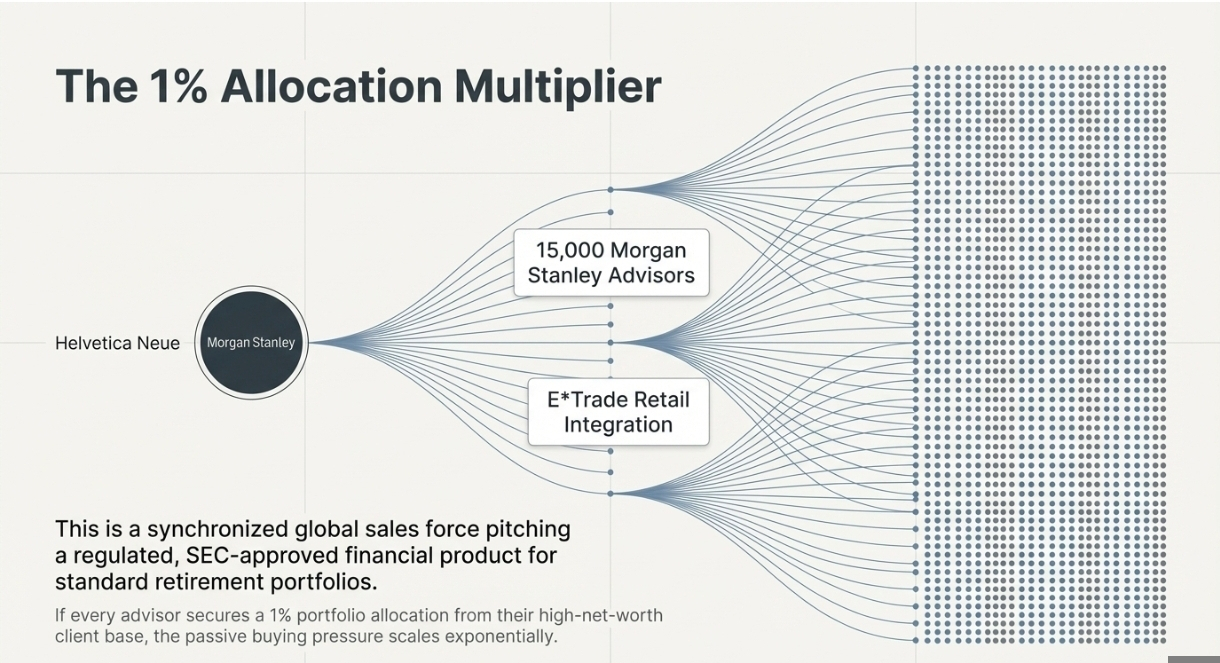
The entrance of Morgan Stanley is particularly significant. They have over 15,000 financial advisors. If each of those advisors puts just a few clients into a 1% Bitcoin allocation, the buying pressure is immense. We are talking about a sales force that covers the entire planet. They aren't selling magic internet money anymore. They are selling a regulated, SEC-approved financial product that fits into a standard retirement plan.
We are also seeing Bitcoin-backed lending become a standard service. Banks are now letting their clients take out loans using their Bitcoin ETF shares as collateral. This allows wealthy investors to get cash without selling their coins. It turns Bitcoin into a productive asset that functions just like a house or a stock portfolio.
V. What’s Next for ETFs in 2026
The ETF wrapper is spreading fast. Solana ETFs are already live and they are staking-enabled. Funds like Grayscale’s GSOL and Bitwise’s BSOL allow investors to capture Solana’s growth plus the yield from securing the network.
The next phase involves tokenized Real World Asset (RWA) baskets. Imagine an ETF that holds a mix of real estate, gold, and Bitcoin. These would trade 24/7 on a blockchain. This is the end game for Wall Street. They want to move every asset class onto a blockchain for instant settlement.
There is also a supply shock coming. Bitwise predicts that ETFs will buy more than 100% of all new BTC, ETH, and SOL issuance in 2026. If the demand from these funds is higher than the amount being mined, the price has only one way to go. Institutions prefer these funds because they offer a risk-adjusted way to hold crypto without the hassle of managing private keys.
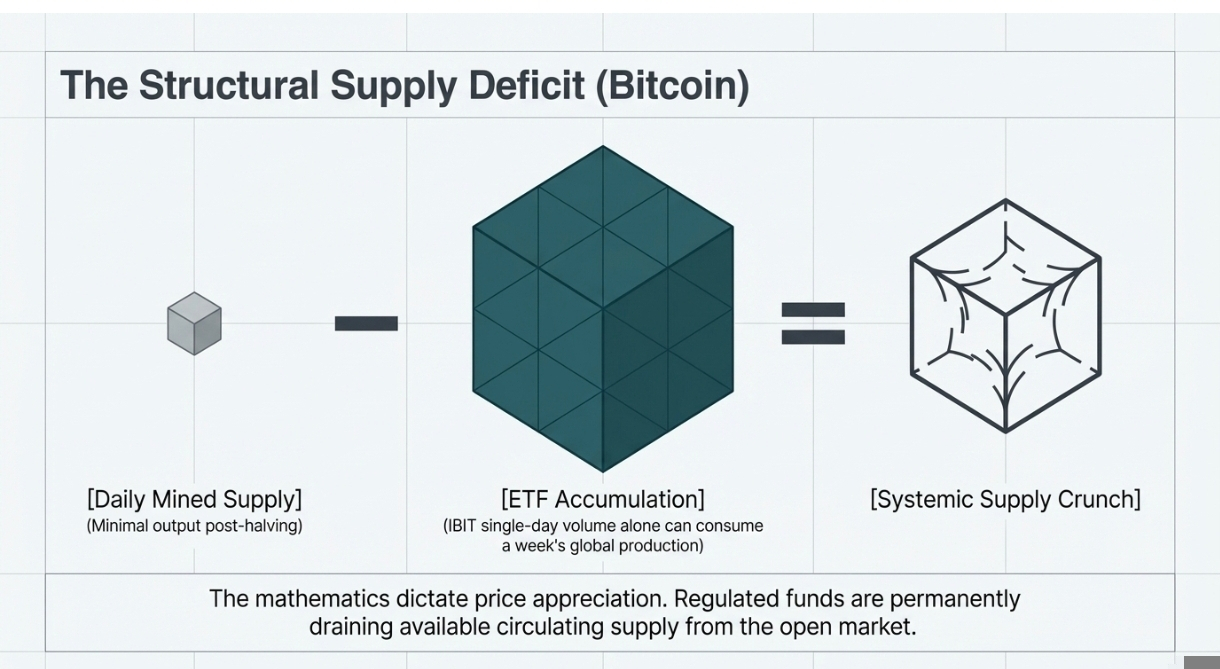
To visualize the supply shock, consider the daily production of Bitcoin. After the most recent halving, miners produce very little new supply. If a single fund like IBIT has a high-volume day, they can easily buy up a week's worth of global production in a single afternoon. When you add up all the ETFs, the math makes it impossible for the price to stay low. They are quite literally draining the available supply from the market.
This supply crunch isn't just a Bitcoin thing. Ethereum is also seeing its supply shrink as more of it gets locked in staking contracts. When an ETF buys Ethereum and then stakes it, those coins are taken off the market. They are not available for anyone else to buy. This creates a double-whammy of high demand and vanishing supply.
VI. Impact on Prices and the Market
These massive inflows are creating a permanent price floor. Even when the broader stock market gets volatile, Bitcoin has stabilized near $70,000. This is very different from the 2024 launch. Back then, it was about curiosity. Today, it is about maturation.
Institutions are treating crypto as digital gold and a growth asset. It protects them from a weak dollar while giving them the upside of new technology. This dual role makes it a must-have for any modern portfolio. We are seeing a historic parallel to the way gold ETFs changed the gold market in the early 2000s. It led to a multi-year bull run that took prices to new heights.
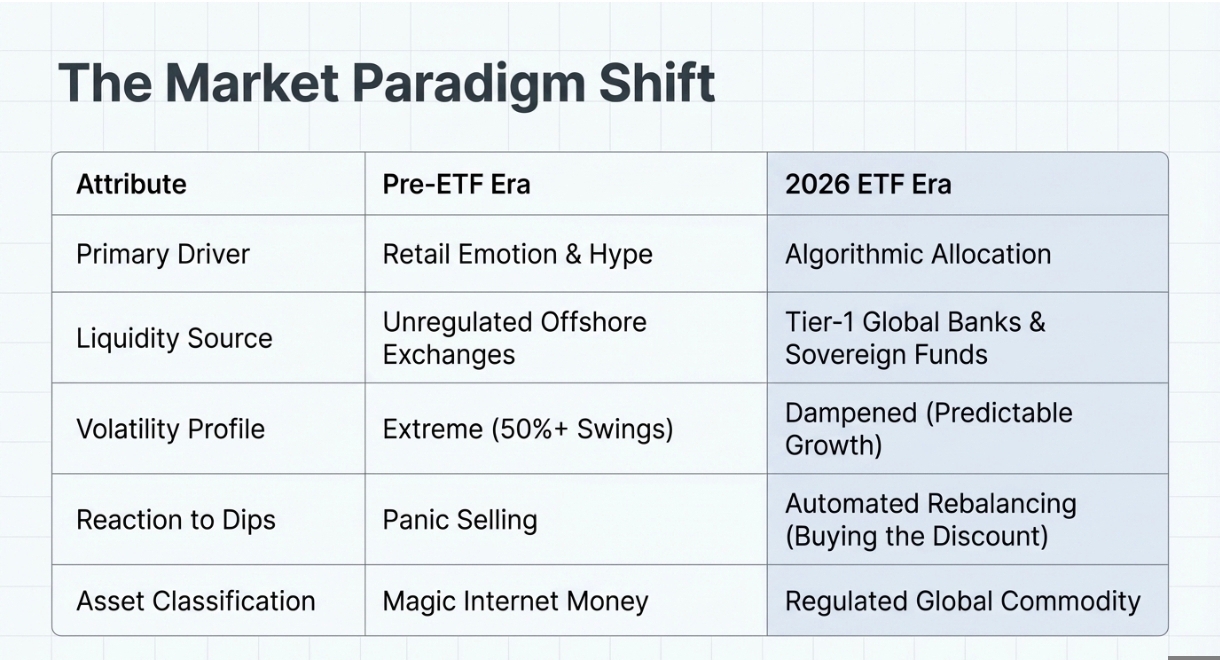
Before ETFs, the crypto market was driven by retail emotion. People bought when they were excited and sold when they were scared. Institutions work differently. They use automated rebalancing. If their target for Bitcoin is 2% and the price drops, their software automatically buys more to bring the position back. This creates a buy the dip machine that runs 24 hours a day.
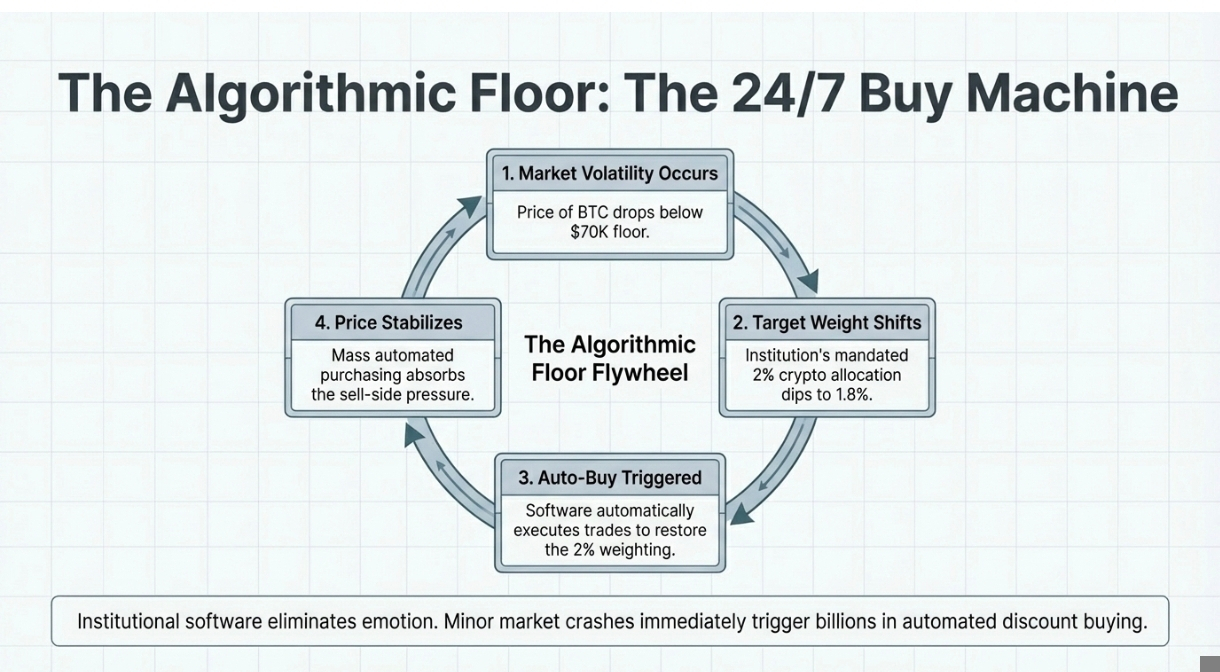
This rebalancing provides the stability we are seeing now. Every time there is a minor crash, the ETF machines kick in and start buying the discount. This makes the market much less stressful for the average investor. The wild 50% swings are being replaced by more predictable growth.
VII. The Role of Global Competition
It's not just a U.S. story anymore. While the U.S. ETFs are the largest, other global financial hubs are racing to catch up. London, Hong Kong, and Dubai have all launched their own versions of these products. This creates a global arbitrage market.
If the price of Bitcoin is slightly lower in London than it is in New York, big trading firms will buy in London and sell in New York until the prices match. This keeps the market liquid and stable around the clock. We are moving away from the days where one exchange could have a completely different price than another.
This global competition also pressures regulators. If the U.S. doesn't approve a certain type of staking ETF but London does, the big money will move to London. This regulatory competition is forcing governments to be more friendly toward crypto to keep the tax revenue and jobs in their own countries.
VIII. Risks and a Realistic Outlook
We have to stay balanced. No market goes up forever. Flows can fluctuate. We could still see regulatory surprises or macro-economic shocks. If the Fed raises interest rates unexpectedly, capital might move back to bonds temporarily.
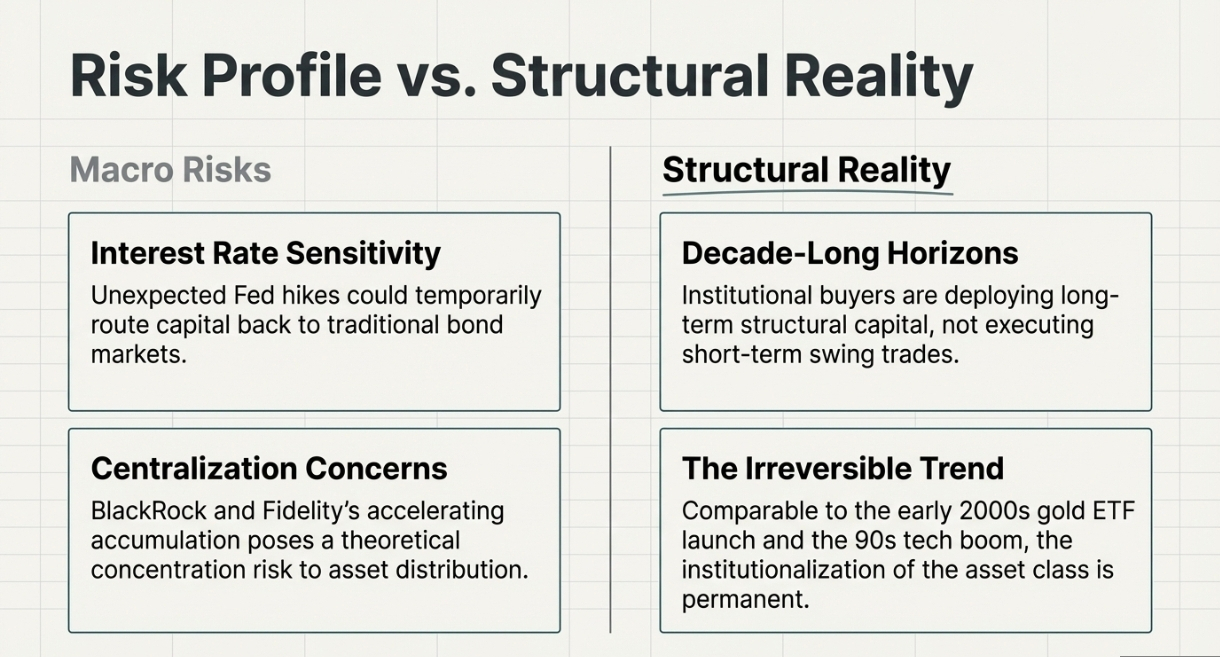
There is also the risk of concentration. If BlackRock and Fidelity eventually own 20% of all Bitcoin, they will have a massive amount of influence over the market. Some old-school crypto fans worry that this goes against the decentralized nature of the asset.
However, the underlying trend is clearly upward. This is structural adoption, not hype. The people buying now are not planning to sell next week. They are planning to hold for the next decade. We are seeing the institutionalization of an entire asset class. It happened with gold, it happened with tech stocks in the 90s, and it is happening with crypto right now.
IX. The Bottom Line
Institutional adoption via ETFs is no longer coming. It is here and it is accelerating in March 2026. The wall of money has arrived. If you are waiting for the big crash to get in, you might be fighting against the world's largest financial machines. They are buying the dips, they are staking for yield, and they are building for the long haul.
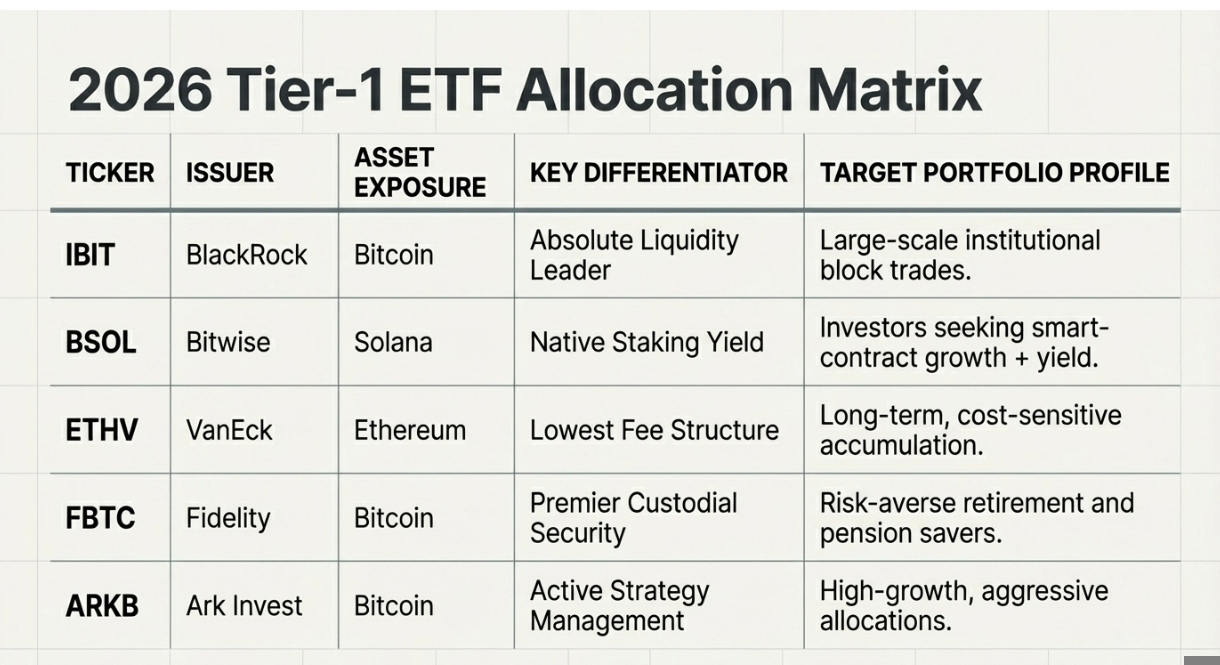
Top 5 ETFs for 2026
IBIT (BlackRock): The liquidity leader for Bitcoin. Best for large trades.
BSOL (Bitwise): The best way to play Solana with staking yield.
ETHV (VanEck): A low-fee leader for Ethereum. Great for long-term holding.
FBTC (Fidelity): Trusted by long-term retirement savers. Excellent security.
ARKB (Ark Invest): Aggressive management for high-growth portfolios.
The transition from magic internet money to global reserve asset is nearly complete. The infrastructure is built, the rules are set, and the buyers are the most powerful institutions on earth. Now, Bitcoin isn't solely reliant on retail but after ETF happened it drastically changed into a more institutional play, where plot and direction is already decided by Big money, you are just the actor.
Which ETFs are you watching? Drop your thoughts below.