


At first I didn’t really care about this whole “trust infrastructure” idea.@SignOfficial
It sounded… efficient. Clean. Almost too clean.
But then something started bothering me.
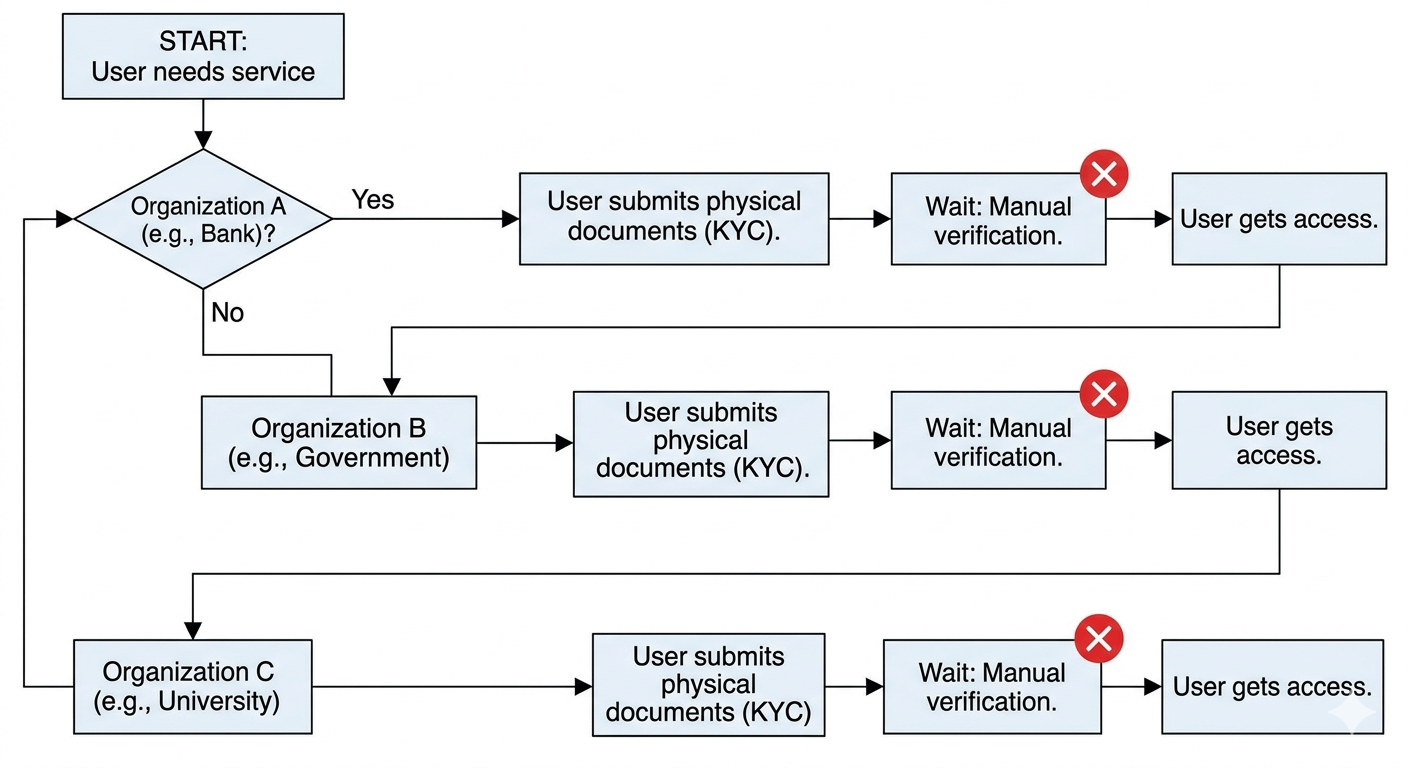
Most of our systems today are slow, repetitive, even annoying… but they also force a pause.
Every time you verify something, there’s a moment where someone checks, questions, reconsiders.

And yeah, it wastes time. But it also adds friction.
So when I came across what $SIGN is doing… I didn’t immediately feel impressed. I felt a bit unsure.
Because what Sign is basically doing is removing that repetition.
You verify once… and then just reuse that proof everywhere.
No more repeating KYC. No more re-checking degrees. No more re-submitting documents again and again.
It sounds perfect.
Too perfect, maybe.
Then I started thinking about where this actually matters.
Places like the Middle East are moving fast. Saudi, UAE, Bahrain… everything is becoming digital. Smart cities, fintech systems, online government services.
But under all that speed… the base systems are still fragmented.
Different databases. Different rules. No shared trust.
So everything slows down anyway.
That’s where Sign fits in.
Not as an app you use… but as something underneath everything.
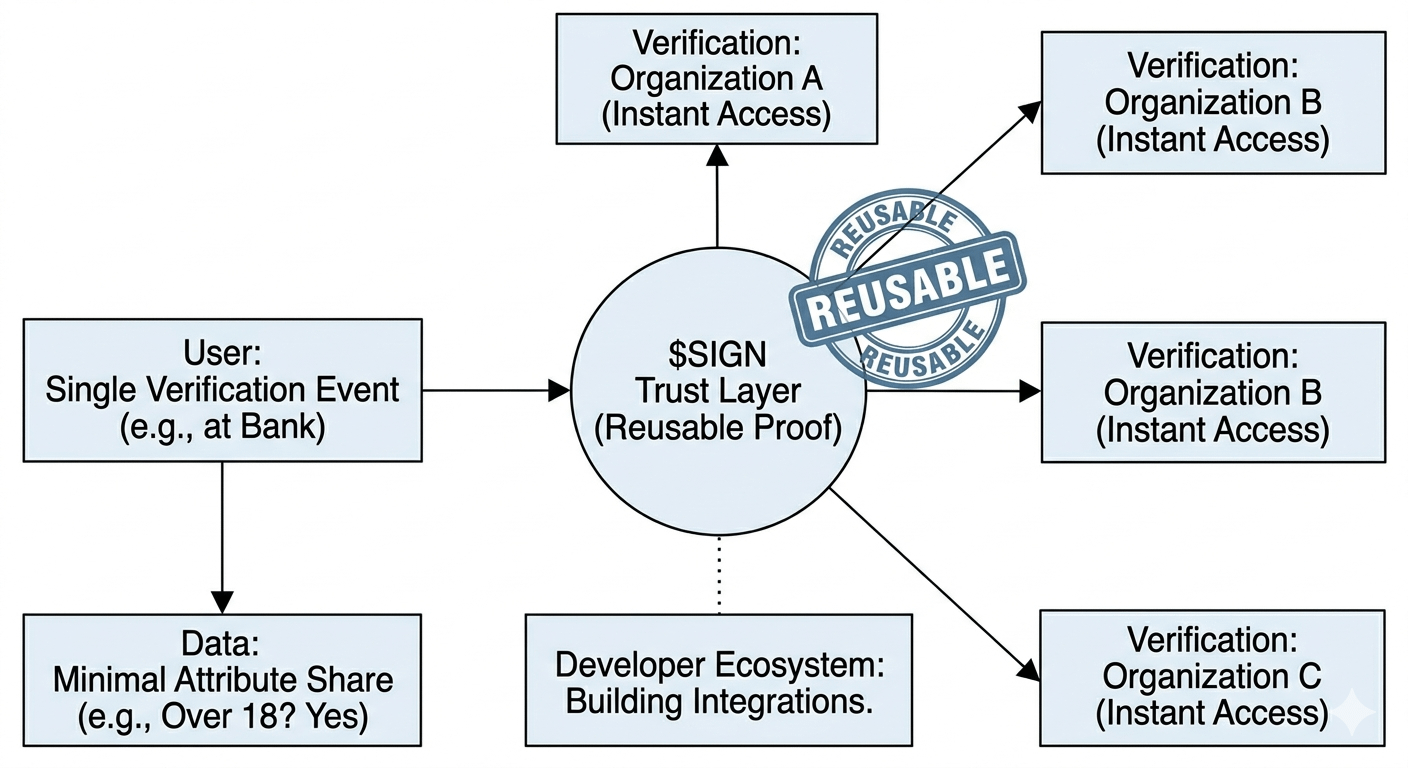
A layer where trust becomes portable.
And I think that’s the part I was underestimating.
Because once trust becomes reusable…
Things start changing in ways that aren’t obvious at first.
Take banking.
Right now, onboarding is slow for a reason. Every bank wants to verify you themselves.
With Sign, it becomes:
You verify once → and that proof moves with you.
Which means:
Faster onboarding
Lower costs for banks
Less fraud (because credentials are real, not copied)
And smoother cross-border transactions
In regions with heavy cross-border movement… that’s not small.
That’s structural.
Education made me pause too.
Fake degrees, unverifiable certificates… it’s more common than people admit.
Sign turns credentials into something you can’t fake.
Employers don’t “trust” documents anymore… they just check proof.
Instantly.
And for people moving between countries, especially in the Middle East, that portability matters more than it sounds.
You don’t carry papers anymore. You carry proof.
Government systems are where it gets even more… sensitive.
Because governments rely on control.
Documents, verification, approvals… all of it creates structure.
With Sign:
One digital ID can replace multiple documents
Services become accessible without repeating checks
Bureaucracy reduces
It aligns with things like Vision 2030… faster systems, lower costs, less fraud.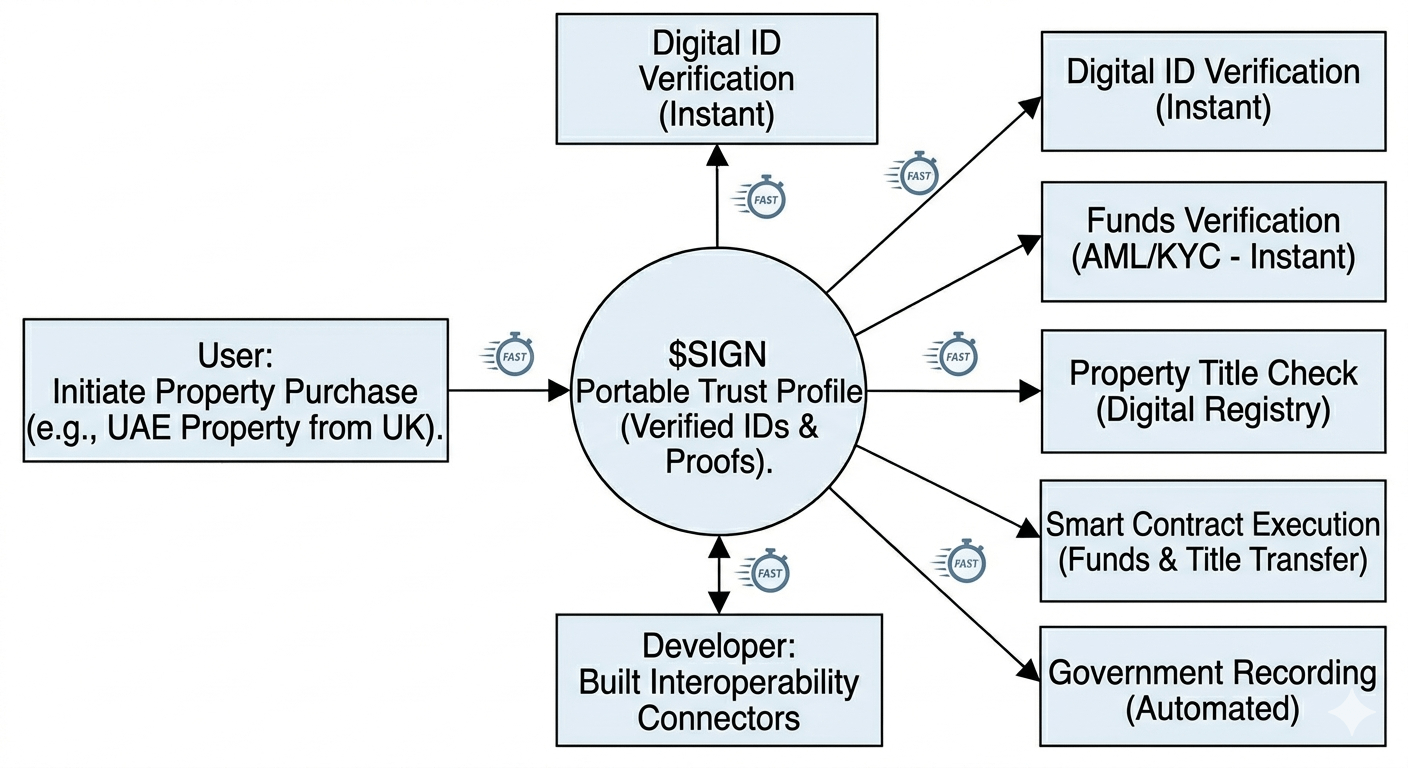
But it also raises a quiet question in my head:
When systems become this smooth… who notices if something goes wrong?
Real estate was the unexpected one for me.
Property systems are slow, paper-heavy, and honestly messy.
Ownership disputes, delays, manual checks…
With Sign:
Ownership becomes verifiable
Transfers become faster
Even fractional ownership becomes possible
Which means property markets become more liquid, more accessible.
But also… more digital.
And that shift is bigger than it looks.
One thing I actually like is how Sign handles data.
Instead of sharing everything… you just prove what’s needed.
So:
Privacy stays intact
Governments keep control over data
But systems still connect across borders
That balance is hard.
And this approach feels… thought through.
There’s also the developer side.
$SIGN isn’t just a token sitting there.
It pulls developers in. Rewards them to build tools, integrations, systems.
And that’s important.
Because infrastructure without usage… is just theory.
Adoption comes from what people build on top of it.
But I still have this one thought I can’t ignore.
A system like this depends on everyone agreeing to trust it.
Banks, governments, universities… all aligning.
And that’s not easy.
Not technically… but politically, structurally.
Still…
Something clicked for me while thinking through all this.
We’ve been trying to build faster systems on top of broken trust layers.
Sign isn’t doing that.
It’s trying to fix the layer itself.
If that works…
Individuals actually control their identity
Businesses stop wasting time on verification
Governments reduce cost and friction
Markets become more transparent
Not because of one app… but because the foundation changed.
I’m still not fully convinced.
But I’m also not ignoring it anymore.
Because this isn’t loud innovation.
It’s quiet infrastructure.
And those are usually the things that matter later… not immediately.
Maybe it works. Maybe it doesn’t.
But I think it’s worth watching… slowly.
No rush to believe it.
Just… don’t dismiss it too quickly.@SignOfficial #SignDigitalSovereignInfra