
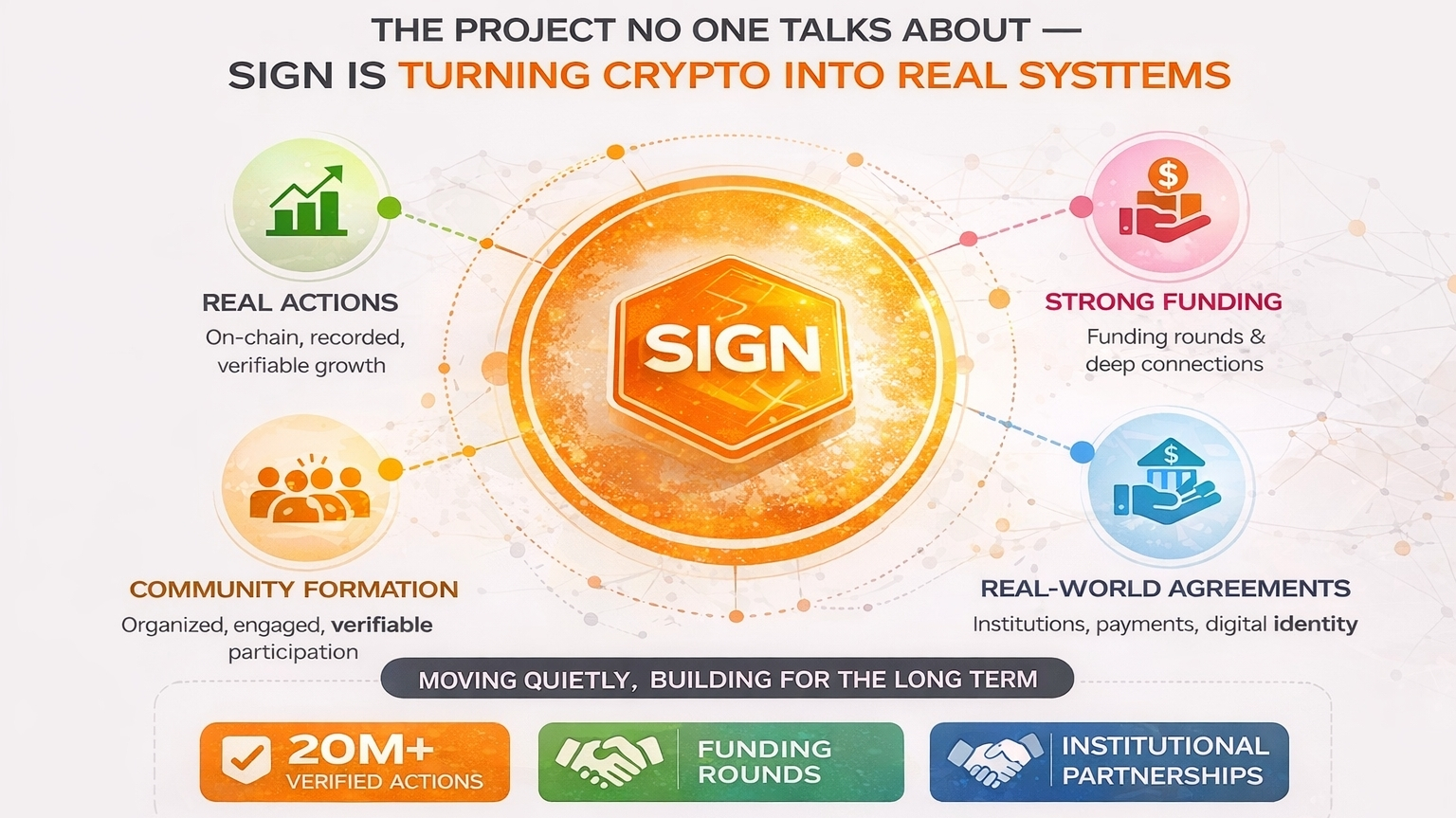

Most of the time, the loudest projects win attention. But lately I’ve been thinking… what if the ones moving quietly are the ones actually building something real?
That thought is what pulled me toward Sign.
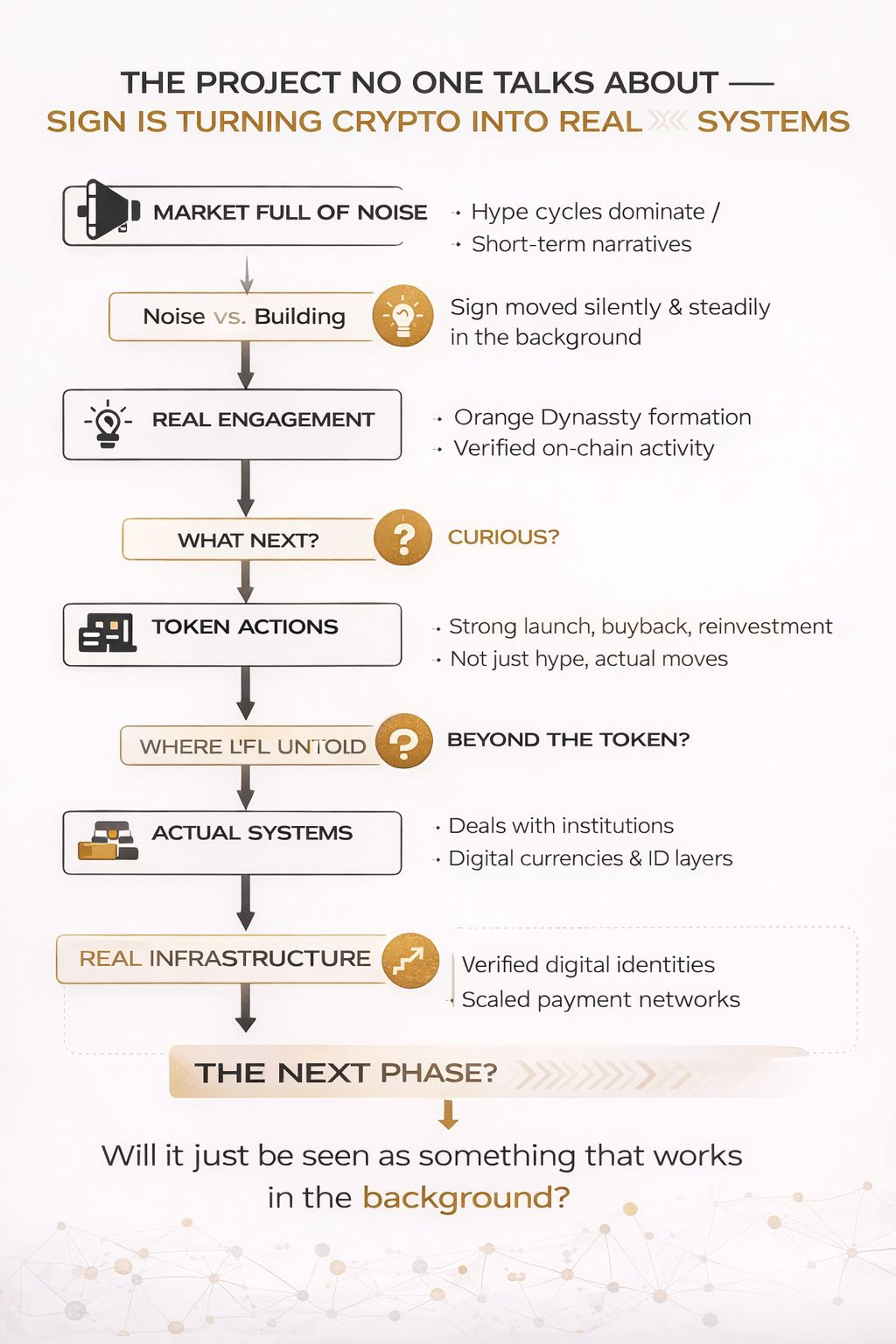
In a market where everything feels like hype cycles and short-term narratives, Sign didn’t follow that path. While others were busy trending, this project felt almost invisible. No constant noise, no aggressive marketing. Just steady movement in the background. And honestly, that made me more curious than any hype ever could.
What stood out first wasn’t the technology. It was the way people were interacting with it.
They introduced something called Orange Dynasty. At first, it sounded like just another campaign. But when I looked deeper, it felt more like a system than a feature. People weren’t just joining — they were forming groups, participating together, earning together. It reminded me of a mix between a game and a coordinated network. And the response was real. Hundreds of thousands joined quickly. That kind of growth doesn’t happen unless something actually connects.
But here’s where it gets interesting.
This activity wasn’t just surface-level engagement. It was recorded on-chain. Verified actions, not empty clicks. That changes everything. Because in most crypto projects, numbers can look big but mean nothing. Here, actions carry weight. It becomes harder to fake and easier to trust.
Then I looked at the token side.
When SIGN launched, it didn’t struggle. Strong volume, quick price movement, wide distribution. On paper, it looked like a typical successful launch. But what happened next is what caught my attention. Instead of fading after the hype, the team stepped back in and bought a large amount of their own token from the market.
That’s not normal behavior.
And they didn’t just sit on those tokens. They used them. To support partnerships, improve liquidity, and reward users. That tells me they’re not just thinking about charts — they’re thinking about structure.
Looking deeper, the backing behind the project is also hard to ignore. Multiple funding rounds, serious capital, and connections that actually open doors. But funding alone doesn’t mean much unless it leads somewhere.
In this case, it did.
Sign started moving into real-world systems. Agreements with institutions, work around digital currencies, identity layers, and payment networks. Not ideas on paper actual implementations.
For example, think about a country where people don’t have reliable identity systems. Now imagine a verified digital identity that connects to payments. Suddenly, access to services becomes easier, faster, and more transparent. That’s not just crypto anymore. That’s infrastructure.
And the usage supports this direction. Millions of verified actions. Massive distribution across millions of wallets. Not just holding tokens, but actually using them within a system.
Still, I’m not ignoring the reality.
Working with governments is slow. Things can change. Execution becomes harder as scale increases. And not every plan translates perfectly into reality.
But even with those risks, something feels different here.
Most projects are trying to stay relevant in crypto.
Sign feels like it’s trying to move beyond it.
And if even part of this works, people might not even call it a crypto project anymore.
They’ll just see it as something that works in the background.
Like real infrastructure.
👉 This article reframes Sign from a “quiet project” into a potential real-world system builder beyond crypto.