
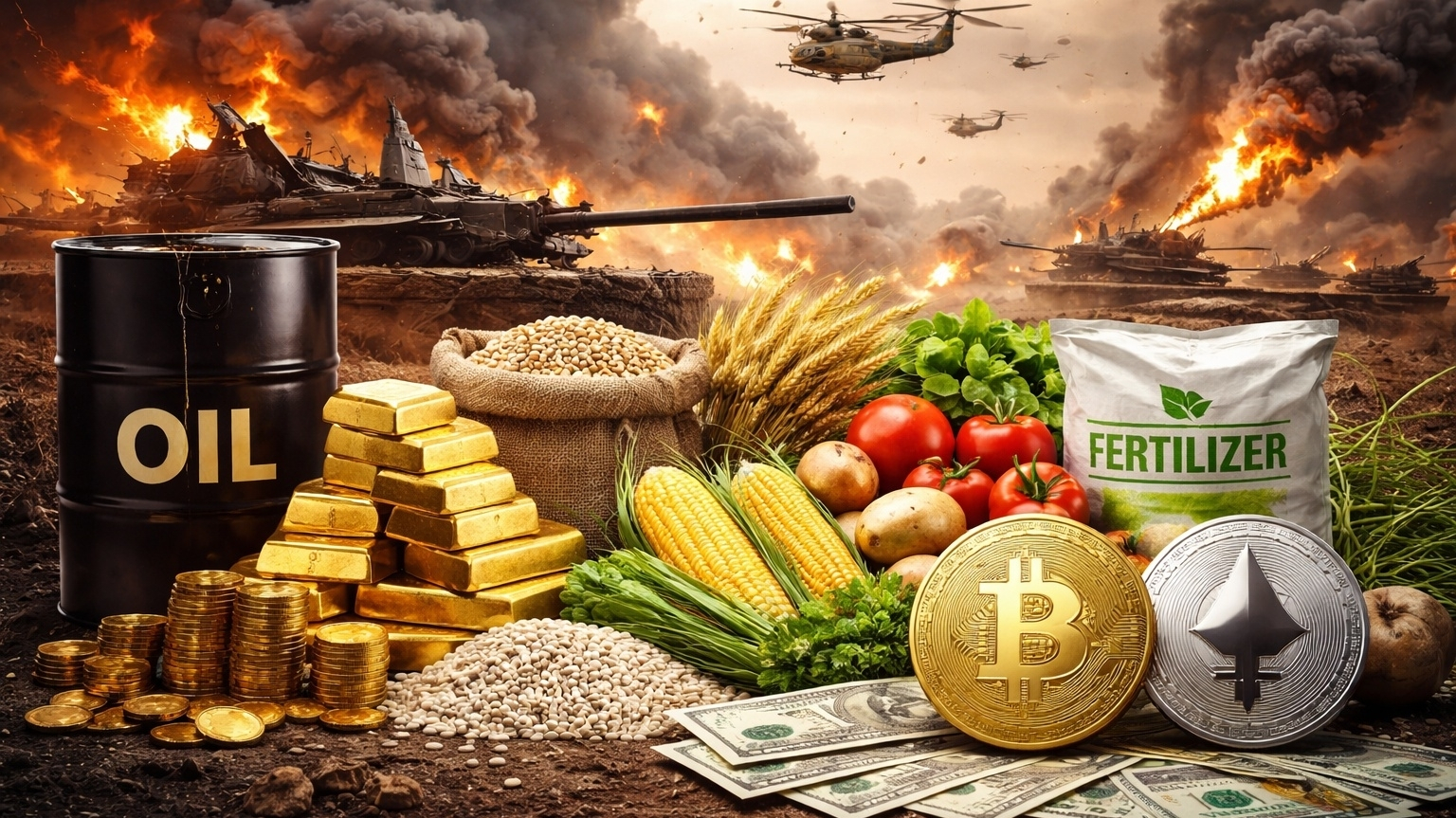
Wars are among the most powerful forces shaping the global economy. Their effects go far beyond the battlefield, influencing financial markets, supply chains, and essential commodities worldwide. As geopolitical tensions rise between major powers such as the United States and Iran, global markets become increasingly sensitive to any escalation.
1. Impact of War on Oil Markets
Oil is one of the most affected sectors during conflicts, especially when tensions involve strategic regions like the Middle East.
Key effects:
Sharp price increases due to fears of supply disruption
Threats to critical shipping routes like the Strait of Hormuz
Increased speculation in global markets
📌 Result:
Rising oil prices drive global inflation, as energy costs impact nearly every industry.
2. Gold as a Safe Haven
During times of war, investors seek safety. Gold remains the most trusted store of value.
Why gold rises:
Loss of confidence in financial markets
Currency devaluation
Demand for wealth protection
📌 Result:
Gold prices typically surge, acting as a hedge against uncertainty and crisis.
3. Impact on Food Markets
Wars directly threaten global food security, especially when key agricultural producers are involved.
Key effects:
Disruption of supply chains
Higher transportation and energy costs
Reduced agricultural production
📌 Result:
Rising prices of staple crops (wheat, corn)
Increased food insecurity in vulnerable regions
Social unrest driven by rising living costs
4. The Fertilizer Crisis
Fertilizers are essential for agricultural productivity, and war can severely disrupt their availability.
How they are affected:
Rising natural gas prices (a key input in fertilizer production)
Export restrictions from producing countries
Economic sanctions
📌 Result:
Lower crop yields
Higher food prices
Long-term pressure on global food systems
5. Impact on Cryptocurrency Markets
Cryptocurrencies have become an important part of the global financial system, and their reaction to war is complex.
Short-term effects:
High volatility
Panic selling during uncertainty
Long-term effects:
Increased adoption of Bitcoin as a store of value
Growing use of Tether for fast, cross-border transactions
Expansion of decentralized finance through Ethereum
📌 Result:
Crypto behaves both as a risk asset and an alternative financial system during crises.
Conclusion
War reshapes the global economic landscape in profound ways:
Oil prices surge, fueling inflation
Gold strengthens as a safe haven
Food and fertilizer markets face serious disruptions
Cryptocurrencies gain a new role in global finance
Ultimately, the more intense the conflict, the greater the uncertainty—and the more volatile and reactive global markets become.