


Yesterday night just after a claim windoew I had been quietly tracking closed without much noise, I found myself still staring at the @SignOfficial interface, not because something dramatic happened, but because nothing did. No spike, no chaos, jast a stream of attestations resolving outcomes in silence. That stillness felt unusual. It made me realize I wasn’t looking at another data verification system. I was watching decisions being finalized.
While tracing recent activity, I pulled a few fragments from on-chain interactions. One contract cluster around kept repeating schema-based calls rather than raw data submissions. Gas briefly climbed during a short burst window, but nothing extreme, just enough to signal coordinateid activity. What stood out wasn’t scale, it was compression. Each interaction carried more meaning than a typical transaction. It felt less like data moving and more like conditions resolving. That distinction stayed with me longer than I expected.
At some point I tried to simulate a simple flow, something basic like attaching a condition to a wallet and triggering access based on that proof. Everything worked as expected. The schema validated, the attestation passed, execution followed cleanly. But I paused mid-process, not because of an error, but because of a realization that felt slightly uncomfortable. I wasn’t verifying truth. I was accepting a predefined definition of truth. The system wasn’t asking whether something was real, it was checking whether it met a condition someone else had already decidd was valid.
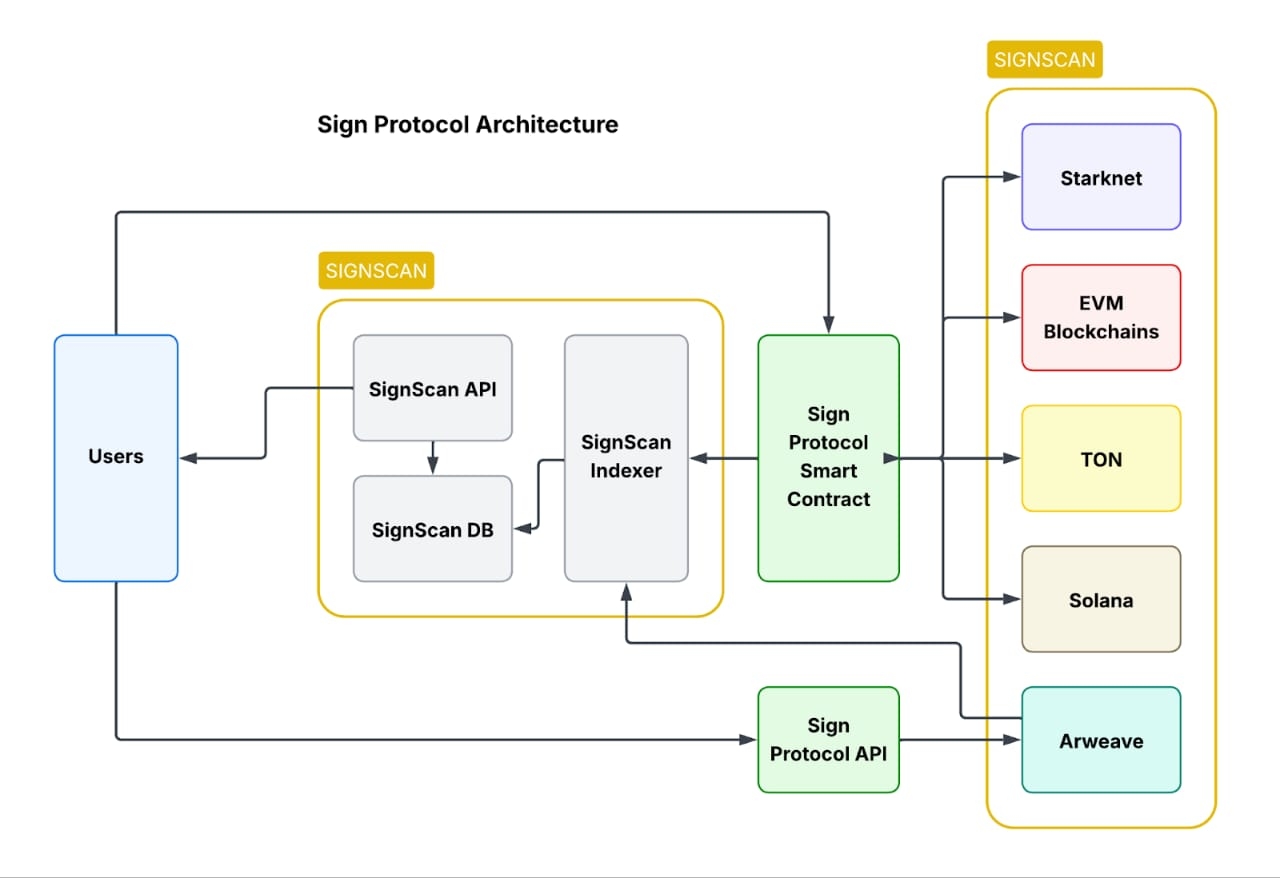
That’s where the structure began to reveal itself to me, not as layers stacked on top of each other, but as a loop constantly feeding back into itself. The economic design makes attestations extremely cheap, almost negligible when pushed through L2 or handled partially off-chain, which naturally encourages volume. More attestations mean more reliance on schemas, and more reliance on schemas mens more influence concentrated in whoever defines them. Technically, the system is elegant. Multi-chain deployment across EVM, non-EVM, and even Bitcoin-adjacent environments shows real execution, not just roadmap theory. But that technical layer is inseparable from the identity and governance layer, because every schema is effectively a rule, and every rule quietly shapes behavior. The loop becomes clear the longer I sit with it.
When I mentally compare this to systems like Fetch.ai or Bittensor, the contrast sharpens. Those systems are focused on intelligence, on agents, on optimizing decisions through computation. What I’m seeing here feels more foundational. It doesn’t try to decide better, it defines what counts as a valid decision in the first place. That subtle shift is easy to miss if you are only looking at surface-level features.
The honest part I keep returning to is this quiet dependency on the verifier layer. If the entity defining schemas or validating attestations isn’t neutral, then the fairness of the entire system becomes conditional, no matter how clean the code is. There’s also a deeper tension in the cost structure. Off-chain attestations make the system scalable and efficient, almost frictionless, but that same efficiency reduces visibility. Less visibility naturally increases trust assumptions, and that introduces a softerr less obvious form of centralization. Nothing breaks, nothing looks wrong, but control shifts in ways that are harder to detect.
I keep thinking about what happens when this kind of infrastructure becomes invisible, when developers and users no longer realize they are interacting with it. If decisions are being enforced through programmable proofs that most people don’t fully understand, then the human layer starts to drift away from the logic layer. And that gap is where things get interesting, or potentially dangerous. Because at that point, the question is no longer whether the system works, but whether people understand the rules shaping their outcomes.
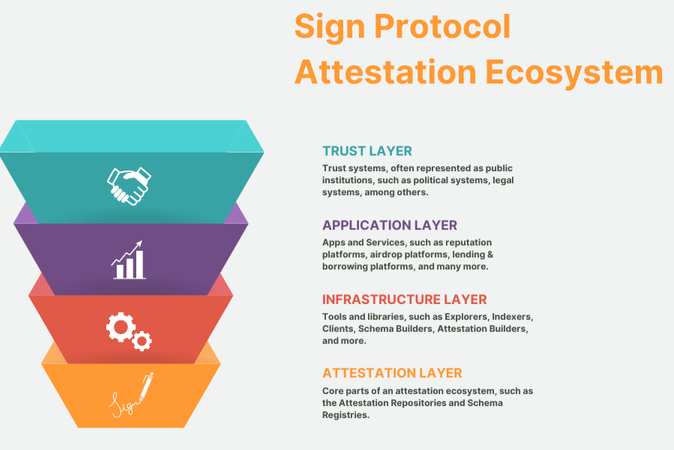
I’m not dismissing what I’m seeing here. The design is strong, and the execution is already ahead of many projects still sitting in conceptual phases. But I can’t fully resolve the tension either. If control over data was the old paradigm, and this system shifts control toward proof and validation logic, then I have to ask myself whether we are actually decentralizing trust, or just redefining where it lives. And the more I think about that, the more I realiz this isn’t a finished system. It feels like an evolving experiment, one that could quietly become foundational, or just as quietly introduce a new kind of gatekeeper that most people never notace.
