


Hey Binancian's I wanna share with you something Last night at on March 30th just as the OBI snapshot window was tightening, I found myself still inside the @SignOfficial dashboard, refreshing state changes and watching wallets reposition in real tim. There was a subtle urgency in the mempool not chaotic, not irrational, but deliberate. Gas wasn’t spiking wildly yet it was elevated enough to signal intent. People were moving assets, not for speculatione but for eligibility. That distinction stayed with me longer than I expected.
As I traced a few flows, I followed interactions tied to contracts resembling. What stood out wasn’t just the volume, but the pattern. Wallets were consolidating balances, then going completely still no outbound activity, no trading behavior, just deliberate inactivity. And do you knoww what happened next tt the same time, those same wallets were interacting with attestation functions, not just holding tokens passively. It felt less like accumulation and more like alignment with a system that was quietly measuring behavior. The chain wasn’t just recording transactions it was observing commitment.
At one pointr I decided to simulate the experience myself from a clean wallet. Fresh address, funded, ready to interact. Everything looked straightforward until it wasn’t. A simple attestation call stalled, not because of congestion, but because I hadn’t satisfied a hidden state requirement. That moment forced me to pause. This system wasn’t rewarding presence it was rewarding context. Being early wasn’t enough. Being correctly positioned within the logic of the system was what mattered. That friction didn’t feel accidental it felt designed.
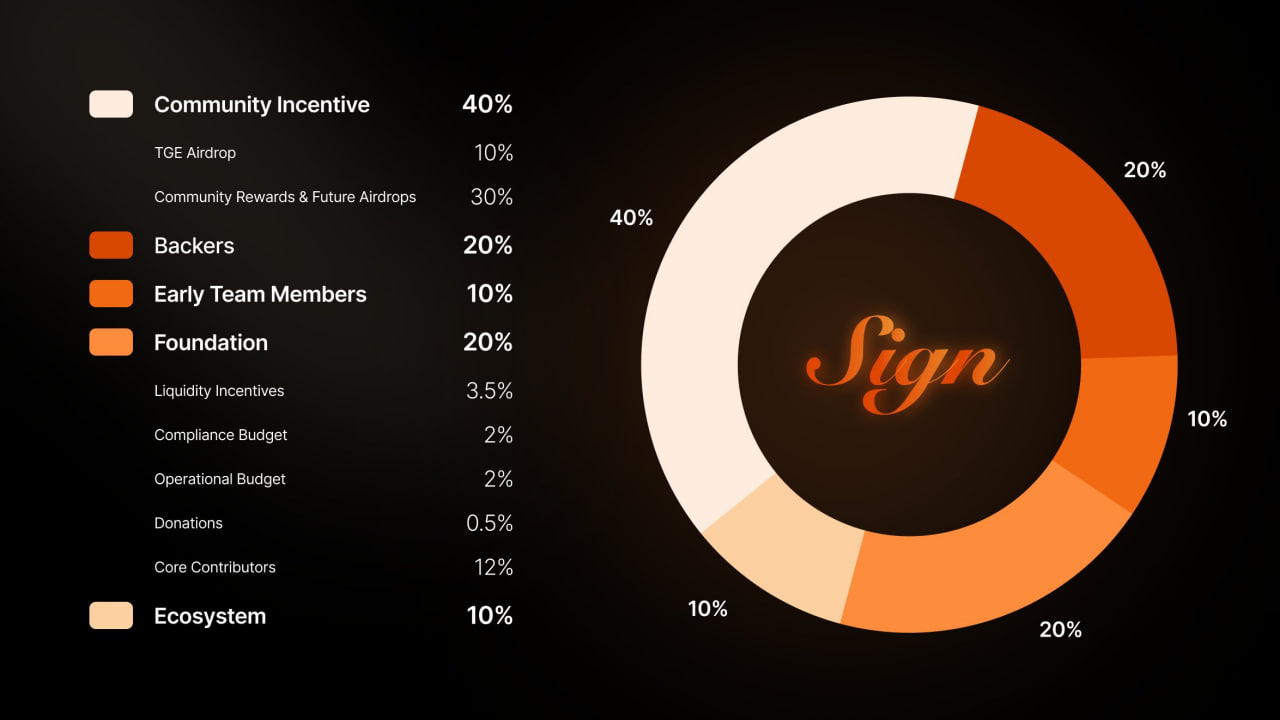
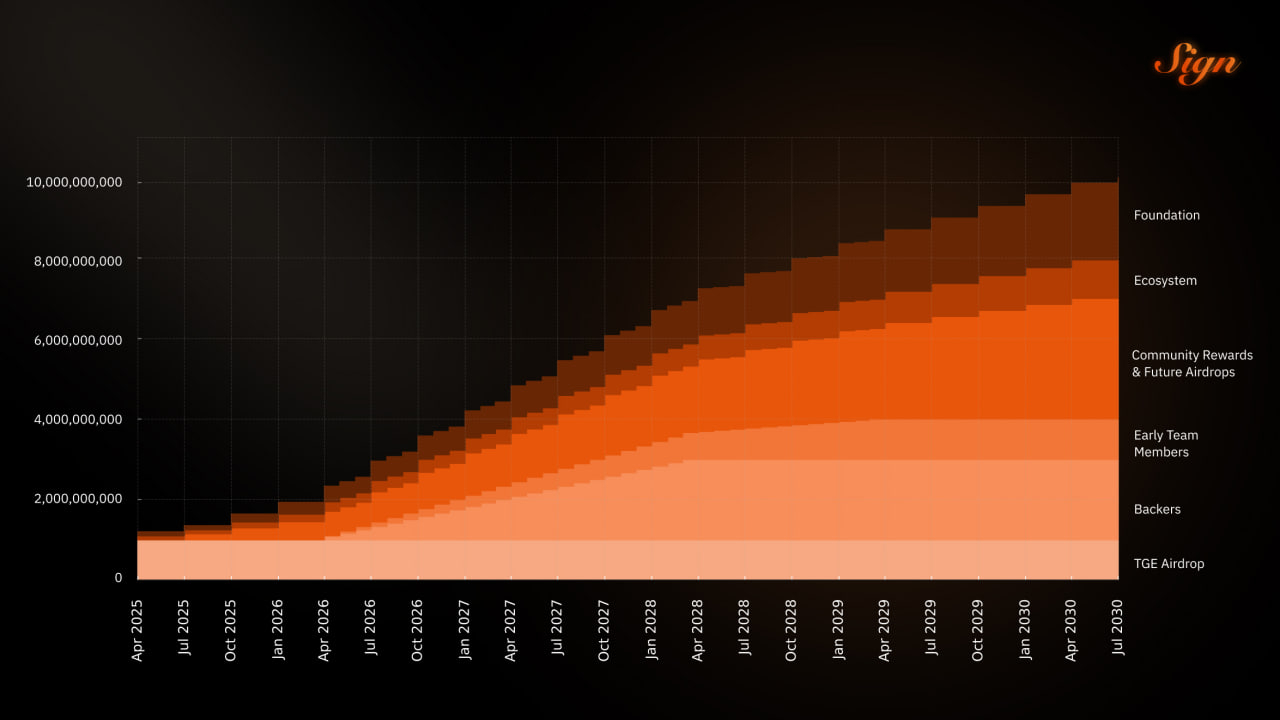
The more I sat with it, the clearer the structure became, not as separate layers, but as a loop constantly feeding itself. Economically, the signal is obvious on the surface $100 million in SIGN sounds massive, with 25 million allocated to Seasoni 1 and a notable portion tied to holding rewards. But the deeper signal isn’t about size it’s about duration. Time, not capital, is the dominant variable. Holding without movement becomes a form of participation, almost like staking without locking. The longer you remain stable, the more the system recognizes you. It quietly reframes liquidity as a weakness and patience as an asset.
Mmm yeah everything collapses back to one uncompromising rule if it’s not on-chain, it doesn’t exist. Assets sitting on exchanges are effectively invisible to the system. Custody becomes identity. That old phrase not your keys, not your crypto is no longer philosophical here it’s operational. The protocol can’t see inside centralized systems, so it simply ignores them. That design choice doesn’t just encourage self-custody, it enforces it. Participation is filtered at the infrastructure level.
Then there’s the identity layer, which Sign Protocol frames as a social contract. The more I observed it, the more it felt like a behavioral registry anchored to wallet activity. Individual actions don’t just generate individual rewards thay contribute to collective thresholds. When the network reaches certain milestones, everyone benefits. That creates a feedback loop where personal incentives are tied to group performance, and group performance reinforces personal engagement. It’s not a stack of mechanics it’s a loop that keeps tightening around user behavior.
When I contrast this with systems like Fetch.ai or Bittensor, the difference becomes more philosophical than technical. Those systems are optimizing machine coordination or intelligence output. Sign Protocol feels like it’s optimizing people. Not what they build, but how they behave under constraint. That shift is subtle, but it changes everythng about how the system should be evaluated.
The honest part I keep returning to is the weight given to early participants. Time-based rewards sound fair in theory, but in practice they amplify advantage for those who arrived first and stayed longest. That creates a curve that’s difficult for late entrants to catch up to, no matter how active they are. At the same time, the scale of participation introduces another tension. A $100 million pool feels large until it’s divided acros potentially millions of wallets, and then the question of dilution starts to matter more than the headline number.
What I’m still sitting with, though, is not the distribution math it’s the intent behind it. This doesn’t feel like a typical airdrop cycle dressed up with new terminology. It feels like a live experiment in behavioral economics, where incentives are carefully structured to push users toward specific patterns salf-custody, inactivity as commitment, and coordinated network usage. The system isn’t asking users to believe in it it’s asking them to adapt to it.
And that brings me to the part that feels the most unresolved. If you strip away the rewards, what remains? Are users interacting because the protocol is genuinely useful, or because the incentives are strong enough to simulate utility? The answer to that question won’t show up in documentation or announcements it will show up in the data after moments like March 30th pass.
Because in the end I’m not just watching Sign Protocol distribute tokens. I’m watching whether a system can successfully train behavior without breaking authenticity. And I keep coming back to one question that feels harder the longer I think about it if the incentives disappeared tomorrow, would the activity we aRe seeing today still exst in any meaningful form?
