
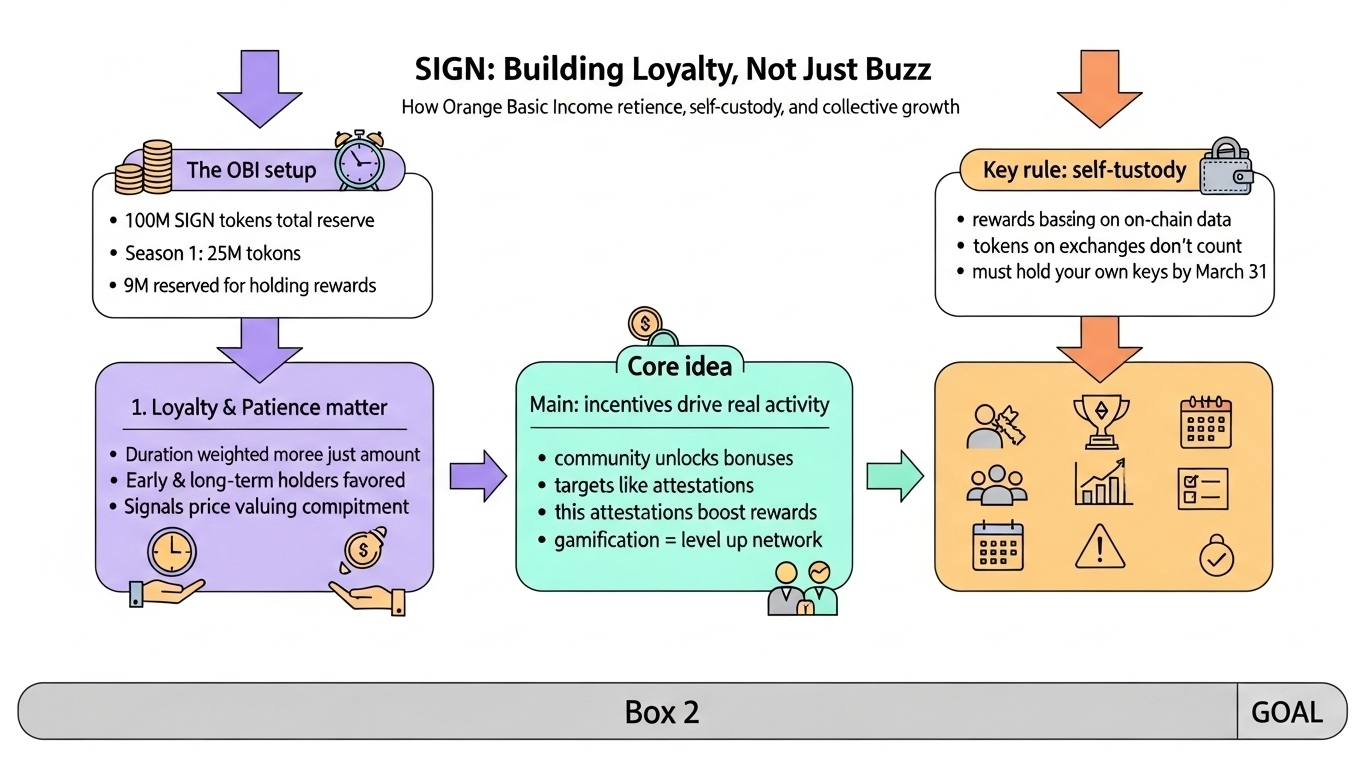


the noise around SIGN’s OBI (Orange Basic Income) looks like typical crypto hype from the outside, but the mechanics described make it feel more like a behavior stress test than a simple airdrop. the program sets aside a huge pool—100 million SIGN tokens—yet the interesting part isn’t the number. it’s the way the rewards are structured and what they’re trying to push the community to do before the March 31 deadline.
season 1 has its own bucket: 25 million tokens. within that, 9 million are reserved for holding rewards. but “holding” here isn’t the usual trick where you buy today and farm tomorrow. the system puts heavy weight on duration. how many tokens you hold matters, but how long you keep them without moving matters even more. the algorithm naturally favors early and long-term holders, which is a clear signal: loyalty and patience are being priced into the reward system.
another strong rule is self-custody. the rewards are based on on-chain data, so tokens sitting inside centralized exchanges don’t count. the protocol can’t see what happens inside those platforms. that means anyone chasing OBI has to move tokens into a self-custody wallet before March 31, otherwise they get zero. it’s blunt, but it forces a change in user habits: from “leave it on an exchange” to “hold your own keys.” whether you like that or not, it’s a deliberate push toward on-chain visibility.
then there’s the collective mission angle. instead of pure solo farming, the community can unlock bonuses if network-wide activity hits certain targets, like a threshold of successful attestations. it’s basically gamification: level up the whole network, everyone benefits. the point is obvious—drive real protocol usage, not just passive holding. if a project can turn rewards into actual on-chain activity, it has a better shot at long-term value than one that only buys attention for a week.
but there are risks. if millions participate, rewards can get diluted fast. and season 2 is still uncertain. the text suggests strategy updates could come in early April, and that strong season 1 performance may carry a “boost” into season 2. that creates a new habit loop: check points regularly, stay engaged, keep building score.
so the real question after March 31 isn’t “did people claim tokens.” it’s what the data shows. did OBI create natural usage, or just reward chasing? because incentives can create activity that looks real for a moment, then collapses when rewards drop. SIGN is basically testing whether it can design an economy where loyalty and participation stick even after the hype phase ends. if it works, it becomes a template. if it fails, it’s just another short-term loop with a long-term fade.
