
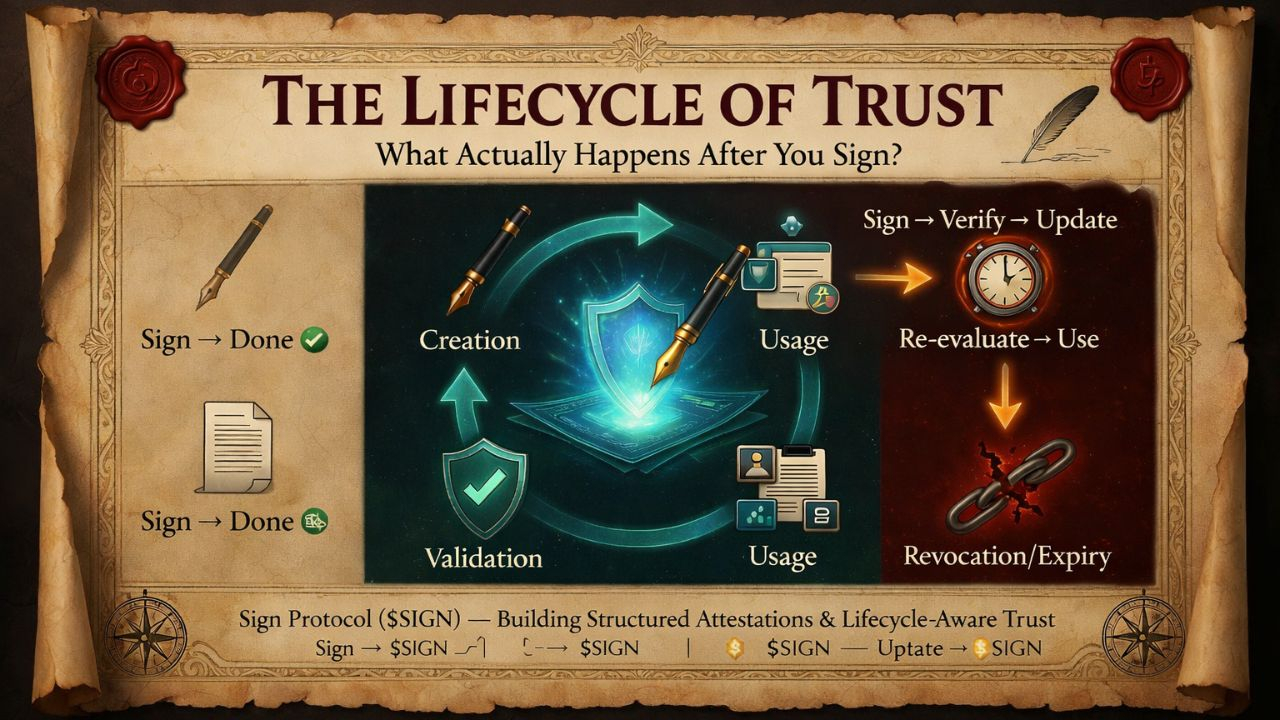
Most people think signing something on-chain is the end of the process.
Honestly? I used to think that too.
But it's not.
It’s actually the beginning of a lifecycle that most systems don’t fully handle.
When I started digging deeper into @SignOfficial and $SIGN , I realized something important:
👉 A signature is just a moment
👉 Trust is what happens after
Let me walk you through what I mean.
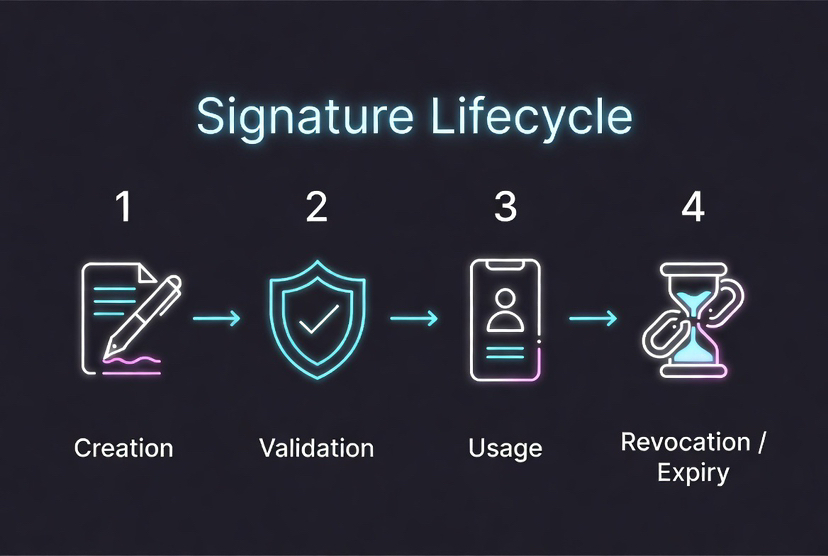
The 4 Stages of a Signature Lifecycle
1. Creation
You sign or attest to something. Simple enough.
This is where most platforms stop thinking. They hand you a receipt and say "done." But that's like building a house and never checking if anyone can live in it.
2. Validation
Here's the question that matters: who actually verifies it?
Is it publicly verifiable?
Does it follow a schema that anyone can understand?
Can others trust the issuer?
Without this step, signatures are just claims. Nice words with no real weight.
3. Usage
This is where things get real. Where the rubber meets the road.
Is the attestation actually being used in apps?
Does it influence decisions?
Is it being queried or referenced anywhere?
If no one uses it, honestly? It has no real value. It's just a digital artifact collecting dust.
4. Revocation / Expiry
This is the most ignored part. And it drives me a little crazy.
Can it be invalidated?
Does it expire?
Is that change visible on-chain?
Without this, outdated or compromised data just sits there. Forever. Pretending to be valid when it shouldn't be.
Where Sign Protocol Fits?
What makes @SignOfficial interesting to me is that it doesn't just focus on creation.
Most projects stop at "you signed it, great." Sign actually builds around:
structured attestations
verifiability
lifecycle awareness
That's where $SIGN becomes more than just a token. It sits inside a system that treats trust as something dynamic not a static stamp that lasts forever.
The Problem Most Systems Have
Here's how most systems treat trust:
Sign 👉 Done 👌

That's it one step and finished.
But reality? Reality looks more like this:
Sign 👉 Verify 👉 Use 👉 Re-evaluate 👉 Update

That gap between the simple version and the real version is where mistakes happen. Where exploits slip through and misunderstandings turn into real problems.
I've seen it happen, maybe you have too.
My Final Thought
We don't really have a shortage of signatures in Web3.
What we have is a shortage of well managed trust over time.
And honestly? That's a much harder problem to solve. It's not flashy, it doesn't trend but it matters.
👉 Your Turn:
Do you think most on-chain signatures today are actually maintained or just forgotten after creation? Have you ever run into a situation where an old, outdated signature caused confusion or a problem?
Drop your take below. Curious how others see this. 👇
#SignDigitalSovereignInfra $SIGN
