
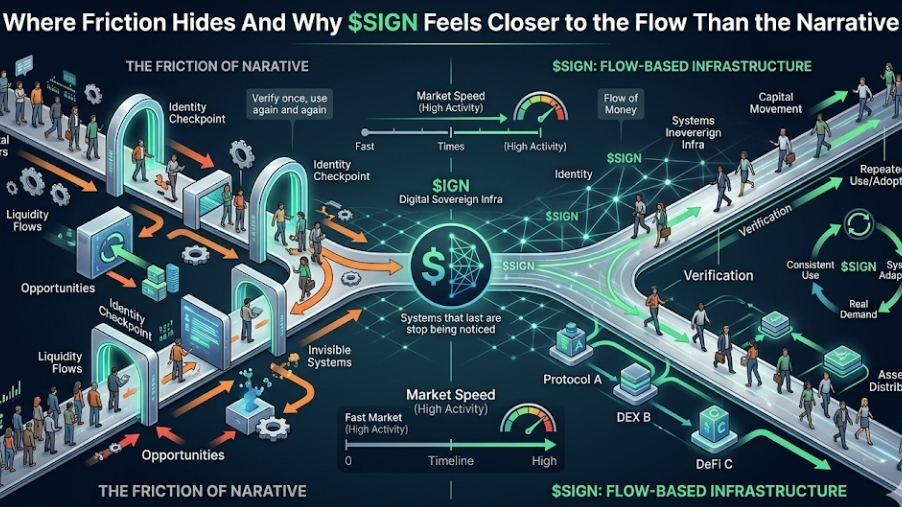

I have been thinking a lot about what happens when things start moving in the crypto world. Not when everything is quiet. When a lot of people are using it. When a lot of money is being moved around ,people are competing to get access when the system is being pushed to its limits. That is when we usually see problems.. That is what I keep thinking about when I look at SIGN.
On the surface SIGN seems simple. You verify your identity once. Then you can use it again and again. This makes it easier to move money. I have learned to be careful when things seem too simple. What matters is not how easy something sounds. If it really makes things easier in real life. In most systems the hard work does not just disappear. It just moves to a place. The question is if SIGN is really making things easier or just hiding the problems.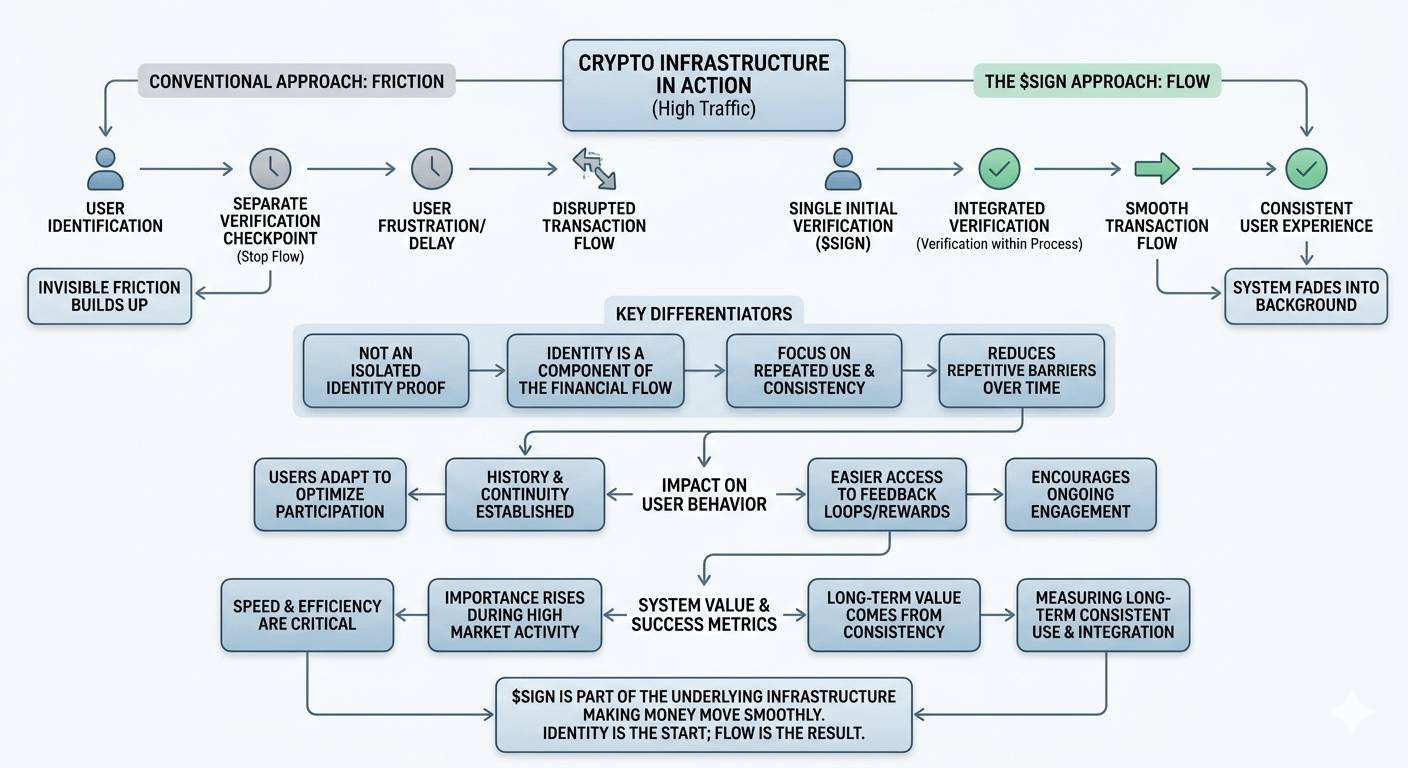
What caught my attention is how closely SIGN is connected to the money moving around. Not who you are but who you are when you are using your money. That is an important part of the system. It is also where people get frustrated if things are slow. People can deal with things when they are learning but they do not like it when they are trying to get their money. That is what really affects how people behave.
Most systems I have seen make you verify your identity before you can do anything. It is like a checkpoint that you have to pass before you can get to what you want. In real life those checkpoints add up. Each one is small. Together they slow everything down. What SIGN seems to be doing is making verification a part of the process not a separate step. It is not something that interrupts what you are doing. Something that is already taken care of.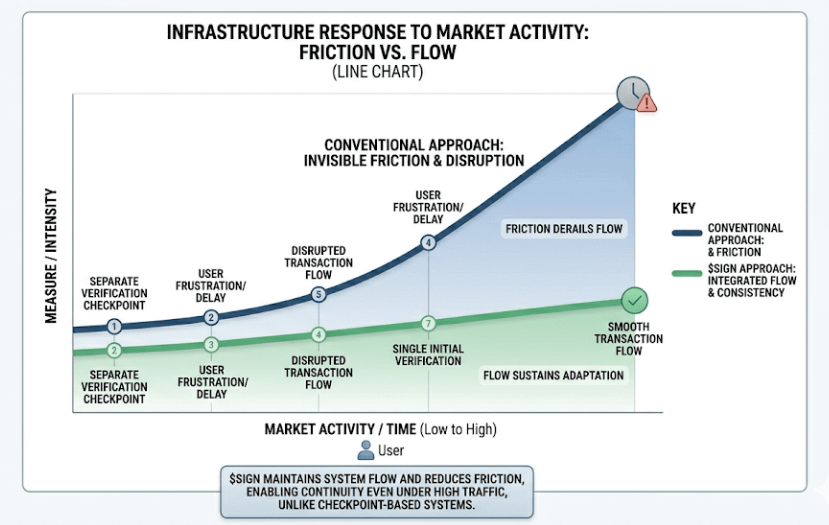
That is a difference. Because when verification is not interrupting the flow of money the system works differently. Money moves faster. More people get involved. At the same time the people who are already using the system get even better at it. They can move their money around easily. That is not a thing I think. It is how markets work. Systems do not usually change how people behave they just make it easier for them to do what they already do.
I do not see that as a problem. I see it as SIGN working the way it is supposed to. If SIGN is making it easier for people to use their identity to move their money then it is also making it easier for people to keep using the system. That is where the real benefit comes in. Not from using it once but from using it again and again without any problems.
What I think is more important is if SIGN can be used in situations. If your identity only works in one place it is not very useful. If it can be used in many different places then it becomes more powerful. It is not a way to prove who you are but a way to show that you are consistent.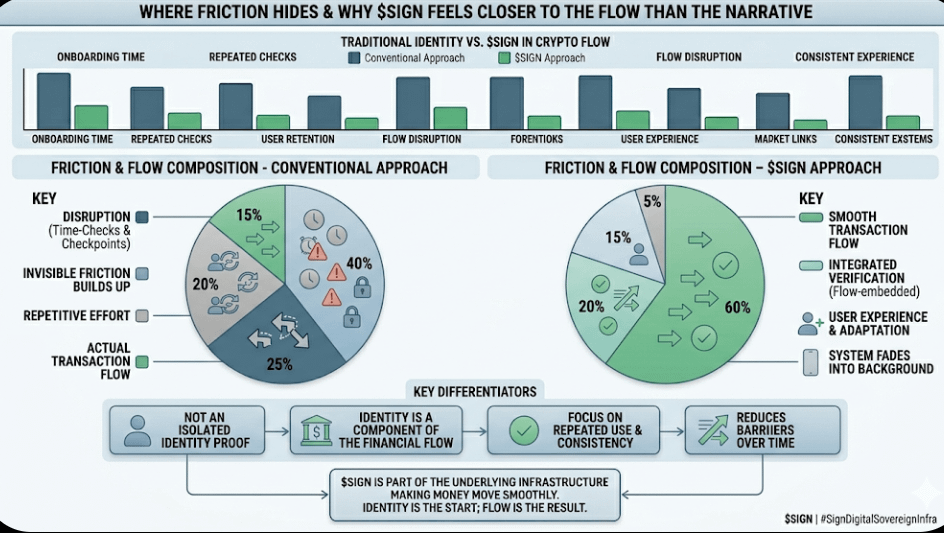
That changes how money moves around. It creates a sense of continuity. Of starting from scratch every time the system can look at what happened before. That makes it harder to understand. It also makes it more realistic. Because once the system can look at history people start to adapt. They do not just use the system they try to make it work better for them.
We have seen this before. When systems give away money or rewards they create a feedback loop. The difference here is that SIGN is making it easier to get into that loop. That means more people can use it. It also means the system has to be careful to make sure people are not just trying to game the system. It has to be able to tell the difference between users and people who are just trying to take advantage of it. That is not easy.
Timing is also important. When the market is slow systems like SIGN seem optional. They are nice to have but not necessary. When the market is moving fast and new money is coming in the system has to be able to keep up. That is when infrastructure either works or it does not. Speed is what matters in those moments. If the system is slow it gets left behind.
If I were trying to figure out if SIGN really works I would not just look at how big it's. I would look at if people are using it consistently over time. Are people using their identity in situations? Is it getting easier for them to use the system? Is the system fading into the background. Is it still asking for attention? Those are the signs that show if SIGN is really working.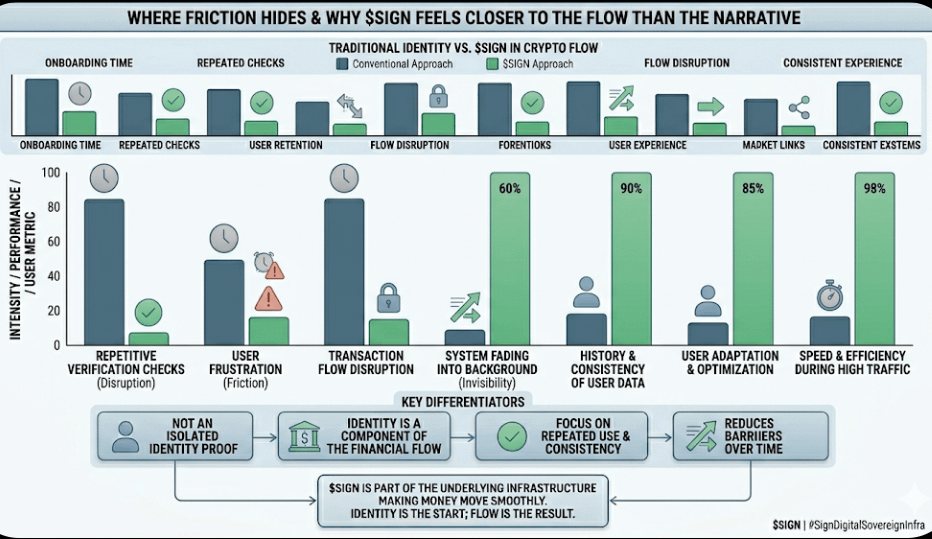
What stands out to me is that SIGN is not trying to be the center of attention. It is just trying to make the process work smoothly. Verification, distribution, coordination. Those are the things that SIGN is focusing on. It is not trying to change the way we think about identity it is just trying to make it work better. That is a thing and I think it is on purpose.
At the time SIGN depends on people using it. It does not create demand on its own it just makes it easier for people to do what they already want to do. That makes it easy to overlook. Also hard to replace once it is in place. Like infrastructure its value comes from how much it is used, not from how much attention it gets.
What I keep thinking about is how good systems are usually invisible. Not because they do not have an impact. Because they make things work so smoothly that we do not even notice them. If SIGN works the way it is supposed to people will not think about verification. They will just move their money around without any problems.
That is where the real change happens. Not seeing SIGN as an identity solution but as part of the underlying system that makes money move around. Identity is the start. What matters is what happens after that.
Because in the end the systems that last are not the ones that people talk about the most. They are the ones that people stop noticing.
@SignOfficial #SignDigitalSovereignInfra $SIGN
