
I was thinking about something while using a few different dApps recently and it’s one of those small things that becomes obvious only after a while Most systems in Web3 give you results but they rarely explain them. You qualify or you don’t you’re trusted or you’re not you get access or you don’t. But the reasoning behind those decisions is usually hidden somewhere in the background. You’re just expected to accept the outcome and move on.
That’s where Sign Network started to feel interesting from a slightly different perspective. Not just as a protocol for attestations, but as a way to make systems more explainable. Because right now, even when decisions are based on real logic, that logic isn’t expressed in a form that users can easily verify. It stays internal to the platform, which creates a gap between what the system knows and what the user understands.
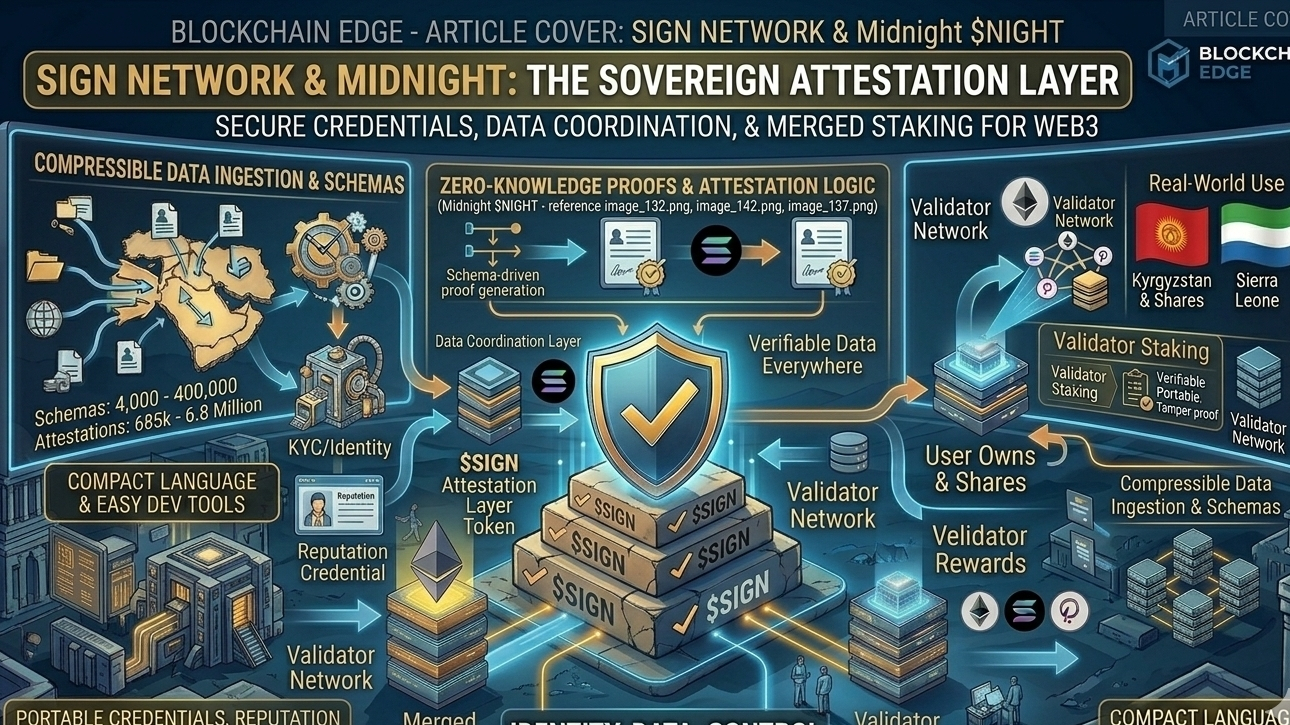
With Sign, those decisions can be turned into structured claims. Instead of simply outputting a result, a system can issue an attestation that defines exactly what was verified and under what conditions. So rather than seeing “eligible,” you could see a verifiable statement that explains why that eligibility exists. That shift from hidden logic to explicit claims changes how users interact with systems, because it replaces blind trust with verifiable understanding.
What makes this more powerful is that these claims don’t just stay inside one platform. They can be reused across different systems. That means the explanation doesn’t disappear once you leave. It becomes part of a broader context that other platforms can also understand. And that starts to reduce the repetition we see today, where every system rebuilds its own logic and explanations from scratch.
This ties directly into the idea of Digital Sovereign Infrastructure. It’s not just about controlling your data, but about owning the explanations tied to that data. The verified reasons behind your status, your eligibility, your participation — all of that becomes something you can carry with you. And that makes interactions feel more consistent, because you’re not constantly re-entering systems that don’t know anything about your past.
The more I think about it, a lot of friction in Web3 comes from this lack of clarity. Not because systems are wrong, but because they don’t communicate their logic in a way that can be verified externally. Sign is basically trying to turn those hidden decisions into something structured and provable. And once that layer exists, systems don’t just give results anymore — they give reasons that can be trusted.