

Sign is moving into an area most crypto projects tend to avoid—the part where money actually needs to function in real-world systems.
Right now, central banks are testing digital currencies, but they keep facing the same challenge. They want privacy, control, and stability. Meanwhile, global markets operate on openness, liquidity, and speed. These two environments don’t naturally align. One is closed and regulated, the other is open and fluid.
What Sign is building is an attempt to solve that disconnect.
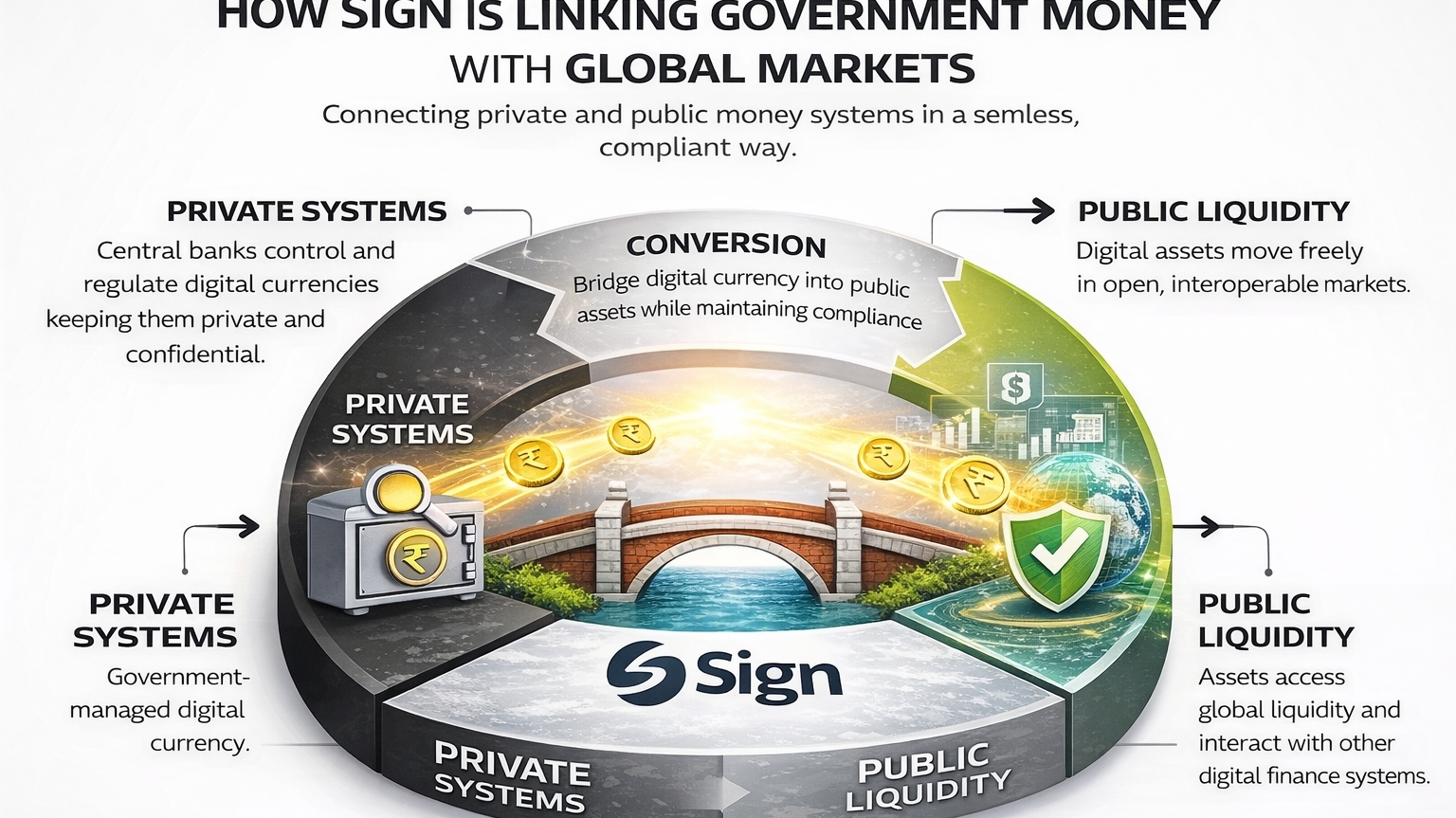
Instead of forcing everything into one model, Sign creates two parallel paths for money. One path is private and controlled—similar to a government-managed system where transactions remain confidential and strictly regulated. The second path is public, where assets can move freely across global networks, interact with other financial systems, and access liquidity.
The real innovation comes from how these two paths are connected.
Sign creates a bridge between them. It allows money to move from a private environment into a public one without violating the rules of either side. For example, someone could receive funds in a government-issued digital currency that stays secure and compliant. But when they want to use it globally—like sending it abroad or spending it in open markets—they can convert it into a public digital asset and move it freely.
What stands out is how this transition is handled. It’s not slow or uncertain. The process is designed to be instant, controlled, and fully verifiable. There’s no ambiguity about where funds go, and every movement is recorded clearly.
This matters more than it seems.
Because the main issue with current digital currency experiments isn’t just technology—it’s trust and usability. Governments are cautious about open systems, while markets hesitate to rely on closed ones. Sign is trying to make both environments functional without compromising their core requirements.
And it goes beyond just transferring value.
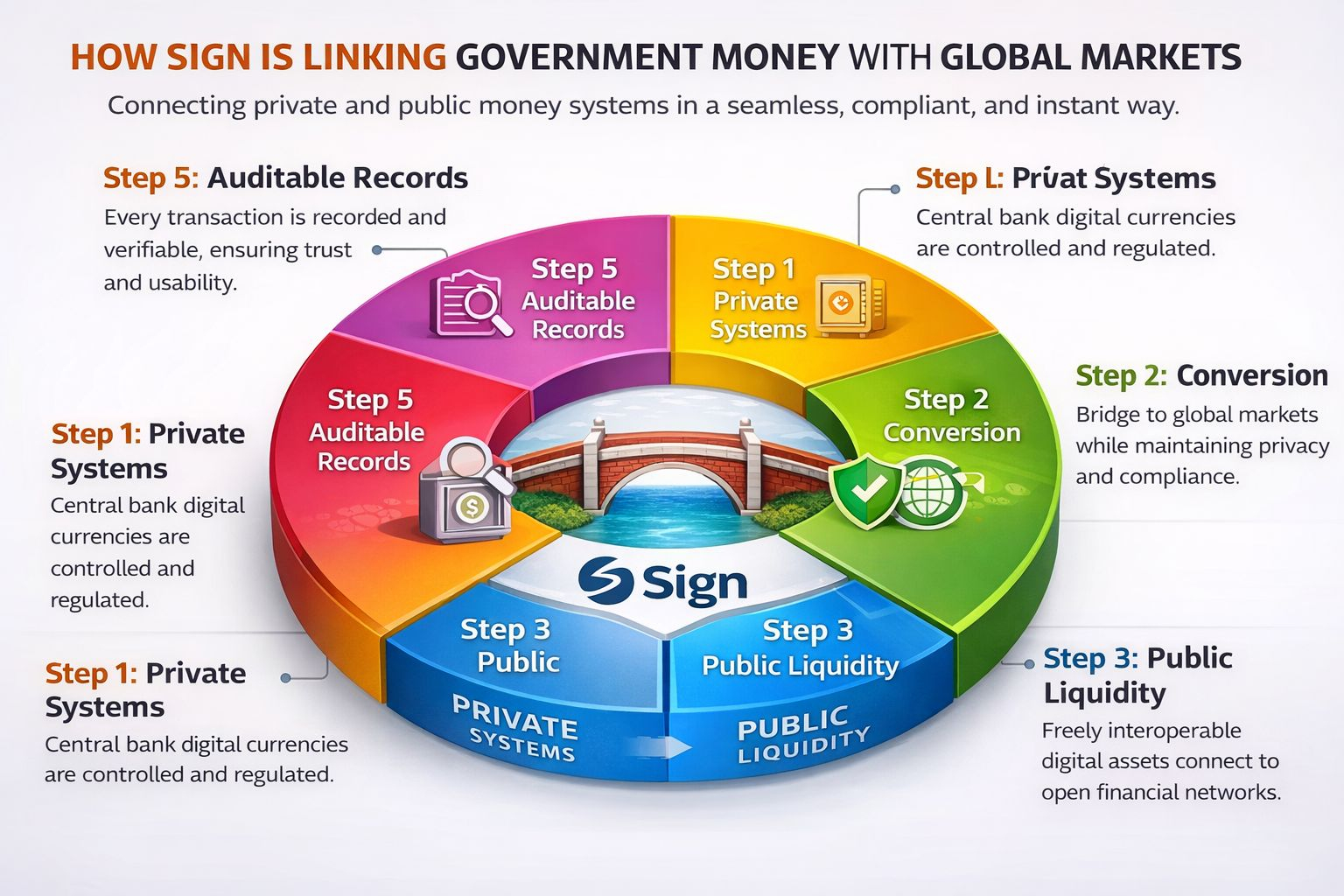
Sign also defines how this system operates in real scenarios. Take a government subsidy as an example. The system first verifies identity and eligibility. Then it determines how the funds should be delivered—whether through a private channel or a public one, depending on the use case. The distribution happens automatically, with every step recorded and traceable.
There’s no need for manual reconciliation. No gaps in data.
At this point, Sign starts to look less like a typical crypto project and more like foundational infrastructure.
They’re not just creating applications—they’re building the underlying rails that financial systems can run on.
From an investment perspective, this shift is important.
If central banks and governments scale digital currencies—and it’s likely they will—they’ll need systems that connect isolated national currencies with global markets. Without that connection, each country risks ending up with its own closed digital system.
Sign is positioning itself directly within that gap.
Private systems on one side. Public liquidity on the other. Sign acting as the connector in between.
It’s not designed to be flashy or trend-driven. But if it succeeds, it becomes part of the core infrastructure that defines how money moves in the future.
And that represents a very different kind of opportunity.