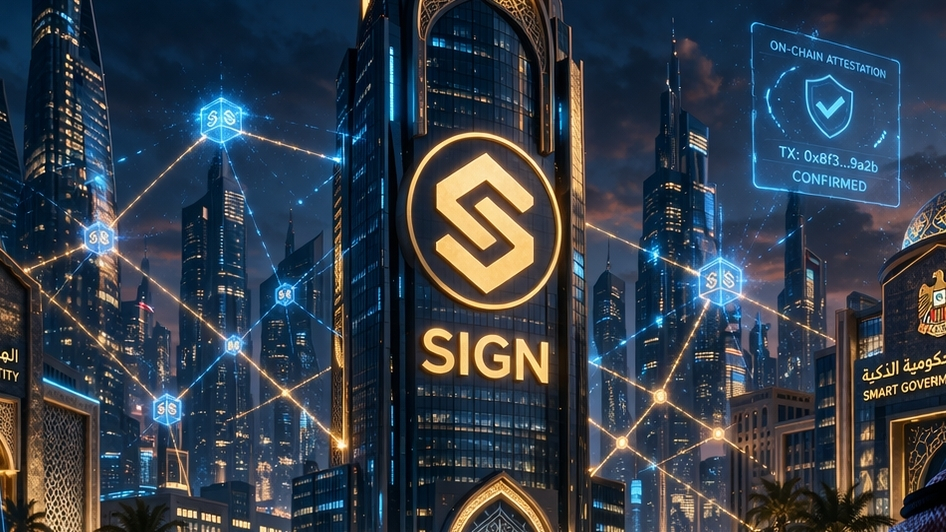
When analyzing infrastructure projects in crypto, very few are actually building for real-world systems. That’s where $SIGN stands out. Instead of focusing only on DeFi or speculation, @SignOfficial fficial is developing a foundational layer for digital identity, verifiable credentials, and transparent token distribution.
Through Sign Protocol, the project enables trustless attestations across multiple chains, while TokenTable introduces programmable and auditable token distribution. This combination positions SIGN as more than just a utility token — it becomes a coordination layer for economies.
What makes this especially relevant for the Middle East is the region’s rapid push toward digital transformation. Governments are actively exploring digital identity frameworks, on-chain records, and transparent economic systems. SIGN’s vision of “digital sovereign infrastructure” aligns directly with these needs, offering plug-and-play systems for identity, governance, and even financial coordination at a national scale.
The roadmap also reinforces this direction: expansion into cross-chain infrastructure, development of a community-driven super app, and long-term deployment of sovereign-grade blockchain systems. These are not short-term features — they reflect a strategy aimed at embedding blockchain into the core of modern economies.
In a market filled with short-lived narratives, $SIGN is quietly building long-term infrastructure. If execution continues, it has the potential to become a backbone for digital economies, especially in regions prioritizing sovereignty and technological independence.