
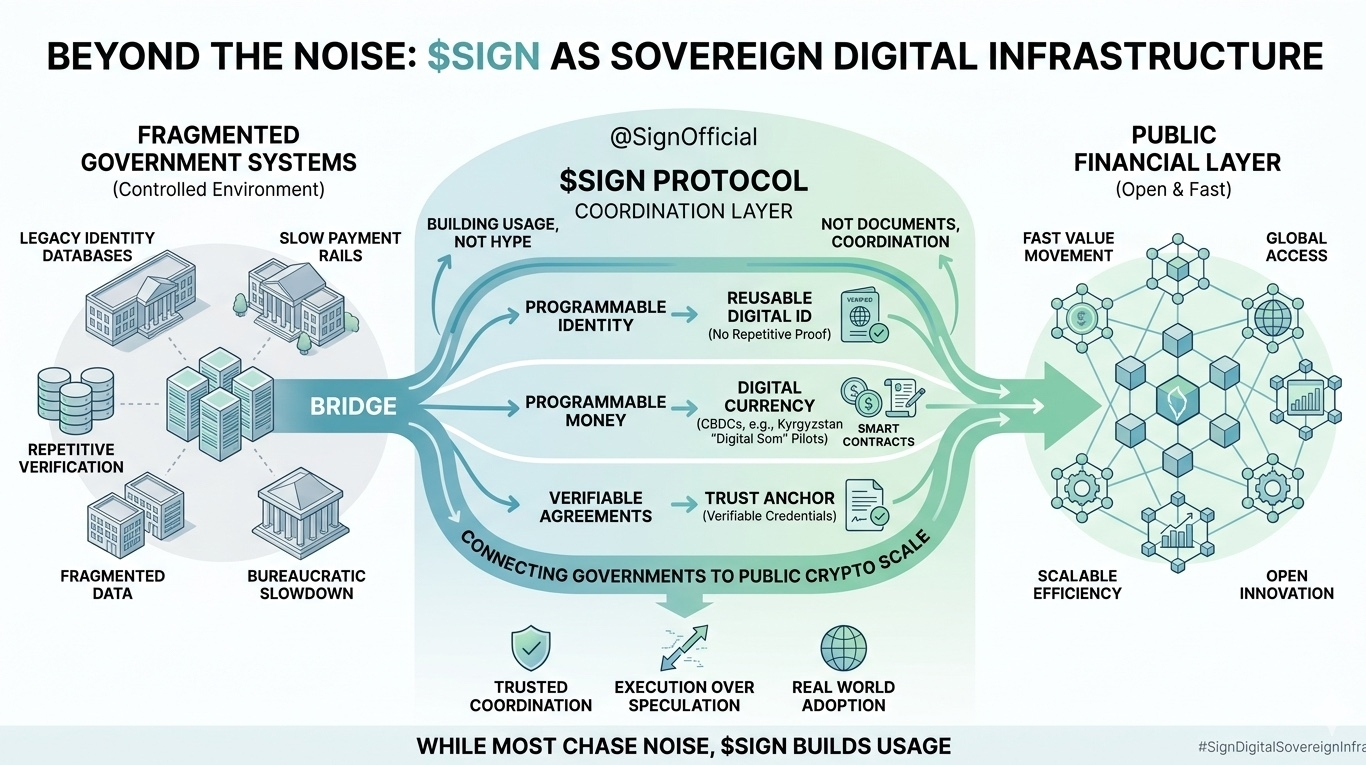
Most people in crypto are still chasing noise.
New tokens. Fast pumps. Whatever trend is getting attention this week.
But every now and then, something shows up that doesn’t really care about attention at all.
That’s where @SignOfficial and $SIGN start to feel… different.
At first glance, it’s easy to misunderstand it.
I did too.
It looked like another “put documents on-chain” idea. The kind we’ve seen before. Upload, verify, store, done. Nothing special.
But the deeper you look, the less this feels like a document product.
And the more it starts looking like infrastructure.
Not the kind built for traders.
The kind built for systems.
Because the real problem isn’t documents.
It’s coordination.
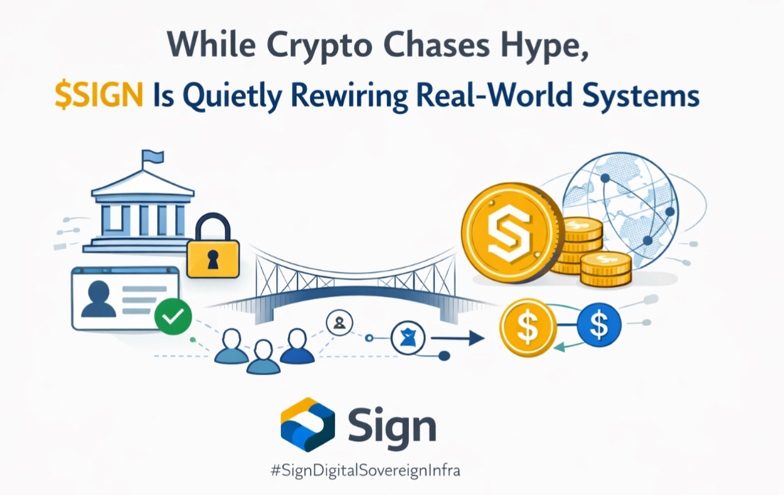
Right now, governments run on fragmented systems. Identity databases that don’t connect. Payment rails that move slowly. Processes that repeat the same verification again and again.
And on the other side, crypto exists as this fast, open layer… but one that governments still don’t fully trust or control.
So everything stays disconnected.
That gap is where $SIGN is operating.
Not replacing either side.
But connecting them.
Think of it as two layers.
A controlled environment where governments can manage identity, compliance, and sensitive data.
And a public-facing financial layer where value can actually move, interact, and scale globally.
That bridge is the real product.
And it’s already starting to show up in the real world.
Countries like Kyrgyzstan are actively working toward digital currency systems like the “digital som,” with legal frameworks already in place and pilot programs underway. (Cointelegraph)
That tells you something important.
This isn’t theory anymore.
It’s direction.
And if you zoom out, the focus becomes clear.
Identity.
And money.
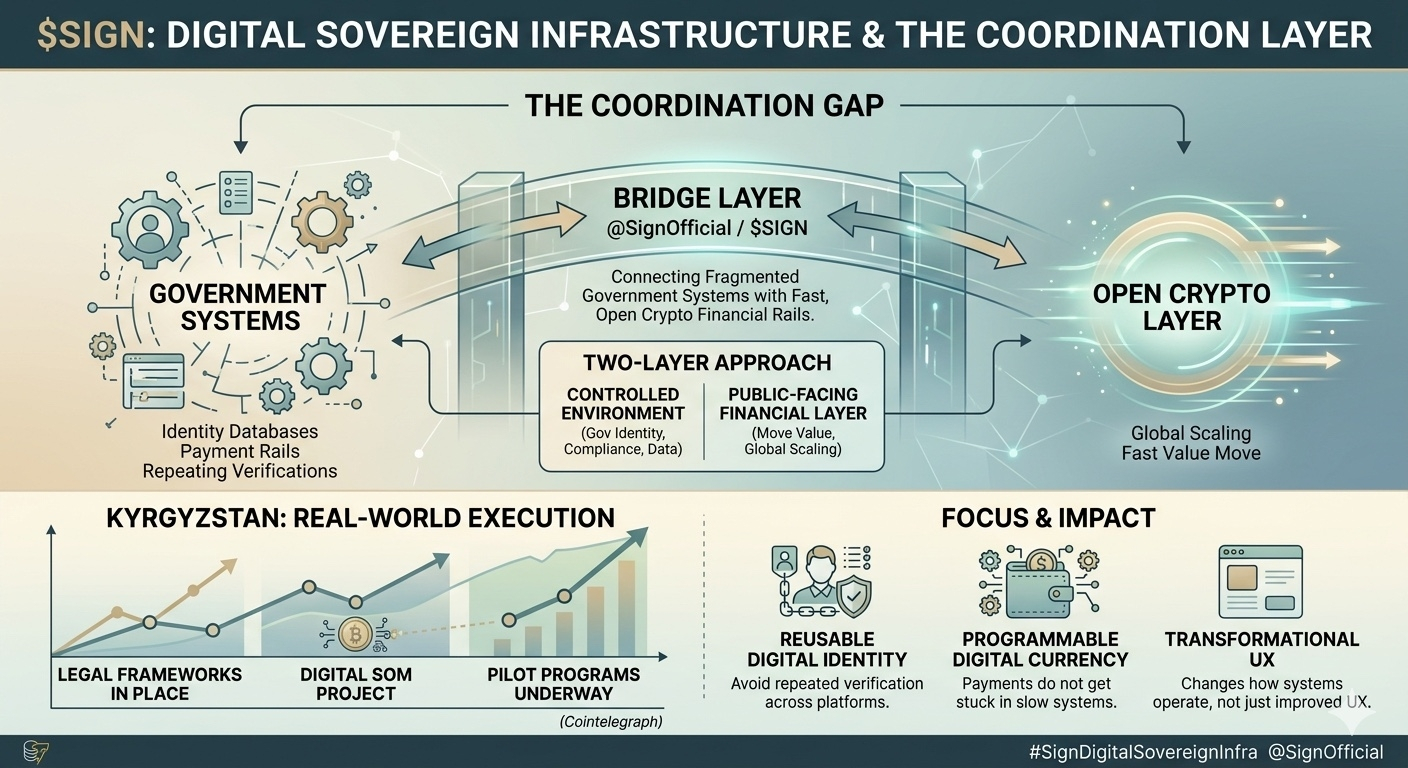
A reusable digital identity means people don’t have to keep proving who they are across every platform.
A programmable digital currency means payments don’t get stuck in slow, outdated systems.
Put those together, and you don’t just improve UX.
You change how systems operate.
That’s what makes this interesting.
Not hype.
Not speculation.
Execution.
Of course, none of this is easy.
Government adoption is slow. Regulations shift. Priorities change.
Even with working pilots, scaling across countries is a completely different challenge.
So yeah, there’s risk here.
But there’s also signal.
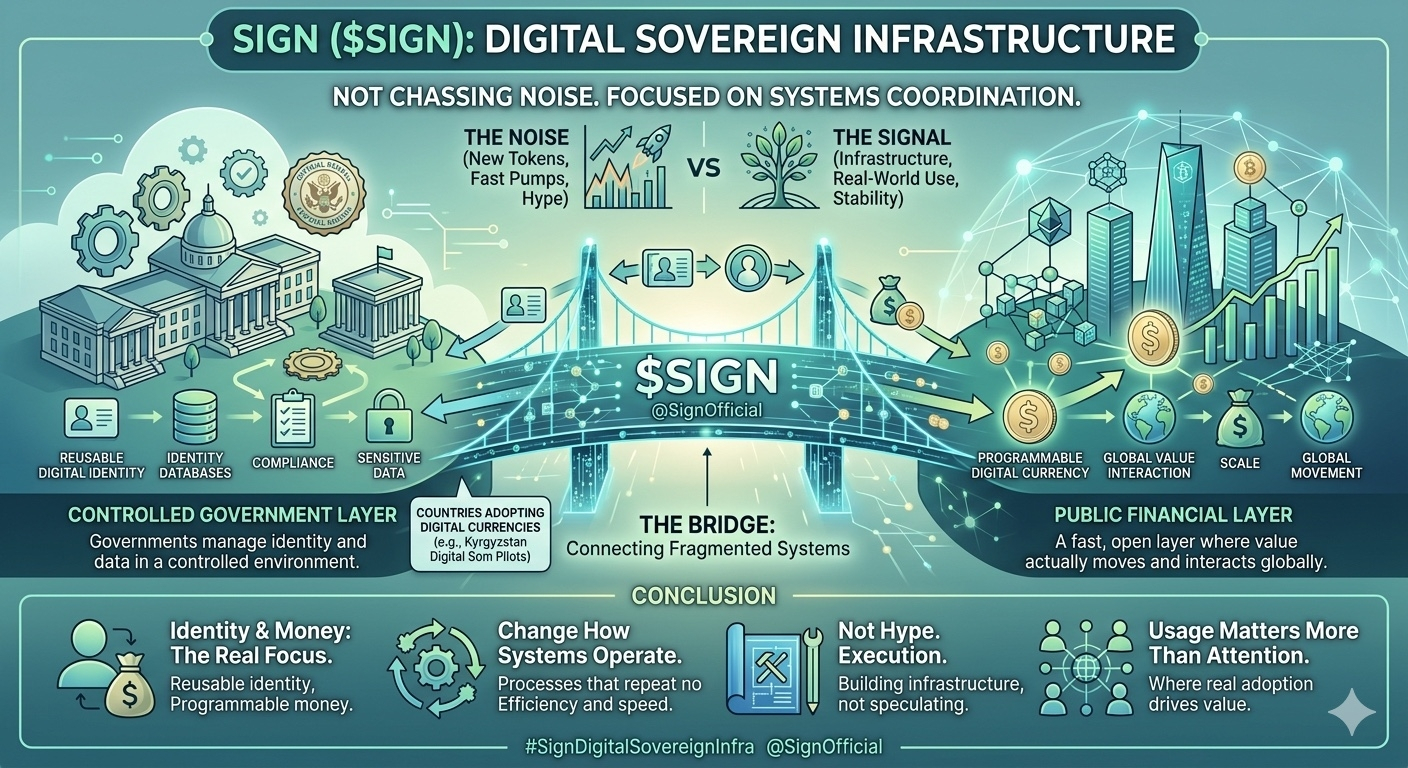
Because while most projects are still competing for attention…
@SignOfficial is positioning $SIGN where attention doesn’t matter as much.
Where usage does.
And that’s a very different kind of bet.