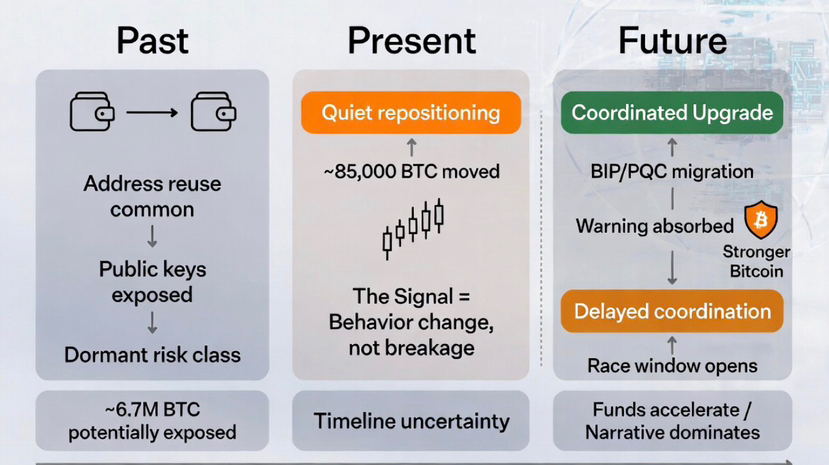
I’ve been seeing the “quantum threat” narrative resurface again, and honestly, it feels less like a sudden risk and more like something the market is slowly learning how to price.
Because if you look closely, nothing actually broke.
No wallet got hacked.
No cryptography failed.
No attacker showed up with a quantum machine.
But still price reacted.
That’s the interesting part.
The number everyone is focusing on is big:
~6.7 million BTC, potentially exposed if quantum computing becomes practical.
But the risk isn’t evenly distributed.
It’s concentrated.
Mostly in older wallets, especially ones where public keys have already been revealed. Early Bitcoin didn’t operate with today’s caution. Address reuse was common, and once a public key is exposed, the theoretical attack surface changes.
That’s why this isn’t really about Bitcoin being vulnerable.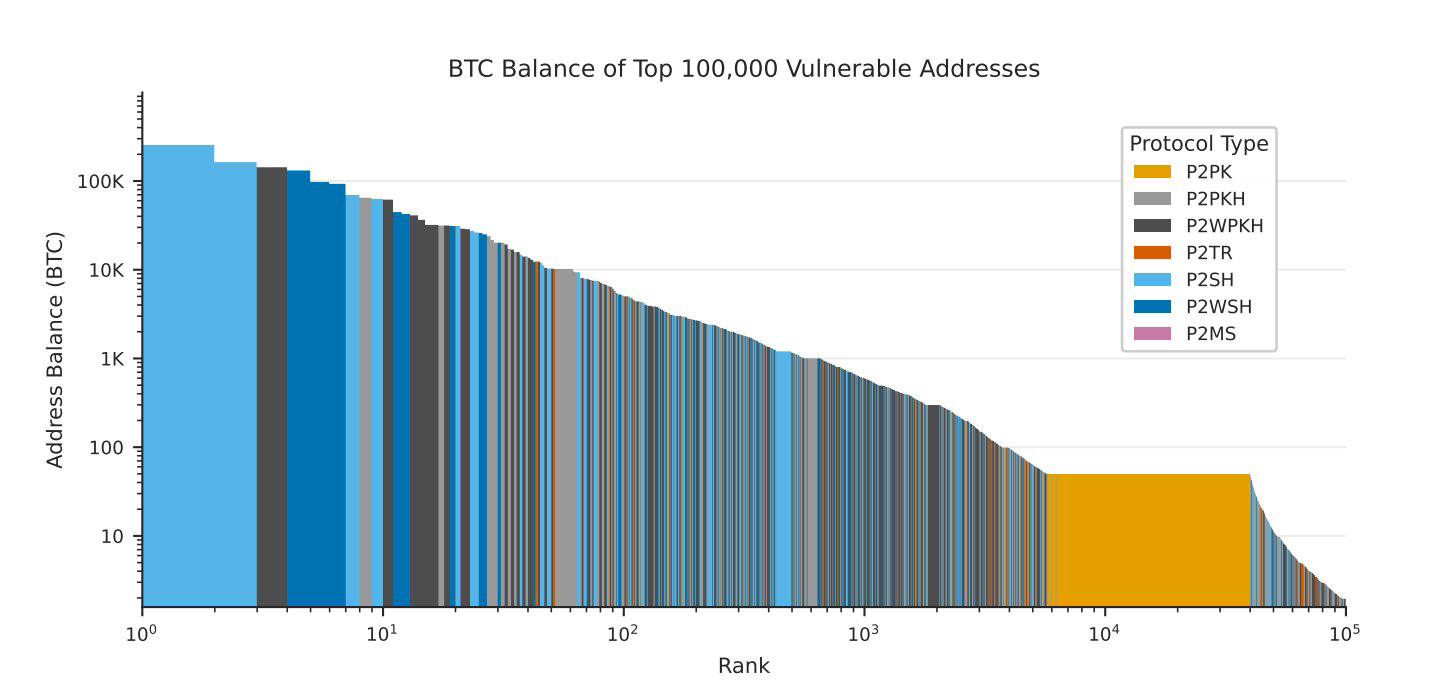
👉 It’s about old Bitcoin becoming a different risk class.
And markets don’t price nuance well.
They price fear.
The movement of ~85,000 BTC from older wallets over the past year is what makes this more than just theory.
Not because it proves quantum is close.
But because behavior is starting to shift.
The wallets that usually don’t move are moving.
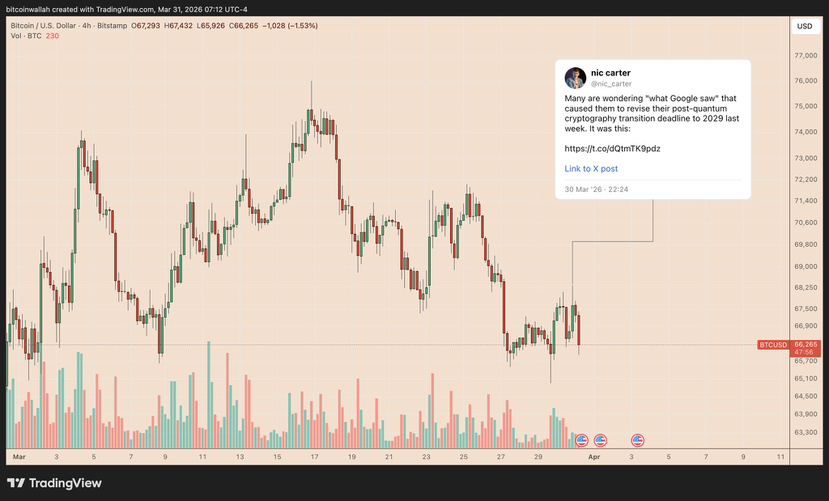 That’s the signal.
Not the paper. Not the estimates.
Early holders aren’t panicking.
It looks more like positioning.
If there’s even a small probability that exposed keys become a problem later, the logical move is simple:
Move funds before it matters.
Quietly. Gradually.
Without waiting for confirmation.
The real shift here isn’t technological.
It’s how the timeline is being perceived.
For years, the assumption was:
quantum risk is a far future problem.
Now it’s becoming:
quantum risk is a timing uncertainty.
And uncertainty is harder for markets to ignore.
There’s also something else sitting underneath this.
Some of these reports come from teams connected to quantum startups.
That doesn’t make the research invalid.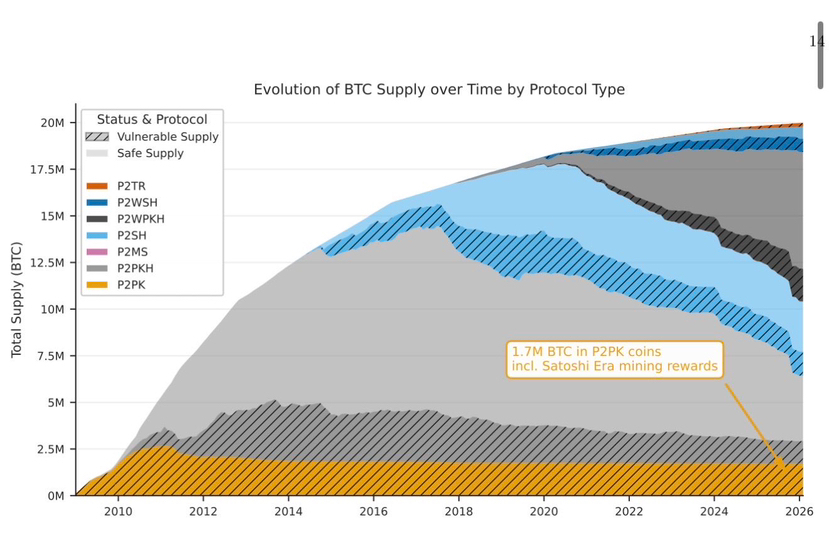
But it does shape how aggressively the narrative spreads.
“Quantum is closer than expected” isn’t just analysis.
It’s also positioning.
And markets react to that before fully separating signal from incentive.
The part most people miss is this:
Bitcoin has never been static.
It has upgraded before. Quietly, but when needed.
The real question isn’t whether quantum can break Bitcoin.
It’s whether Bitcoin upgrades before quantum becomes practical.
Because the risk isn’t instant failure.
It’s a window.
If breaking keys ever becomes possible within a meaningful timeframe, security stops being absolute.
It becomes a race.
And once something becomes a race, behavior changes fast.
Funds move faster.
Developers act faster.
Markets react faster.
Right now, we’re not in that window.
We’re in the phase where research is improving, assumptions are shifting, and narratives are moving ahead of reality.
That’s why price reacts, but doesn’t collapse.
The real vulnerability isn’t $450B in Bitcoin.
It’s coordination.
Can the system upgrade in time, before timing becomes the risk?
That’s not a cryptography problem.
It’s a social one.
If Bitcoin upgrades in time, this becomes a warning.
If it doesn’t, it becomes a race.
And markets don’t wait for clarity when timing itself becomes the risk.
#GoogleStudyOnCryptoSecurityChallenges #bitcoin #crypto