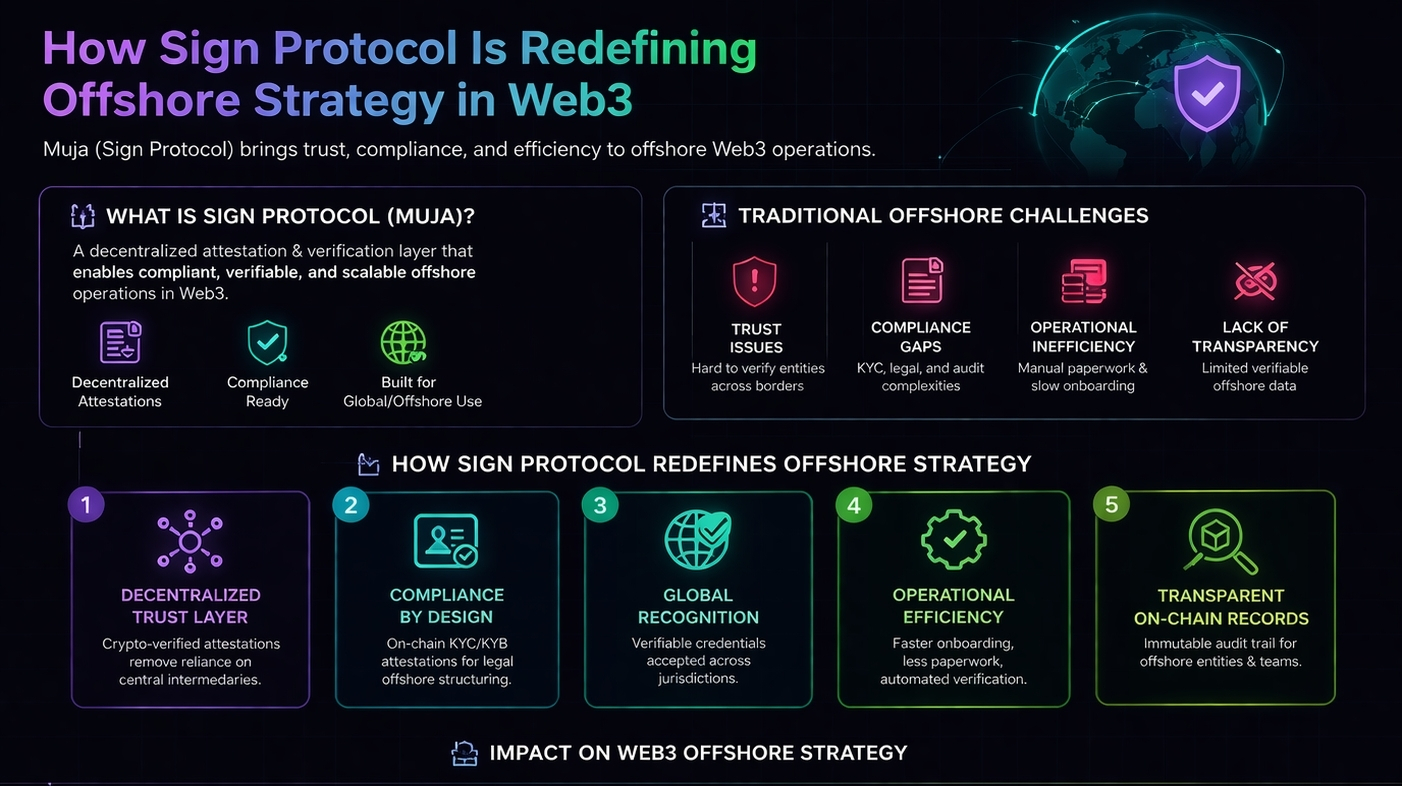

In the early stages of the crypto industry, most projects were primarily focused on finding locations with low taxes, minimal regulations, and fast incorporation processes. That approach worked when the industry was largely speculative and experimental. However, as Web3 continues to mature, the requirements have become more complex, especially for infrastructure-level projects like @SignOfficial
Sign Protocol operates in a fundamentally different category compared to many traditional crypto projects. It is not just about tokens or trading; it is about building a system of verifiable attestations that can represent identity, credentials, and trust across digital and real-world environments. Because of this, choosing the right offshore jurisdiction is not simply a financial decision. It becomes a strategic move that directly impacts how the protocol scales, how it integrates with institutions, and how much trust it can establish globally.
One of the key reasons jurisdiction matters so much for (@Sign Protocol) is the nature of the data it deals with. Attestations can represent sensitive and high-value information, such as identity verification, educational qualifications, financial eligibility, or governance participation in decentralized systems. When this kind of data is involved, the legal environment behind the entity supporting the protocol becomes extremely important. It must offer clarity on digital asset regulations, recognition of data integrity, and compliance standards that align with international expectations.
The Cayman Islands has emerged as one of the most suitable jurisdictions for projects like Sign Protocol, particularly when it comes to building the core structure of the protocol. Its regulatory framework around virtual assets provides a balance between flexibility and oversight, allowing blockchain projects to innovate while still maintaining a clear legal status. For Sign Protocol, this means it can establish a foundation entity responsible for governance, alongside separate entities for development and token-related activities.
This type of structure is especially useful for maintaining decentralization while still complying with global regulations. Cayman also allows for efficient token issuance models, which is important for a utility token like SIGN that may be used within the protocol for validation or participation. The success of companies like Block.one shows how effective this jurisdiction can be for building large-scale blockchain ecosystems.
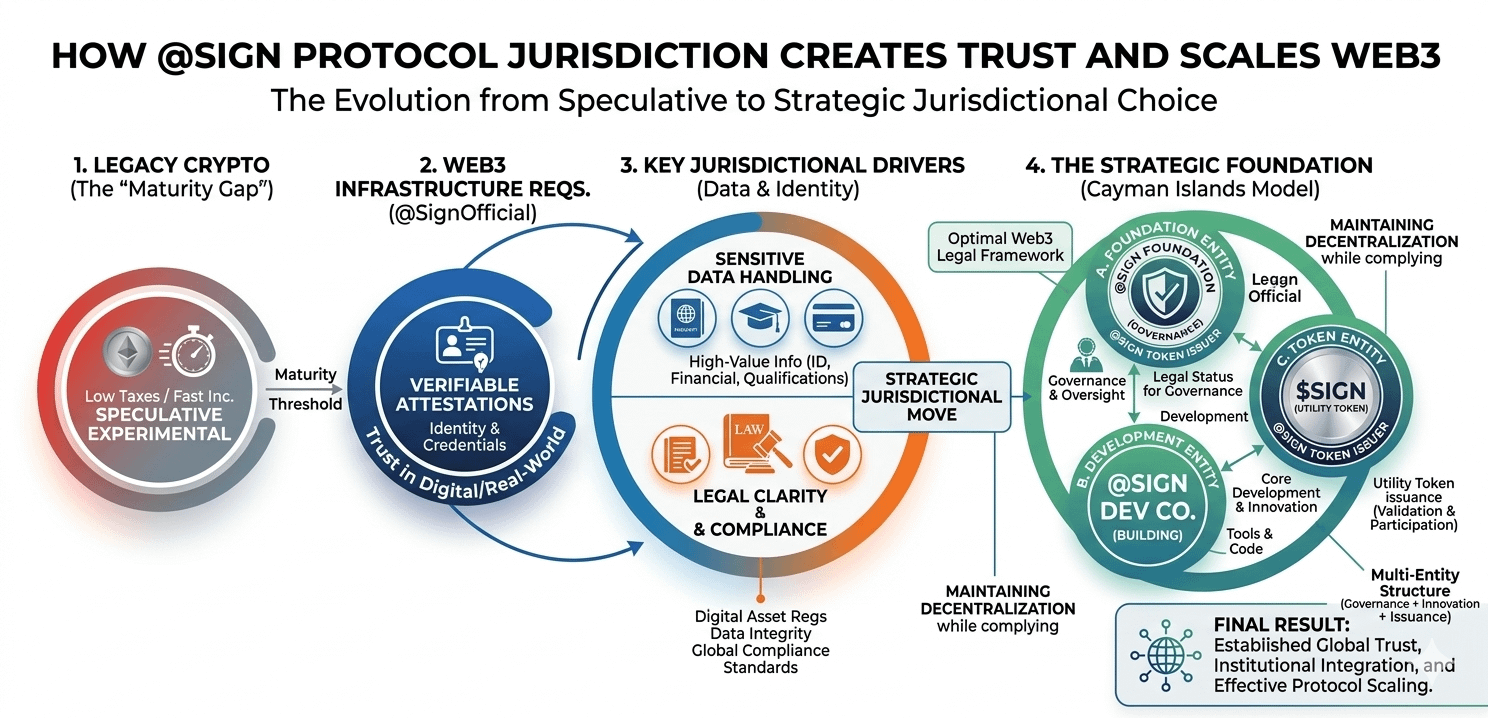
adopting a similar structure, Sign Protocol can ensure both scalability and legal clarity.
While Cayman is ideal for the core protocol, the British Virgin Islands offers advantages in terms of speed and flexibility. Its company registration process is straightforward, making it a strong choice for ecosystem-level activities. For example, if Sign Protocol wants to support developer initiatives, NFT-based credential systems, or experimental applications, BVI provides an efficient environment to do so.
Another factor that makes BVI relevant is its approach to privacy. In a system where identity and attestations play a major role, there needs to be a balance between transparency and confidentiality. BVI allows projects to manage this balance effectively, offering a level of discretion without completely compromising compliance. This flexibility is one of the reasons why companies such as Bitfinex have chosen to operate there. For Sign Protocol, BVI can function as a space for innovation while the core protocol remains anchored in a more structured jurisdiction.
On the other hand, some use cases of Sign Protocol require a higher level of regulatory certainty. This is where the Bermuda becomes particularly relevant. Unlike jurisdictions that focus primarily on flexibility, Bermuda has developed a comprehensive regulatory framework for digital asset businesses. This makes it especially suitable for applications involving compliance, identity verification, and financial integration.
When attestations are used for purposes like KYC or institutional onboarding, operating within a recognized legal framework becomes essential. Bermuda provides that framework while still supporting innovation in the digital asset space. The presence of companies like Circle highlights how this jurisdiction bridges the gap between traditional finance and blockchain technology. For Sign Protocol, this creates opportunities to expand into areas where trust must be both technically and legally enforceable.
Another jurisdiction that aligns well with the goals of Sign Protocol is the Isle of Man. It offers a well-balanced regulatory environment with clear guidelines for virtual asset businesses. This clarity is important for building systems that rely on verification and trust, as it reduces uncertainty and strengthens credibility.
The Isle of Man is particularly suitable for the verification layer of Sign Protocol. Attestations are only meaningful if they can be trusted, and that trust depends on the processes used to create and validate them. By operating in a jurisdiction with strong compliance standards, Sign Protocol can ensure that its verification mechanisms meet both technical and legal expectations. Companies like CoinCorner demonstrate how reliable and compliance-driven operations can thrive in this environment.
For expanding into real-world applications, the Mauritius offers unique advantages. Its regulatory sandbox allows companies to test innovative solutions in a controlled setting, which is particularly useful for a protocol like Sign that aims to bridge digital and physical systems. This environment makes it possible to experiment with use cases such as educational credentials, lending systems, or identity verification programs without facing immediate regulatory pressure.
Mauritius also has a network of international tax agreements, which supports cross-border operations. This is important for a protocol that aims to function globally, as it reduces friction when interacting with different markets. By using Mauritius as a testing ground, Sign Protocol can refine its applications before scaling them to larger and more regulated environments.
As blockchain technology continues to integrate with traditional finance, jurisdictions like Jersey and Guernsey are becoming increasingly important. These regions are known for their strong financial services sectors and their openness to innovation in digital assets. They provide a level of institutional credibility that is difficult to achieve in less regulated environments.
For Sign Protocol, this opens the door to institutional adoption. Attestations can play a critical role in areas such as compliance, asset management, and investment decision-making. By operating within jurisdictions that are trusted by financial institutions, the protocol can position itself as a reliable partner in the evolving financial landscape. The presence of firms like CoinShares shows how blockchain-based solutions can integrate with traditional systems in these regions.
One of the most important insights from this analysis is that a single jurisdiction is rarely sufficient for a project like Sign Protocol. Each region offers different advantages, and the best approach is often to combine them in a way that aligns with the protocol’s structure and goals. For example, Cayman can be used for the foundation and token layer, BVI for ecosystem activities, Bermuda for compliance-focused applications, and Mauritius for testing new use cases. Jersey and Guernsey can then support institutional expansion, while the Isle of Man strengthens the verification infrastructure.
This multi-jurisdictional approach allows Sign Protocol to operate efficiently while maintaining a high level of trust and compliance. It also provides flexibility, enabling the protocol to adapt to changing regulatory environments and market conditions.
Ultimately, the shift in offshore strategy reflects a broader change in the blockchain industry. The focus is moving away from simple cost optimization toward what can be described as trust optimization. Projects are no longer asking where it is cheapest to operate; they are asking where they can build systems that are credible, scalable, and legally recognized.
Sign Protocol represents this shift in a very clear way. By focusing on attestations and verifiable data, it brings a new layer of accountability to Web3. This makes the choice of jurisdiction more important than ever, as it directly influences how that accountability is perceived and enforced.
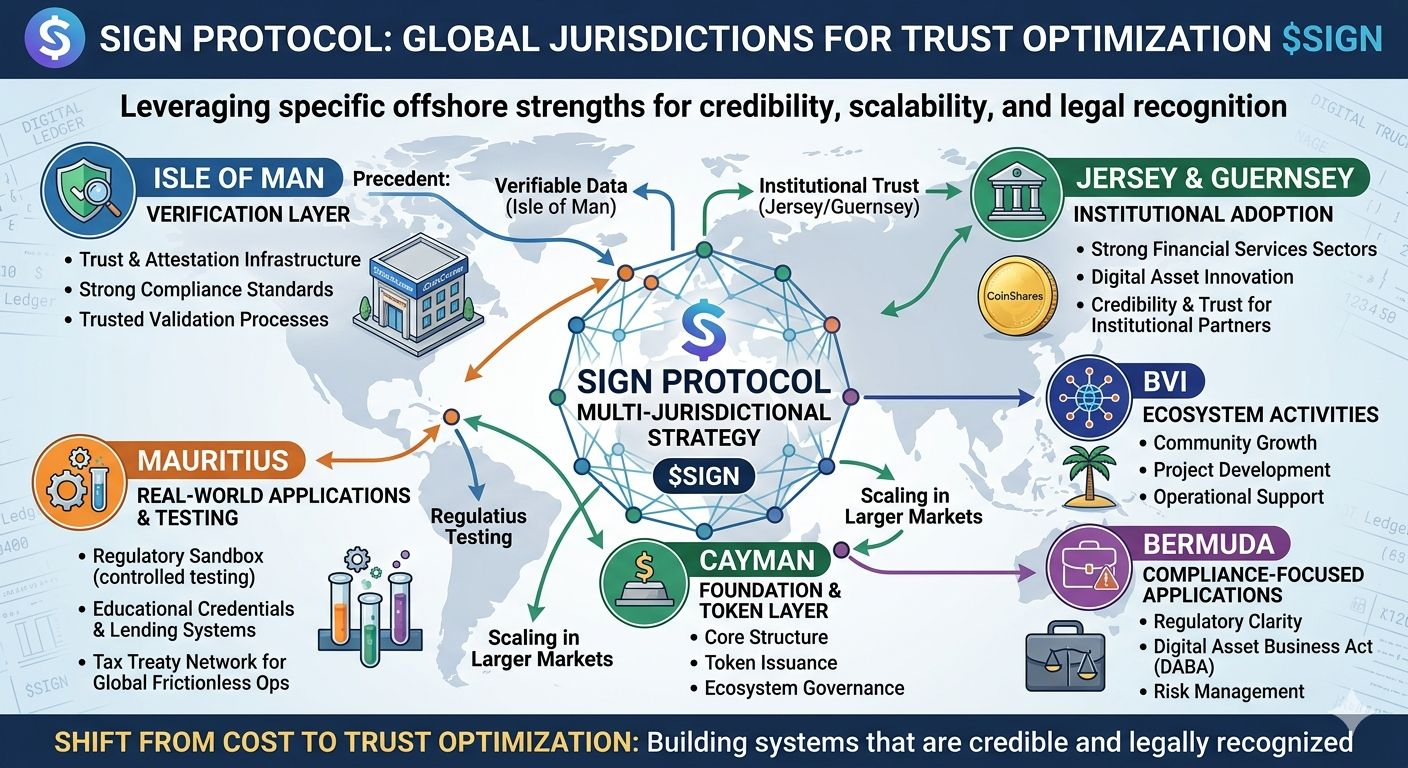
In a world where digital interactions increasingly rely on trust, the legal and regulatory foundations behind a protocol are just as important as the technology itself. For Sign Protocol, choosing the right offshore jurisdictions is not just about enabling growth—it is about ensuring that the trust it creates can be sustained and recognized on a global scale.