


That was really really weird that $STO and $NOM was bold out the whole market and blooming very massively and I honestly saw For years we have talked about bringing real utility to blockchain networks.
When I looked at what Sign Protocol was building with their attestation systems, I felt real optimism.
Moving the burden of proof from physical paper to cryptography is objectively a massive leap forward.
Verifying a claim without exposing sensitive data is exactly what the digital economy needs.
It solves the fundamental friction of global commerce.
You do not need to wait weeks for a compliance officer to stamp a physical document.
You just verify the cryptographic signature on the chain.
It makes perfect sense on paper.
Then I looked closer at the actual use cases being prioritized.
This is where the optimism collides with a very uncomfortable reality.
The core tension of this protocol is not technological.
It is entirely philosophical.
Sign Protocol is pitching a decentralized verification layer to centralized sovereign entities.
We are talking about government subsidy distribution.
We are talking about central bank digital currencies.
These institutions rely entirely on absolute control over their citizens.
They do not want censorship resistance.
They want compliance at scale.
Imagine a scenario where a state uses this infrastructure to distribute relief funds.
The government issues a verifiable credential to eligible citizens.
The citizen presents this credential to a smart contract to claim their funds.
That sounds amazing until you ask who controls the issuer registry.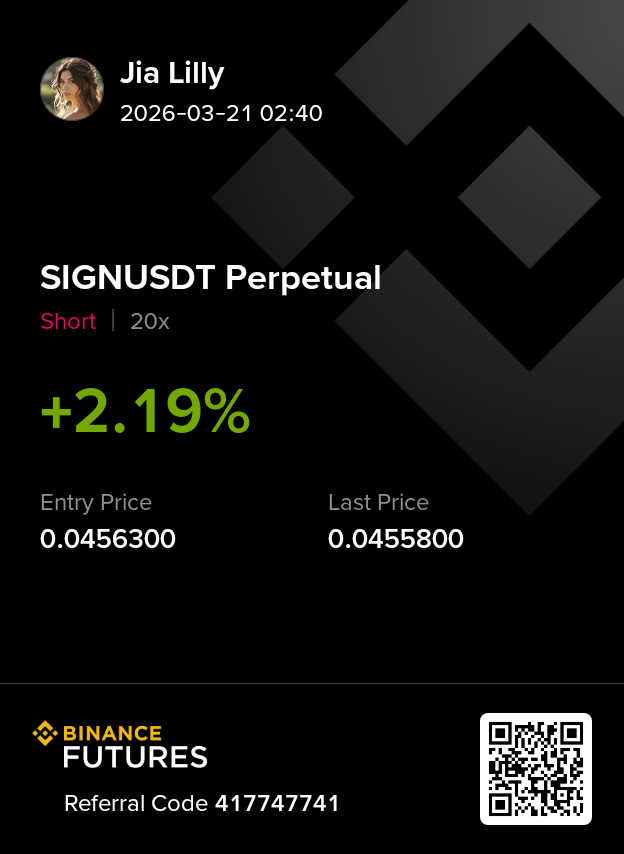
If the state revokes a credential because a citizen protested, the decentralized nature of the chain becomes irrelevant.
The smart contract will flawlessly execute the denial of service.
It will enforce the will of the centralized issuer with cryptographic certainty.
We are using the immutable ledger to permanently record the exclusion lists of sovereign states.
This escalates the danger of state control.
A traditional database can be audited or challenged.
A cryptographic attestation system gives the state unassailable authority.
They can claim the system is impartial while holding the only private keys that actually matter.
This forces a very simple question.
Are we building permissionless infrastructure or acting as efficient IT vendors for nation states?
We are dressing up legacy bureaucratic control in modern cryptographic clothing.
The protocol might be trustless.
The institutions deploying it are absolutely not.
By optimizing state control, we abandon the original cypherpunk premise of this industry.
It is brilliant software engineering deployed in an unforgiving geopolitical landscape.
The technology works exactly as designed.
That might be the most concerning part of all.
You cannot build a neutral tool for entities that operate on the exercise of asymmetric power.
At some point, the architecture must reflect the realities of its largest users.
Will the protocol protect the sovereignty of the individual user or will it become a frictionless enforcement mechanism for the state?
$SIGN #signdigitalsovereigninfra #SignDigitalSovereignInfra @SignOfficial