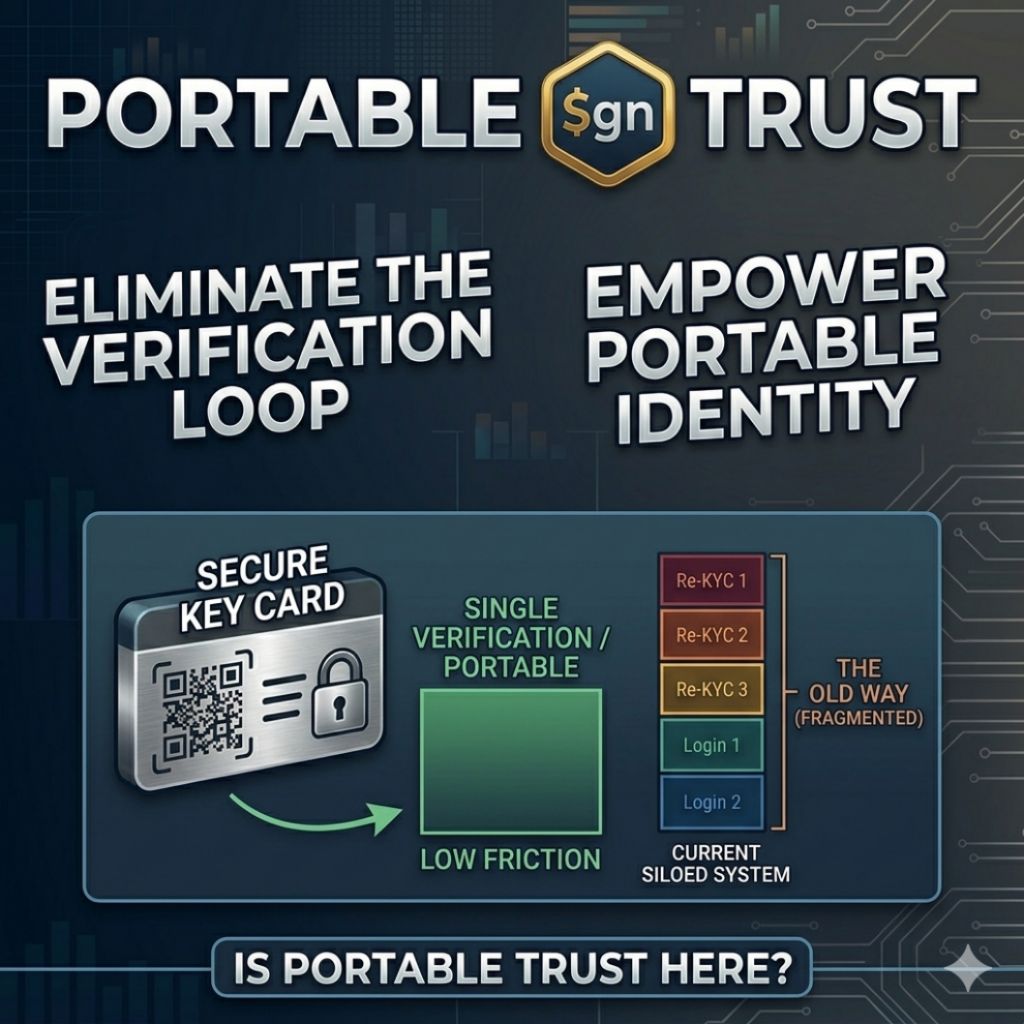

Some days, I swear my hands move before my brain. I’m halfway logged into some new site, wallet ready, signature scribbled—just sleepwalking through the motions. Upload the document, cross your fingers, watch the digital wheel spin. It’s this endless, mechanical dance. No—more like running laps in a hamster wheel. Last week, or maybe it was the week before (time gets blurry at 2 AM), I tried to join some gated crypto drop. I’d already proved my digital worth in one app just days earlier, but none of it mattered. Face a new wall, jump different hoops, same receipts—but the gates still don’t open. Was I moving forward, or just rewinding? Same damn proof, but somehow I was a stranger all over again.
And—forgive me, I’m talking to myself now—this isn’t about missing data. The internet hurls info at you like a firehose. If it was just about “show me your papers,” we’d be golden. But trust? That’s the thing that gets stuck in the pipes. Doesn’t flow.
Take a step back from your glowing rectangles and you see the cracks everywhere. Pick your poison—crypto, AI, even those slick apps that pretend they’re magic. Everything’s modular: grown-up Lego sets, systems stacked on systems, but each one’s its own little fortress. Why does every new app greet your credentials like they’ve never seen ID before? Instead of glancing at what’s out there, they build their own little walls, as if starting from scratch is a virtue. Over and over, like some bureaucratic washing machine on a loop.
It’s funny (or sad, or both)—somewhere along the line, we learned to treat repetition as proof. Like the more times you click “verify,” the truer it becomes.
Here’s something that bugs me: you bring your expensive badge to a new platform, and the bouncer just shrugs. Maybe it can’t read your card, maybe it just doesn’t trust you. Either way, you’re stuck in the cold. Credentials only work as long as you stay home. One step outside the walls, and you’re invisible again.
There was this time—I was just starting to poke around $SIGN. And no, I don’t mean the usual “digital proof” parade; we’ve all seen those. Badges, soulbound tokens, pretty trinkets. Most of them are like trophies on a shelf—collecting dust, not pulling any weight.
But $SIGN made me pause. Could these proofs actually do something out in the wild? Like, what if your badge unlocked an event, skipped you ahead in a line, or saved you from yet another onboarding process? Suddenly, it’s less about hoarding gold stars, more about using them to open doors.
If all a credential does is sit pretty—well, it’s just digital wallpaper. Looks nice. Useless. @SignOfficial pokes at this, asks the wild question: Can trust survive a system hop? Can you box up trust, pass it off, and have it mean something on the other side? That moment—a platform you’ve never met says, “This proof isn’t mine, but yeah, okay, I’ll roll with it.” That’s not just an “identity layer.” That’s—wait, how do I say this—maybe the beginning of a shared nervous system for the internet? Or maybe I’m getting ahead of myself.
Digression—reminds me of middle school, actually. My buddy Mike had this hall pass from Mr. Drake. It was supposed to work everywhere, but the math teacher always squinted at it, double-checked, and sometimes wouldn’t let him through. Trust, even with signatures, came down to vibes and recognition. Feels about the same online, just with a blockchain and fancier stamps.
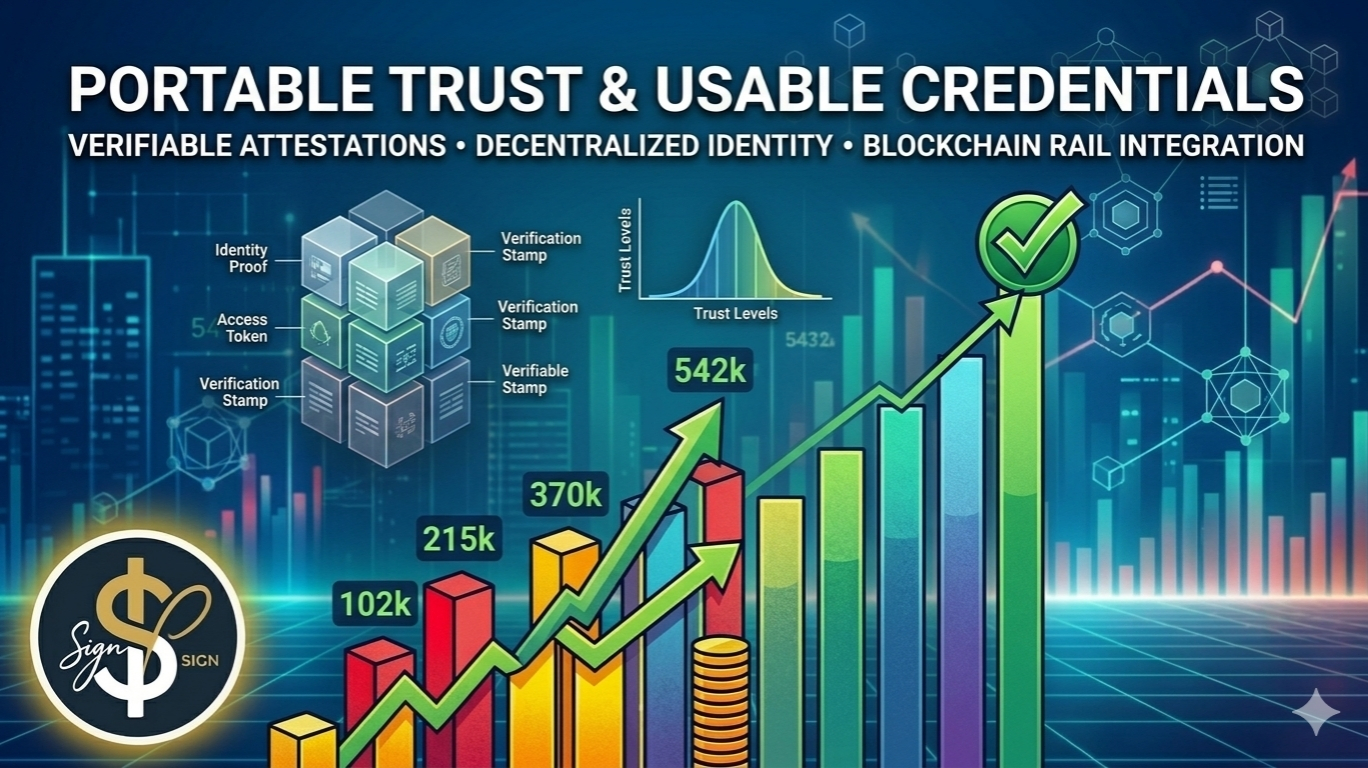
Back on track—yeah, there’s a pile of tech under the hood: attestations, tokens, crypto rails, all the buzzy words. I keep squinting at the docs, hoping to spot the secret sauce that makes “decentralized” actually user-friendly. That tightrope act rarely ever works right out of the gate.
There’s risk, too, obviously. Why should Platform A accept credentials from Platform B? What’s to stop bad actors, sloppy credentials, or straight-up fraud? Getting everyone to agree on a standard—man, that’s the mountain. That’s the “messy boots in the mud” part, not the clean lines on a roadmap. Good luck corralling hundreds of cats.
But—deep breath—I can’t shake the hunch that this is the right direction. Systems just keep multiplying; nobody’s putting that genie back in the bottle. Rebuilding trust from scratch, every single time? That’s not some charming technical quirk. That’s a ball and chain on progress.
So the real question—it isn’t “Will $SIGN nail it right now?” It’s more like, “Is the need for portable, usable trust unavoidably here?” I circle around that question every time I watch another platform plug its ears and make me start over.
Until trust becomes as mobile as information, we're all just running on repeat. Prove, submit, wait, do it again—like personal Groundhog Day, but more annoying.
They call it “verification.” I call it a slow-motion boomerang. And I’m still waiting for it to finally move forward and not come swinging back.