
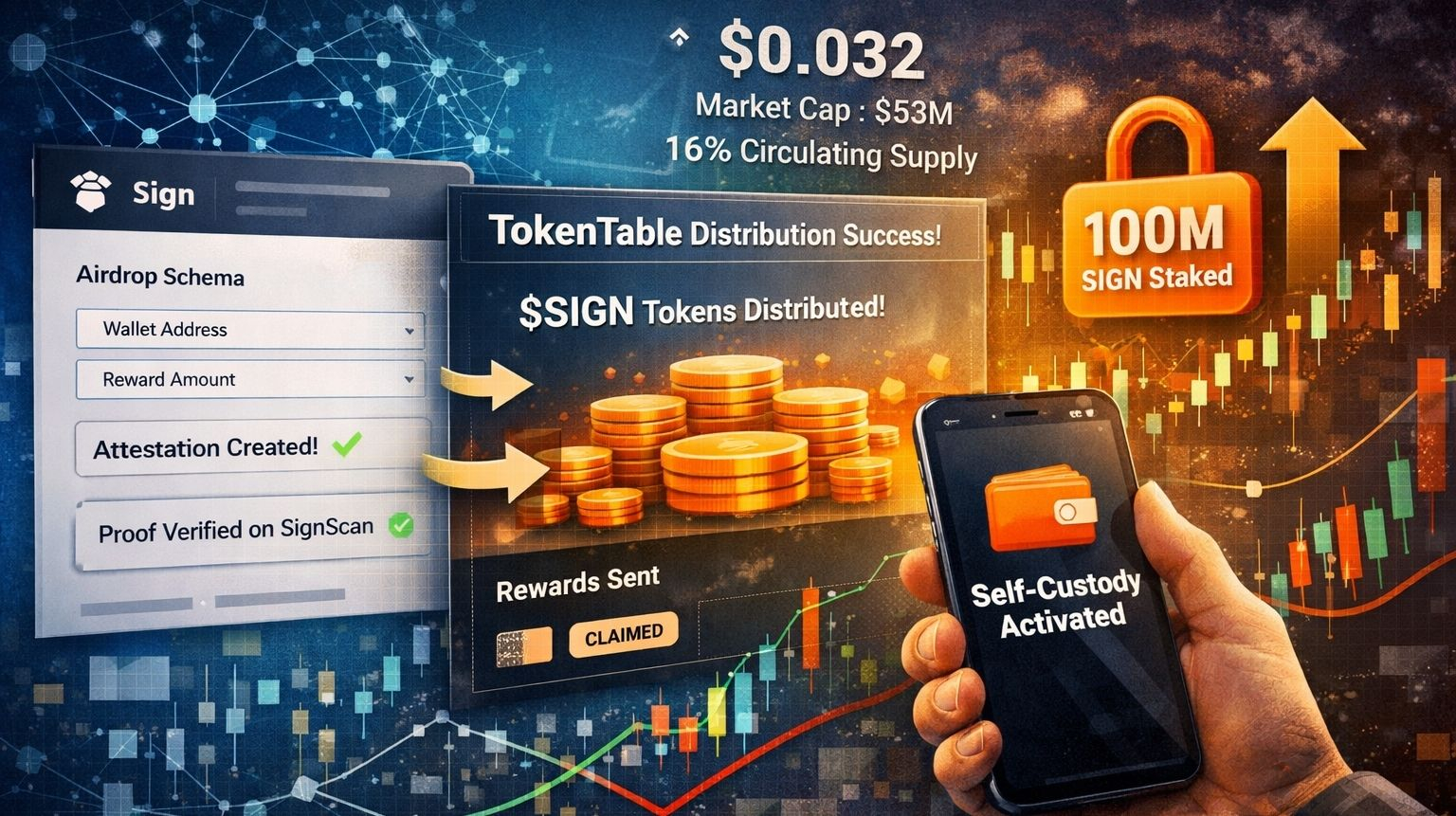
I was scrolling through Binance Square yesterday evening, checking the last days of the Sign CreatorPad campaign, when one thing stood out. The better posts weren’t just repeating the hashtag they were showing real screenshots of schemas turning into attestations that actually triggered TokenTable distributions. It felt like people had genuinely played with the system instead of just farming.
That tracks with my own experience using Sign. The no-code schema builder is surprisingly clean, and SignScan makes verifying cross-chain proofs feel effortless. You build once, attest once, and the proof travels. TokenTable then picks it up and runs the payout exactly as designed. The product layer is mature and quietly powerful you feel it when you test the flow yourself.
Still, the token side keeps me measured. Sitting around $0.032 with a $53M market cap and only 16% circulating against a $320M FDV, the upcoming unlocks are hard to ignore. Volume has held up decently through the campaign, but the wide gap between circulating and locked supply plus some heavy wallet concentration creates a tension you can sense in the price action.
What I find interesting is how they’re trying to handle this. The CreatorPad rewarded quality over quantity, and the new Orange Basic Income program putting 100 million SIGN behind actual self-custody time and balance feels like a serious attempt to build real holding behavior before the next wave of supply hits. It’s transparent and on-chain, which matches the rest of the protocol’s ethos.
For me, the big question is whether the strong product usage can eventually translate into token conviction that survives the dilution schedule. If it does, Sign has one of the cleaner long-term setups in infrastructure. If not, the unlocks will keep reminding everyone that great tech and sustainable tokenomics are still two different challenges. I’m keeping a close eye on holder behavior after this campaign ends.
@SignOfficial $SIGN #SignDigitalSovereignInfra

