Kabhi kabhi kisi project ko dekh ke pehli feeling yeh hoti hai ke…
“yeh zyada try kar raha hai.”
Too much hype.
Too many promises.
Too much “this will change everything.”
Aur phir kuch projects aise bhi hote hain…
jo quietly apna kaam samjhate hain.
Na over-sell karte hain,
na unnecessarily complex banate hain.
@SignOfficial mujhe honestly thoda isi category mein laga.
Pehli baar jab main isay dekh raha tha…
toh mujhe yeh nahi laga ke yeh koi flashy Web3 product hai.
Na yeh DeFi jaisa feel deta hai,
na NFT jaisa hype create karta hai.
Instead…
yeh ek simple sa sawaal raise karta hai:
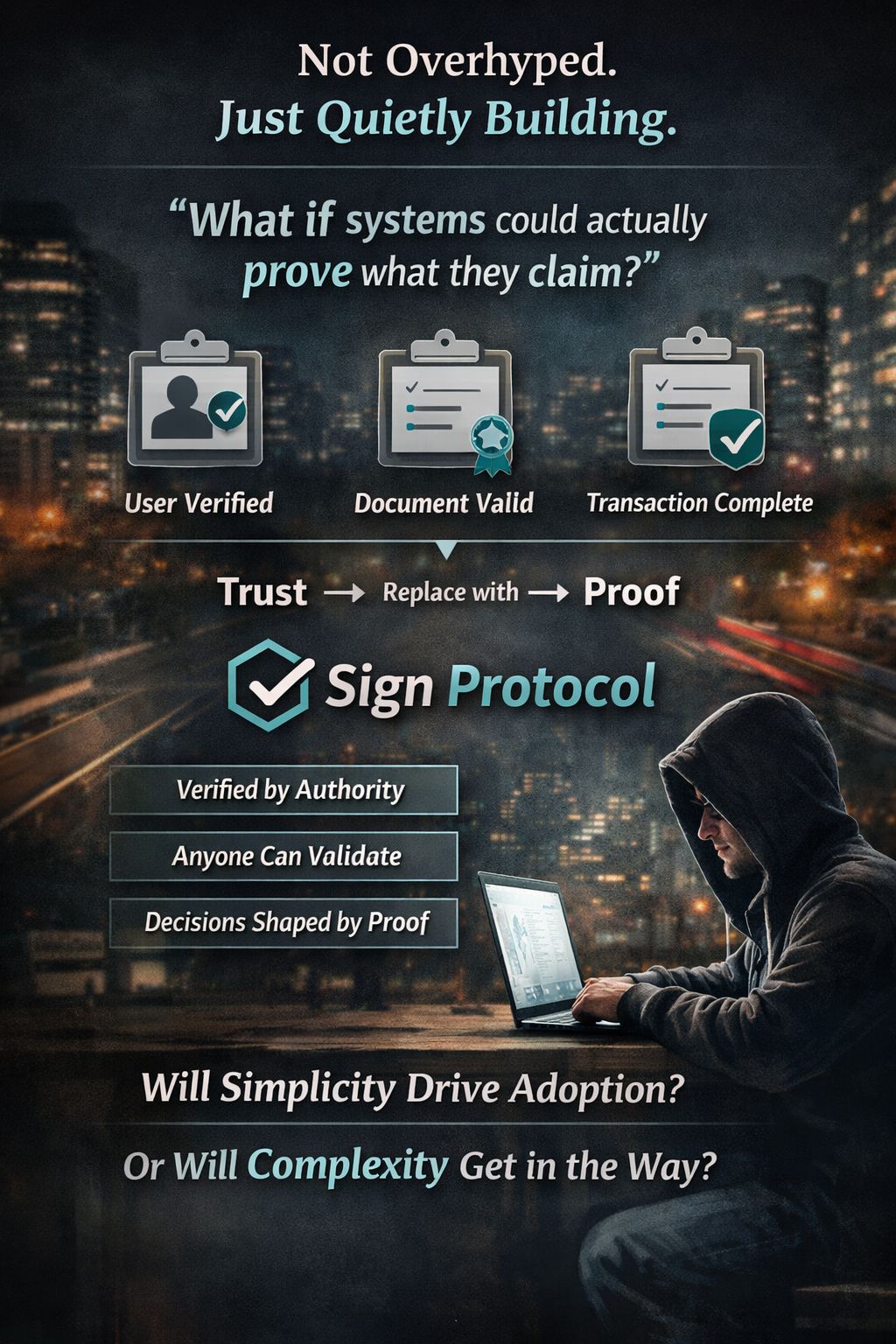
“What if systems could actually prove what they claim?”
Aur yahan se baat interesting ho jati hai.
Because hum daily basis pe bohot se claims accept karte hain:
- yeh user verified hai
- yeh document valid hai
- yeh transaction complete ho chuki hai
Lekin aksar…
hum in claims ko check nahi karte.
Hum sirf trust karte hain.
Sign Protocol ka approach yahan simple lagta hai:
Trust ko replace karo…
proof ke saath.
Matlab:
- har claim structured ho
- kisi authority ya entity ne sign kiya ho
- aur koi bhi usay verify kar sake
Isay wo “attestation” kehte hain.
Yahan tak sab kuch kaafi straightforward lagta hai.
Lekin jab aap thoda aur sochte hain…
toh pata chalta hai ke yeh sirf verification ka system nahi hai.
Yeh actually…
decision-making ko shape karne wala layer ban sakta hai.
Example ke liye:
Agar system ke paas proof hai ke aap eligible hain…
toh wo automatically aap ko benefit de sakta hai.
Agar proof hai ke aap compliant hain…
toh approval delay nahi hoga.
Sounds smooth.
Almost frictionless.
Lekin yahan ek choti si cheez hai jo ignore ho sakti hai.
Because jab systems itne smooth ho jate hain…
toh hum yeh bhool jate hain ke:
rules kis ne banaye hain.
Agar logic clear hai → system fair lagega
Agar logic biased hai → system bhi biased ho jaye ga.
Aur kyunki sab kuch automated hai…
toh decisions fast honge,
lekin zaroori nahi ke har dafa right bhi hon.
Mujhe yahan ek balance interesting laga.
Sign Protocol completely rigid system nahi lagta.
Selective disclosure jaisi cheezein allow karti hain ke:
user decide kare ke wo kya share kare.
Matlab:
system ke paas power hai verify karne ki
lekin user ke paas bhi thoda control hai reveal karne ka
Shayad isi liye yeh “real” feel hota hai.
Na yeh full decentralization ka unrealistic promise karta hai
na yeh pure control systems jaisa lagta hai
It sits somewhere in between.
Mere liye yeh project impressive is liye nahi hai ke yeh perfect hai…
balki is liye hai ke yeh practical lagta hai.
Yeh accept karta hai ke:
- systems ko trust chahiye
- users ko privacy chahiye
- aur dono ke beech balance easy nahi hai
Aur shayad isi liye yeh over-hyped nahi lagta.
Yeh bas…
quietly ek important problem solve karne ki koshish kar raha hai.
Ab sawal yeh hai:
Kya simplicity enough hogi adoption ke liye?
Ya phir complexity phir bhi beech mein aa jaye gi.
Filhaal, Sign Protocol
ek aisa system lagta hai jo loudly claim nahi kar raha…
lekin silently build kar Raha hai.
Aur kabhi kabhi…
aise hi systems long run mein matter kar jate hain.
@SignOfficial #signdigitalsovereigninfra $SIGN