
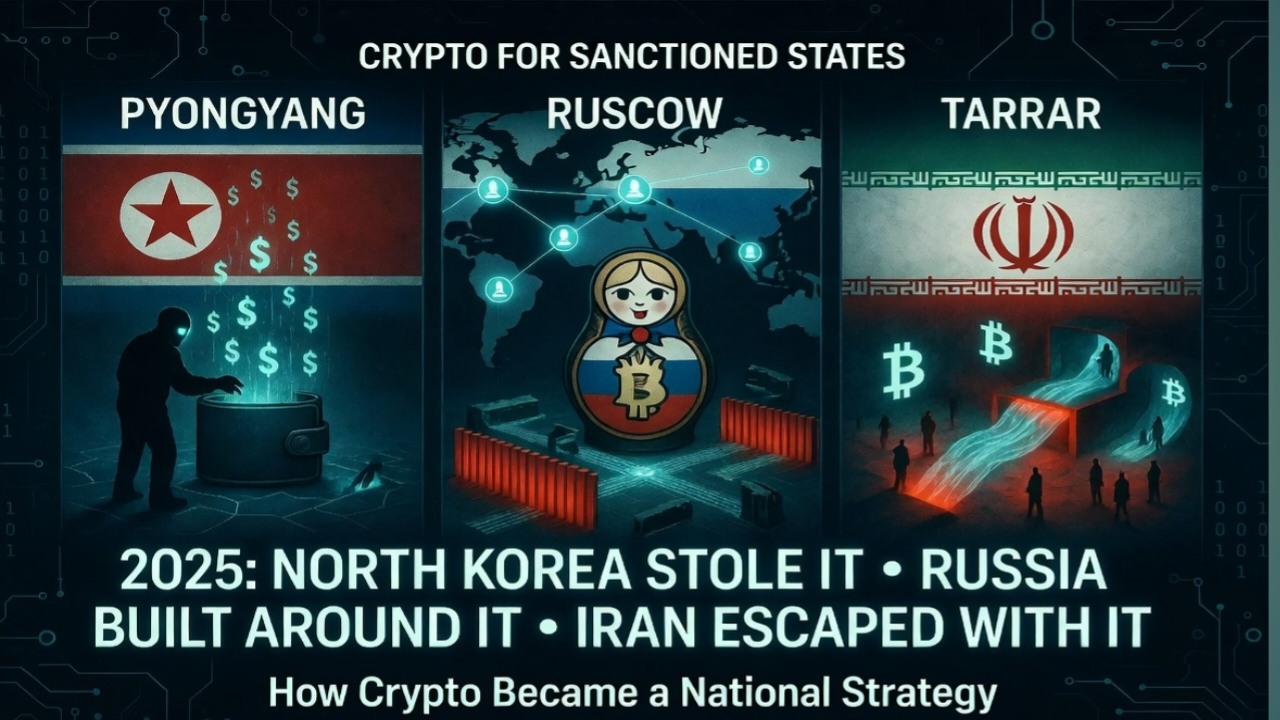
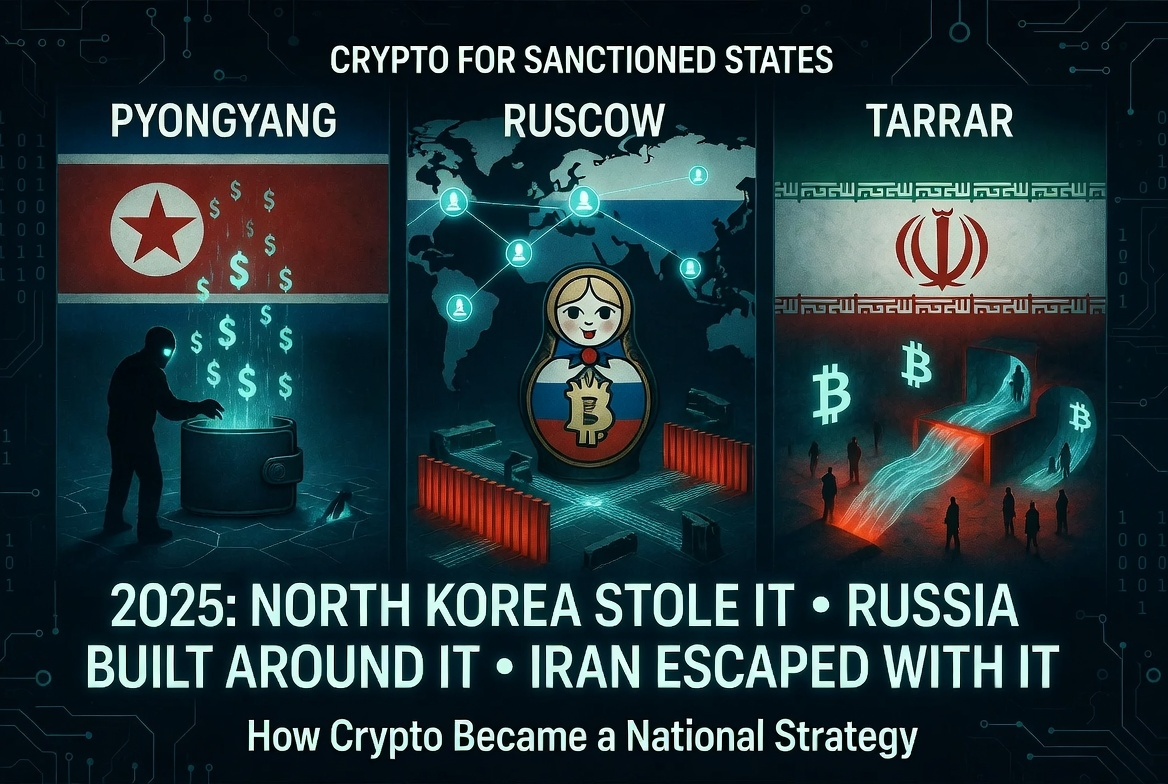
By 2025, crypto wasn’t just a “speculative asset” for countries under sanctions—especially not for North Korea, Russia, and Iran. Each took a different path, but they all put crypto at the center of national strategy.
If you want a quick way to understand it: North Korea used crypto mainly to bring in money (by stealing it), Russia turned it into a workaround for sanctions and keeping trade alive, and Iran treated it as both a financial pressure valve and a geopolitical tool.
That year, it became obvious—crypto wasn’t just a tool for black markets anymore. It turned into a utility for states. A big 2026 review of 2025 activity found just how much these countries leaned into blockchain-based finance. Crypto started supporting their state operations: keeping their economies resilient, moving money across borders, funding procurement, and dodging sanctions. It stopped being something only used by outsiders or criminals. Now, governments themselves were in on the action.
But it’s worth saying—North Korea, Russia, and Iran weren’t all doing the same thing with crypto.
First, North Korea. They ran crypto like an export business, but what they exported was cyber theft. By 2025, North Korea’s hackers specialized in targeting exchanges, raiding wallets and bridges, grabbing as much as they could, laundering it through a web of networks, then converting whatever they could into hard cash for the regime. Chainalysis reported more than $2 billion stolen just in 2025—Bybit was the headline heist. This wasn’t just crime for its own sake; it was about raising real money to keep the country running under tough sanctions.
Crypto solved three big headaches for North Korea: it gave them access to foreign money without banks, was way more scalable than old-school smuggling, and let their cyber units operate with deniability. By 2025, they weren’t “adopting” crypto—they were wringing it for cash through organized, state-backed theft.
Russia had a different playbook. They weren’t as smash-and-grab—they built out crypto infrastructure to keep their economy connected to the world while sanctions tried to shut them out. The focus was on working around the choke points of the global banking system, not escaping it completely. Ruble-linked stablecoins like A7A5 became key, letting Russian businesses keep trading and settling cross-border payments even with financial restrictions. Russia’s use cases boiled down to cross-border settlements, payment channels that could dodge sanctions, support for trade and procurement, and in some cases, fundraising for their wartime needs.
One example stands out: researchers tracked crypto flows funding drone and component purchases for Russian actors. Crypto didn’t replace normal finance, but it helped out at the margins—supporting logistics and wartime procurement where speed and flexibility mattered most.
So, in Russia’s case, crypto meant adaptation under fire—not dropping out of the system, but building routes around blockades.
In Iran, crypto filled two big roles at once. For ordinary people and businesses, it was an escape hatch. With inflation soaring, and the rial under constant pressure, Iranians turned to crypto to protect value and move money when banks or the state wouldn’t let them. Chainalysis picked up on active exchange use and signs of capital flight. Crypto became both a store of value and a private tunnel for money leaving the country.
And on the government side, Iran wove crypto into their wider financial and geopolitical toolkit.