
A customer pays.
The merchant sees the payment settle. The order shows completed. For a moment, everything looks finished.
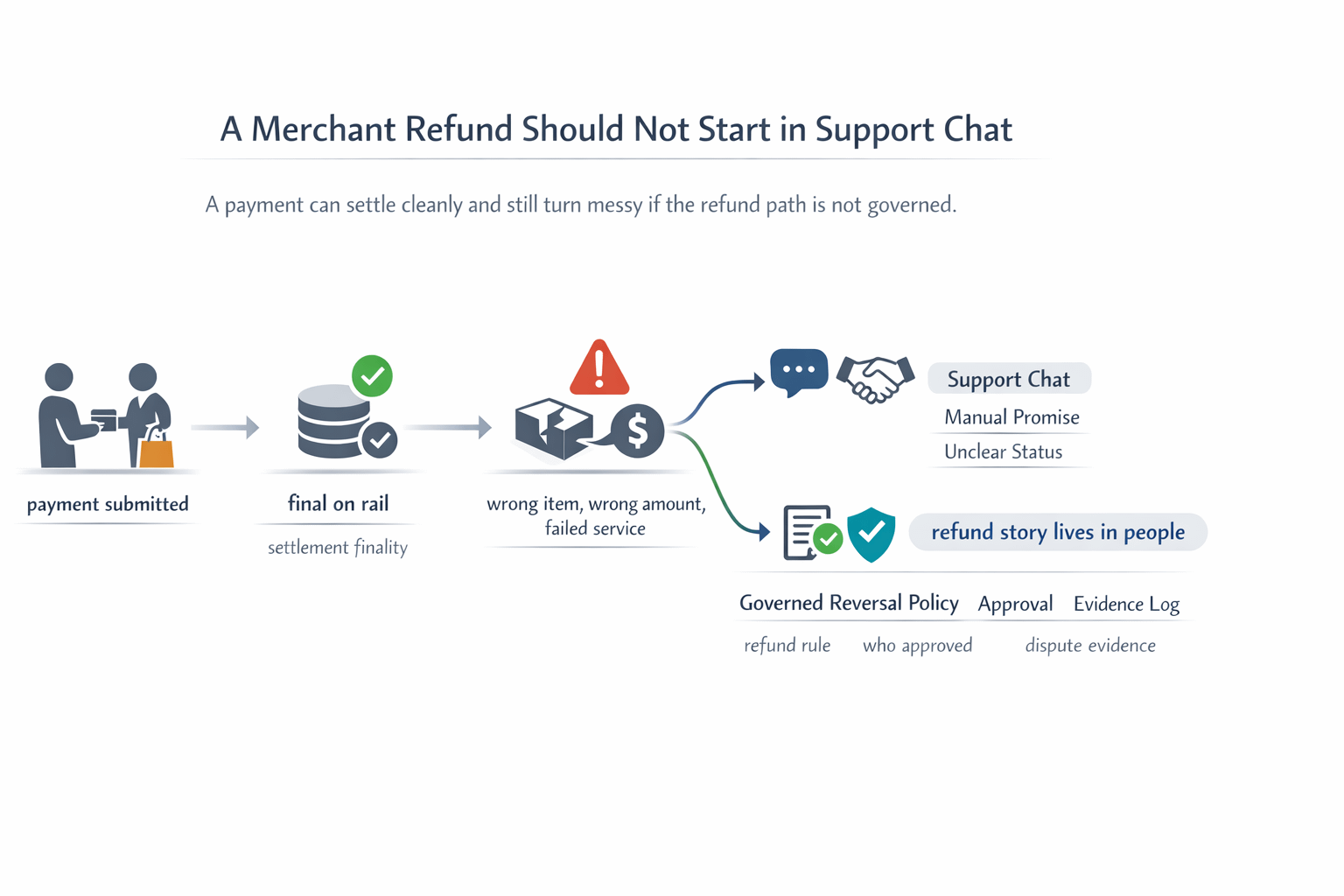
Then the order goes wrong. Wrong item. Failed service. Maybe a duplicate charge. The merchant tells the customer the refund was approved and asks them to wait. A day passes. Then another. The customer comes back with screenshots. The original payment still looks final. The refund still does not show up anywhere the customer can actually trust. Now support is in the middle of a case that should have been easy, and the only thing growing faster than the delay is the number of messages.
That is the part I keep getting stuck on.
Not the payment. The unwind after the payment already looked done.
Because this is where a money system can quietly stop telling one clear story. The settled payment has a record. The refund has a note in chat. The merchant says it was approved. Support says they can see the conversation. The customer says none of that matters because the money is still missing. At that point, the problem is no longer speed. The problem is that the system has started leaning on memory.
What I like here is that SIGN does not only make the payment leg look clean. The part that matters more to me is whether the refund stays inside the same governed path after settlement is already final-looking. In this exact case, only a few things matter. Which settled payment is being reversed. Who had authority to approve that refund. Which rule allowed the reversal. And what record proves the refund actually executed instead of just getting promised.
That is the whole fight.
If support has to calm the customer by pointing at internal notes, the system is already weaker than it looks. Notes are not the refund. A promise is not the refund. "We already processed it" is not the refund. The refund becomes real when the reversal enters the governed flow and leaves a trail strong enough to carry the case without staff retelling it over and over.
This is where the dispute gets ugly. The customer comes back again with the same screenshot of the original debit. The merchant says they already approved the reversal. Support can only point to messages, maybe an internal status update, maybe a promise that finance handled it. But the customer is still staring at a settled payment with no durable record showing who authorized the unwind, under what policy, and where the reversal actually landed. Now everyone sounds sure, but the record still sounds weak.
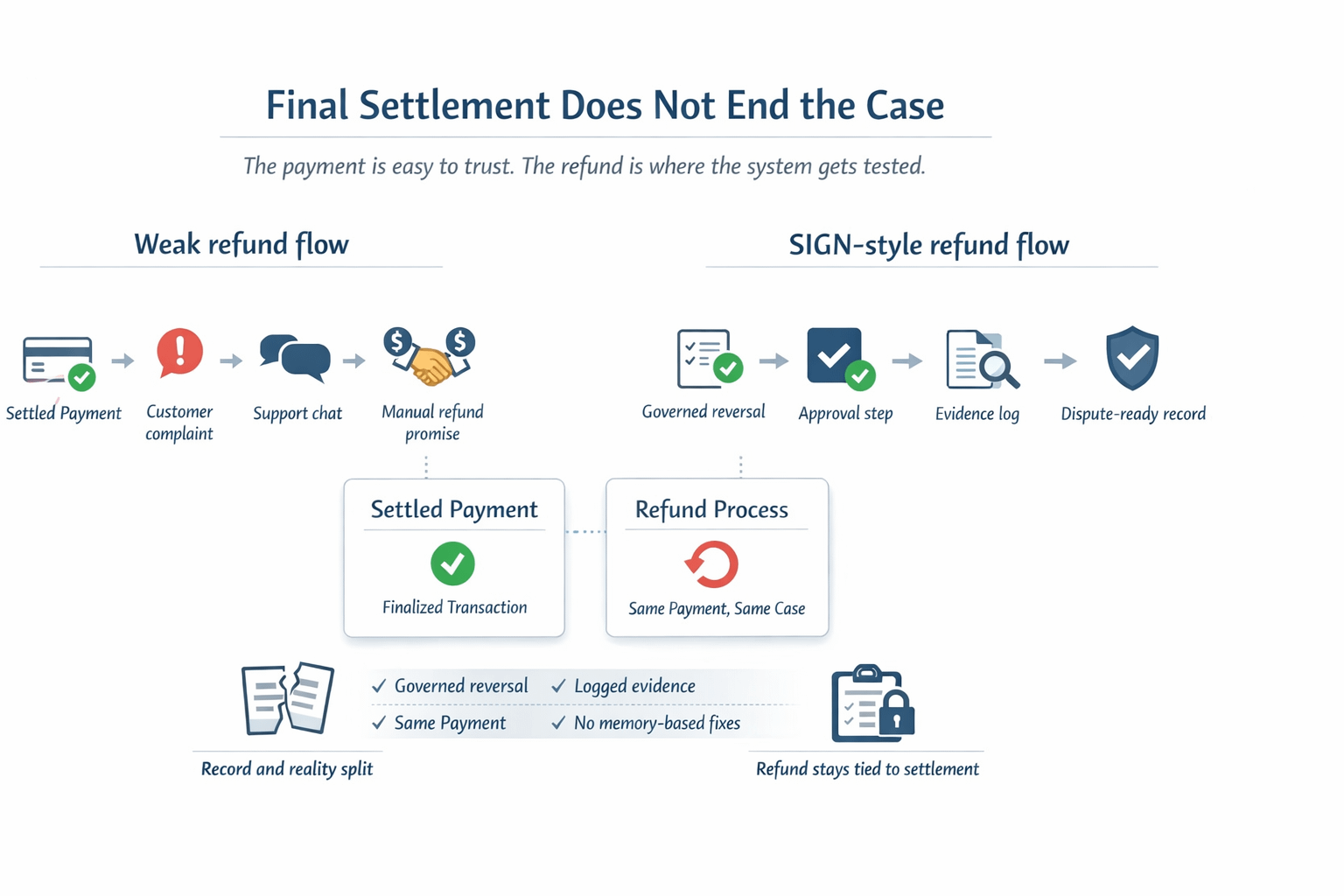
That is the kind of split I keep watching for. One truth sits in the original settlement. The other truth sits in support chat, trying to explain why the reversal should be trusted even though the proof is thin. Once that happens, the system is not really closing disputes anymore. It is borrowing credibility from staff.
That is why $SIGN feels more real to me here than on the first payment screen. The easy part is making money move. The harder part is when a merchant says "refund approved" and the customer comes back two days later asking the system to prove that those words turned into an actual governed reversal. If that proof exists, the case stays small. If it does not, the refund turns into a story people keep repeating because the record cannot finish the job on its own.
#SignDigitalSovereignInfra $SIGN @SignOfficial
