
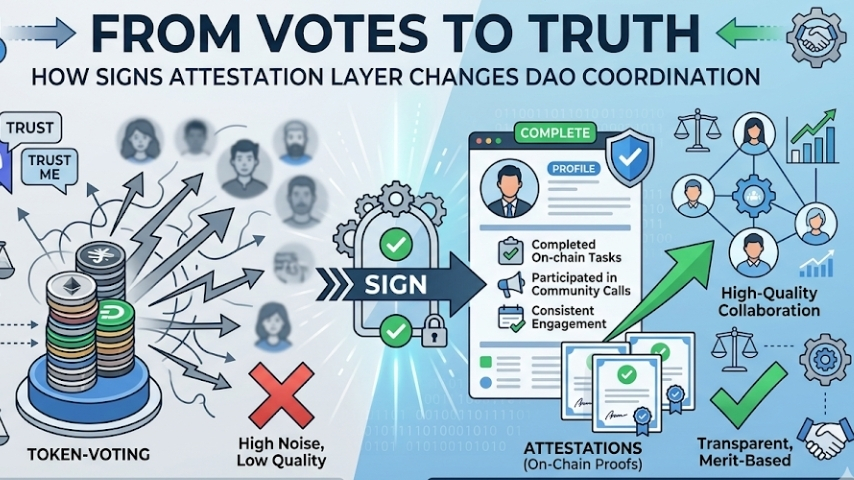

A few months ago I joined a DAO. It was like all the others a Discord, a big token and a promise of "community driven decisions." Everyone talked about being independent and decentralized. When we tried to vote on something important the problems started to show.
People were sharing screenshots of their wallets saying "check this" and "trust me." We were having debates about who was really participating and who was just trying to get more tokens. We were not working together we were just pretending.
That's when I started looking into Signs attestation layer. I realized this was not another project about identity. It was the missing piece for how DAOs can prove who they are what they have done and why they deserve a say. Without all the drama.
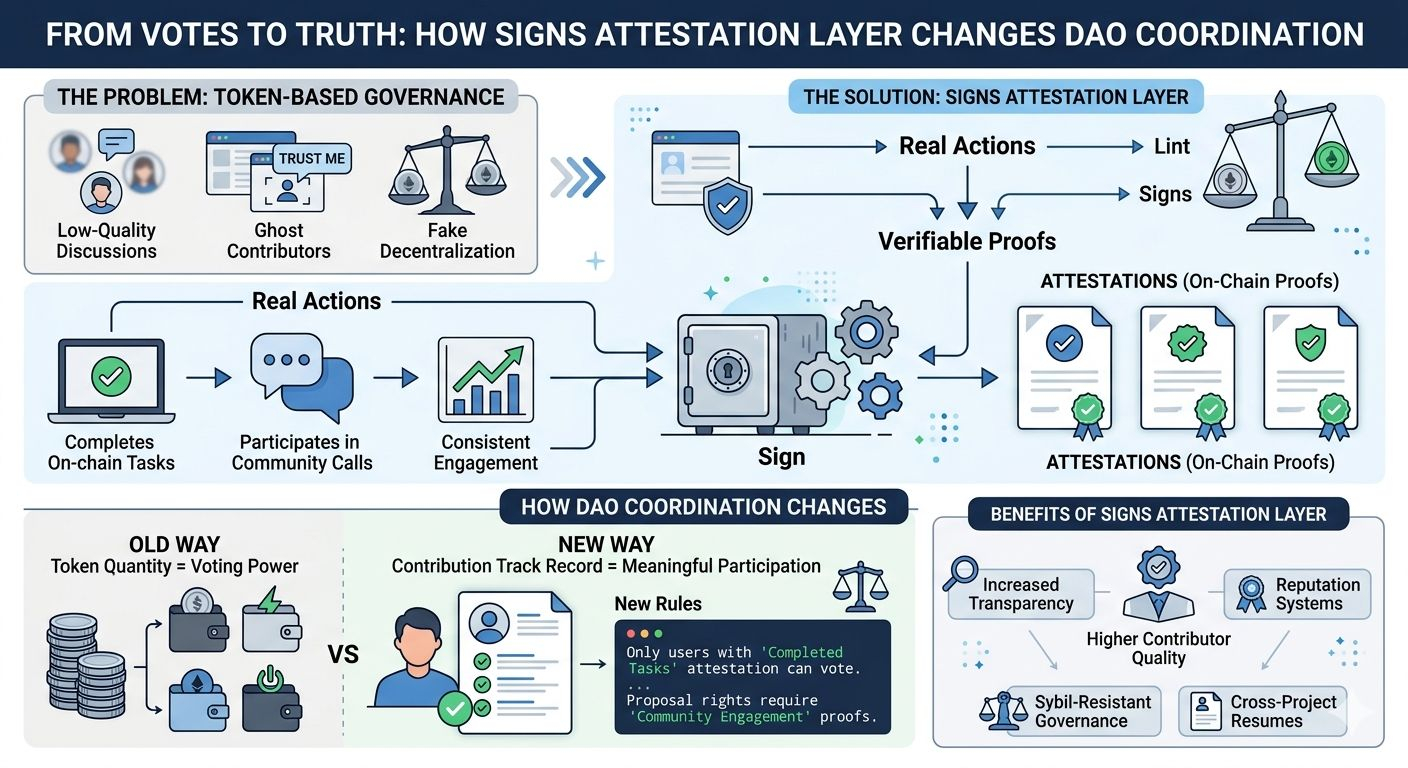
The Problem with Democracy in DAOs. DAOs are supposed to be the future of working anyone can join anyone can contribute and anyone can vote. In reality most DAOs are still struggling with fake decentralization. You can vote with wallets. You can say you are a contributor without doing anything. You can join a vote at the minute and suddenly you are part of the "core" team because of the tokens you have.
The problem is not that DAOs lack vision. The problem is that they lack truth. When every vote counts but we cannot prove anything about the voter working together starts to feel like a game built on lies. That's why many DAOs end up with low quality discussions ghost contributors and a few powerful people secretly controlling everything.
How Sign Changes "Votes" into Participation. This is where Signs attestation layer starts to feel like it was made for DAOs. Of just trusting that someone can vote because they have tokens you can prove that they are entitled to participate based on real actions.
For example imagine a contributor who:
* Joins a DAO onboarding program.
* Completes tasks on the blockchain.
* Participates in community calls and creates content.
* Engages over weeks or months .
With Sign each of these moments can be turned into a verifiable proof. Not a Discord message not a screenshot not a claim. But a proof that can be read by governance tools or custom dashboards.
Suddenly voting is not about how many tokens you have. It's about your track record. You can make rules that say:
1 "Only users who completed tasks on the blockchain can vote."
2 "Only participants who have on chain proofs can propose changes."
3 "Power is based on both contribution and time not tokens."
All of this is possible without any single authority deciding who is real. The rules are written in code. The proofs are stored on the blockchain. Sign does not give you opinions; it gives you facts.
The Story of a DAO That Changed Its Behavior. The surprising moment for me was seeing a real DAO change its behavior once it started using Signs attestation layer.
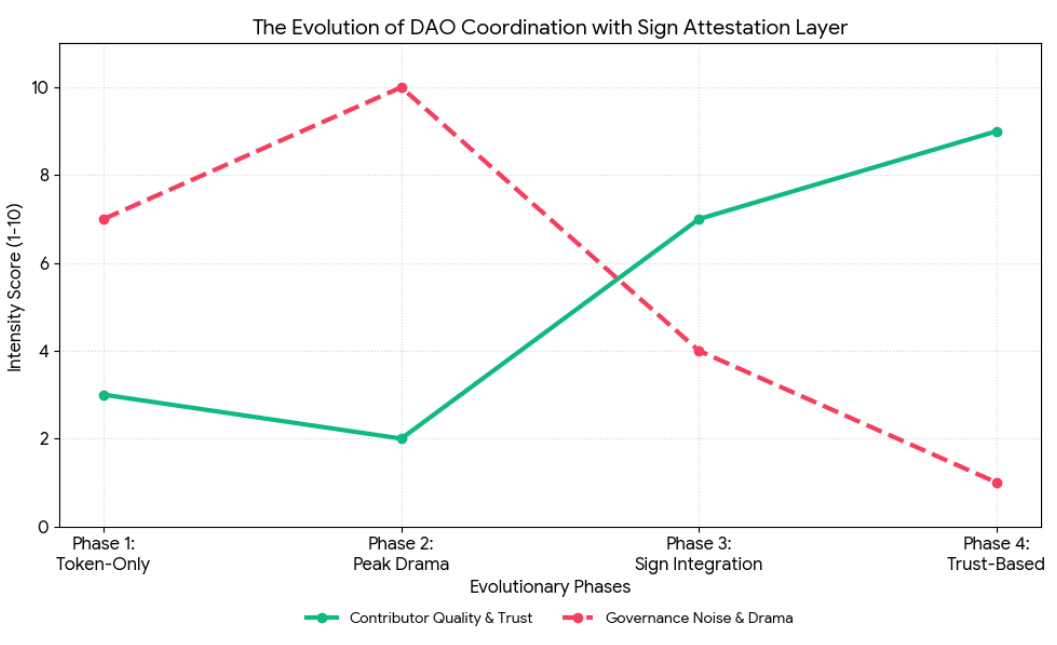
At first participation was all about feelings. People joined for the tokens talked big and then disappeared. The votes were messy turnout high noise and people trying to cheat. Then the team decided to re onboard the community using Sign. They created a set of tasks:
1- Proof of blockchain activity
2- Proof of community engagement
3- Proof of consistent presence
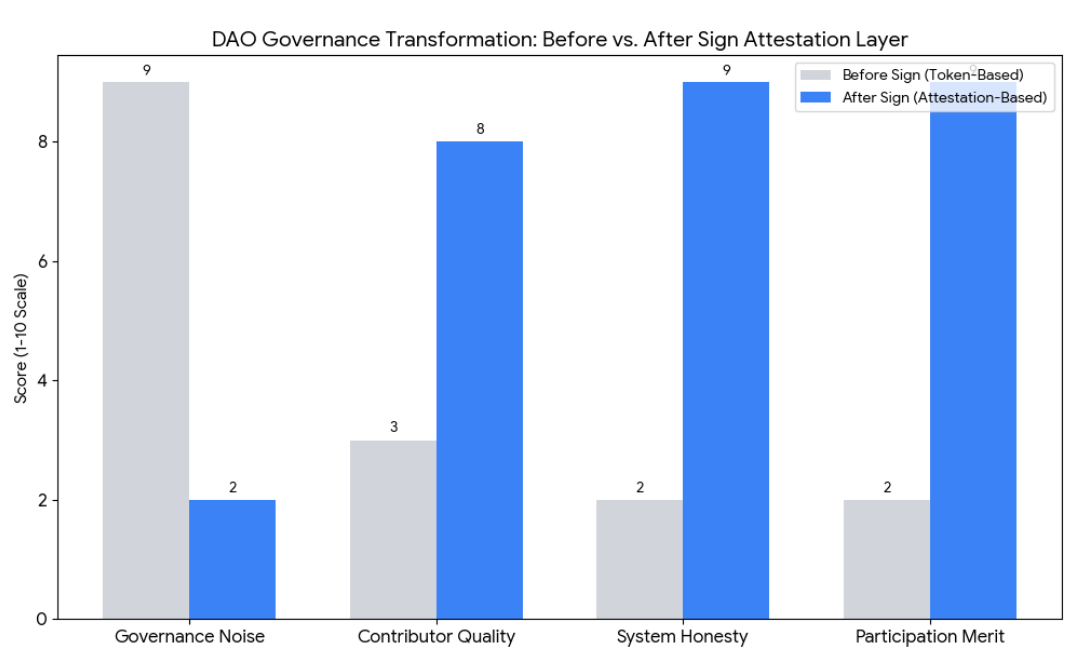
Users who wanted to participate in governance had to complete these tasks and get their proofs. It was not mandatory. It rewarded the honest contributors. Over time something subtle but powerful happened:
1- The noise in governance decreased.
2- The quality of contributors increased.
People stopped asking "how tokens do you have?" and started asking "what's your track record?" The DAO did not become perfect but it became more honest. For the first time it felt like the DAO was actually working together around real people, not just wallets.
From Identity to Infrastructure. One of the things I love about Sign is how quietly it works. It does not force you into a system or a firm that checks your identity. It just gives you a layer of verifiable truth that you can plug into whatever system you are using.
For DAOs this is huge. You can build reputation systems that reward contribution. Create blockchain resumes for contributors that travel across projects. Design governance that filters out wallets and bots without banning anyone. This turns identity from a problem into a tool that enables coordination. Of trying to "know everyone " you create a system where proof speaks louder than claims.
The Long aTerm Vision: DAOs That Scale Without Losing Themselves. If the blockchain is going to grow DAOs need to stop pretending that everyone is equal and start building systems that can discern who is actually contributing.
Signs attestation layer does not promise to "fix" DAOs. What it offers is an upgrade: a way to move from votes based on tokens to votes based on verifiable truth. That might not sound exciting. Its the kind of change that actually makes DAOs feel like real organizations. Organizations where you can prove your work prove your commitment. Prove your consistency. Without sacrificing your anonymity or privacy.
For me that's the promise of Sign. It's not about identity or proofs it's about building systems where trust is no longer assumed but proven. For DAOs that want to grow without losing their soul that's the only foundation that will ever hold up.
@SignOfficial #SignDigitalSovereignInfra $SIGN
