


spend enough time in crypto and you start noticing something strange you work hard across platforms you grind tasks join campaigns connect wallets claim rewards and interact daily thinking you are building something meaningful but the moment you leave that platform everything loses value not deleted but useless outside that space nobody recognizes your work nobody sees your history
this is the real problem of web3 today every platform builds its own identity system its own rewards its own rules nothing connects users walk from one ecosystem to another and restart from zero again no memory no continuity no reputation that travels with you people say we are early but honestly this is not a technology problem anymore it is a cooperation problem nobody wants shared standards because everyone wants control over users and data
what people actually want is simple verify once and carry that proof everywhere effort should stack over time reputation should follow you across apps rewards should reflect long term contribution instead of random campaign participation
this is where sign enters the picture sign started earlier as ethsign focused only on blockchain document signing but later expanded into a larger idea building an evidence layer for web3 instead of speculation the goal became reusable proof identity credentials agreements participation records and token distributions that can be verified across chains without centralized ownership
the idea is straightforward if applications institutions and distribution systems need reusable evidence users will keep coming back because they need verification not hype sign protocol allows cross chain attestations while storage systems like ipfs and arweave hold permanent data governance staking and incentives exist to coordinate the ecosystem rather than sell a simple buy the token own the network story
the token only matters long term if the network keeps generating records people actually need to check
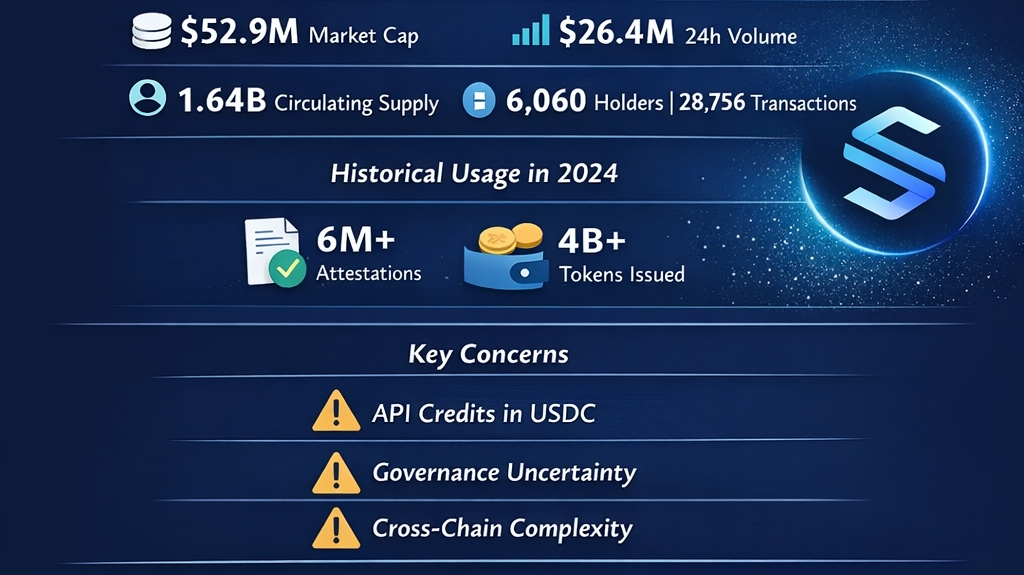
market data shows activity still exists as of april 1 2026 coinmarketcap listed sign around 52 point 9 million market cap with about 26 point 4 million daily trading volume circulating supply near 1 point 64 billion tokens out of 10 billion maximum supply basescan showed roughly 6060 holders on base and more than 28756 transactions with fresh approvals and transfers happening shortly before snapshots meaning the chain is still alive not just historical hype
historical numbers look even bigger according to the mica whitepaper in 2024 alone sign handled over 6 million attestations and distributed more than 4 billion tokens to over 40 million wallets through campaigns claims and distribution programs but this also raises concern because much of that demand came from incentives and one time events which means retention becomes the real test will people keep using the system when rewards stop
there are clear risks utility leakage exists because developers can buy api credits using usdc meaning real usage might not directly create token demand governance uncertainty also matters since validators and operators could hold stronger influence than regular holders creating a gap between governance narrative and reality
cross chain design adds another layer of complexity the base deployment uses signoft architecture through layerzero omnichain technology allowing interoperability but also introducing more moving parts compared to a single chain token
the biggest question remains repeated usage are attestations happening during quiet weeks when no campaigns run when nobody is paid to participate real infrastructure shows recurring verification not temporary activity spikes
staking through the live portal and obi program may reduce selling pressure but long term alignment only happens if staking connects to genuine network demand otherwise it simply delays distribution selling
users already feel something is wrong people burn out because effort does not carry forward platforms feel like closed rooms you enter complete tasks earn tokens then leave and start over somewhere else even structured ecosystems like binance improve experience but remain isolated worlds once you step outside continuity disappears again
web3 does not need more platforms or more tokens it needs shared standards portable credentials consistent verification and rewards tied to real contribution sign is essentially betting that the future of crypto depends on cooperation building a neutral layer underneath everything where proof sticks identity travels and work compounds over time
until that happens users will keep repeating the same cycle verify repeat earn move restart again and again and that is why the conversation around sign is less about price and more about whether web3 finally decides to remember its users instead of resetting them every time they move.