
That night sticks with me - sitting at my desk, tired, staring at another sign-up form. Twenty minutes gone, uploading documents again: passport, income proof, address check. Same ones I’d sent to three other places already that month. Not one remembered me. My data lived everywhere - wallets, exchanges, apps - but each site acted like we were meeting for the first time. Wasting time wasn’t the worst part. What bothered me? Having to trust everyone completely, without any say over where my details went next. It hit me then just how flawed our system for checking identity online actually looks. Connected we may be, yet personal details and access rights sit trapped in isolated corners, making us prove ourselves endlessly - trusting blindly that the organizations holding them won’t misuse what they have.
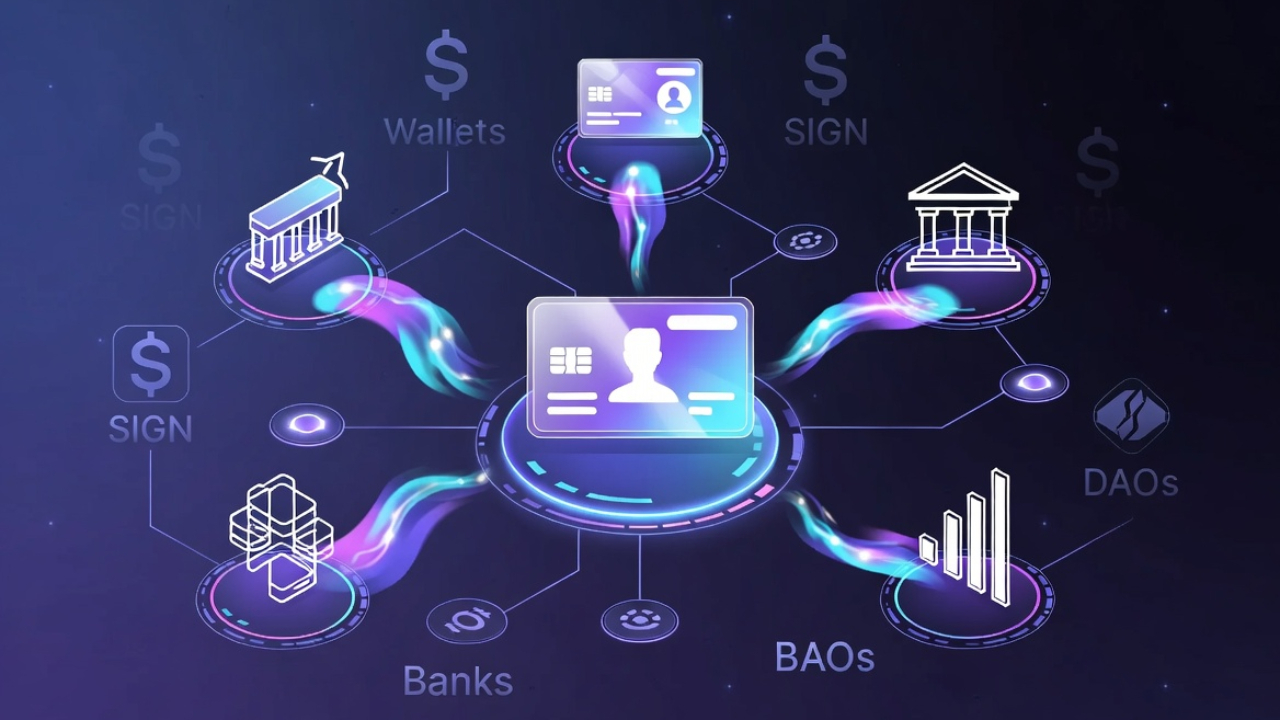
What most people face daily - that constant back-and-forth just to prove basic things online - is exactly where @SignOfficial steps in. Built right into their foundation sits Sign Protocol, a solution moving beyond single chains. It collects loose bits of digital proof floating around and reshapes them into verified packages usable anywhere on chain. Jumping between apps usually means repeating yourself endlessly; here, it doesn’t. Issuers craft attestations instead: sealed records detailing identity, ownership, actions taken - locked down by cryptography. Each follows a strict format, like a universal form everyone agrees on. Structure matters because systems can then interpret and trust these pieces instantly, never phoning home to double-check.
Every now and then, a system comes along that treats verified information like real-world evidence. After someone confirms something, it gets stored directly on the blockchain - or tucked away privately off-chain within a clever mix, yet still protected and open to checks. That same ID token? It moves freely between platforms and networks, skipping repeated paperwork or delays caused by human approval loops. Imagine needing cash from a lender, stepping into a group decision pool, or showing you qualify for public benefits - same check, no extra steps. Holding on to your own attestations means platforms just check a digital seal instead of asking again. One proof moves across services, cutting down repeat checks because privacy stays intact without oversharing details. Mistakes slip in less often when information does not get reentered every time somewhere new. Fraud finds fewer cracks to crawl through once verification relies on sealed records that travel with you. What matters most sits protected, yet always ready to confirm truth.
Still, it works on the underlying problems of confidence messing up numerous setups right now. Instead of depending on central bodies or constant hand-driven reviews - slowing things down while risking collapse at weak spots - it shifts toward checking after trusting, where records stay open for inspection and move freely across platforms. Evidence stacks when builders, organizations, or regular people link confirmations: one may pair location history with birthdate verification, another might connect blockchain actions to real-world documents. The structure holds without breaking apart. What makes this work so well? It opens doors for newcomers at the same time it hands control straight to people managing their data. Built-in privacy shows up in tools such as zero-knowledge proofs - show what needs seeing, keep the rest hidden.
Not limited to individual identity alone, this system supports verified information on group affiliations, legal compliance, or property rights. Because organizations may release proof of meeting regulations, and authorities can apply the same setup for cross-border digital identification with smart features. With @SignOfficial framing Sign Protocol as a trust foundation for state-level operations, it stands out beyond typical blockchain tools. What emerges is a structure enabling countries, agencies, and individuals to function digitally - on their own terms - with openness and strong protection built in.
Right there in the middle stands $SIGN - the piece making everything else move. Not just another coin tossed onto the pile, this one runs the show: creating proofs, confirming truth, guiding decisions through holder votes, also rewarding those who keep things ticking. Picture yourself drawing up forms, someone else checking facts, or coding new tools; $SIGN ties each role together by balancing rewards and purpose. It holds the weight so reused proofs and connections between chains do not collapse under their own needs. As more users join, more apps form around it, turning clever design into something that feeds itself simply by being used.
The thing I like best? How down-to-earth and ready-for-what-comes-next it all seems. Instead of ditching what already works Sign Protocol adds a shared way to check facts so old systems connect safely. With more networks using these proofs things get easier - less broken data leaks, less time spent rechecking the same stuff. This isn’t flashy but it’s solid progress: Web3 might stop feeling strange to regular people yet still help big organizations follow rules right.
One day, trust online won’t depend on endless passwords or big companies guarding access. What changes things? Portable proof you control - works everywhere. That’s exactly what @SignOfficial builds with Sign Protocol. Instead of repeating yourself each time, imagine verified details moving with you across apps. Their system uses blockchain-based identity stamps anyone can check but no one else owns. Alongside this runs a token designed to fuel real function, not just profit spins. Trust shifts from hoping someone is honest to knowing via math. Most overlook how deep this goes. When users truly own their data footprint, tasks like payments or sharing records turn simpler, stronger. Global teamwork gains too when barriers based on location fade quietly. The foundation being built today around $SIGN ay shape how people connect digitally tomorrow. Watching it grow feels less like waiting and more like standing near something already moving. #SignDigitalSovereignInfra
