
I didn’t plan to write today…
but something about this whole “trust” idea kept looping in my head.
Not the usual kind of trust people talk about in crypto.
Not transparency. Not “everything on-chain”.
Something more uncomfortable.
Like… proving something is true… without actually showing everything.
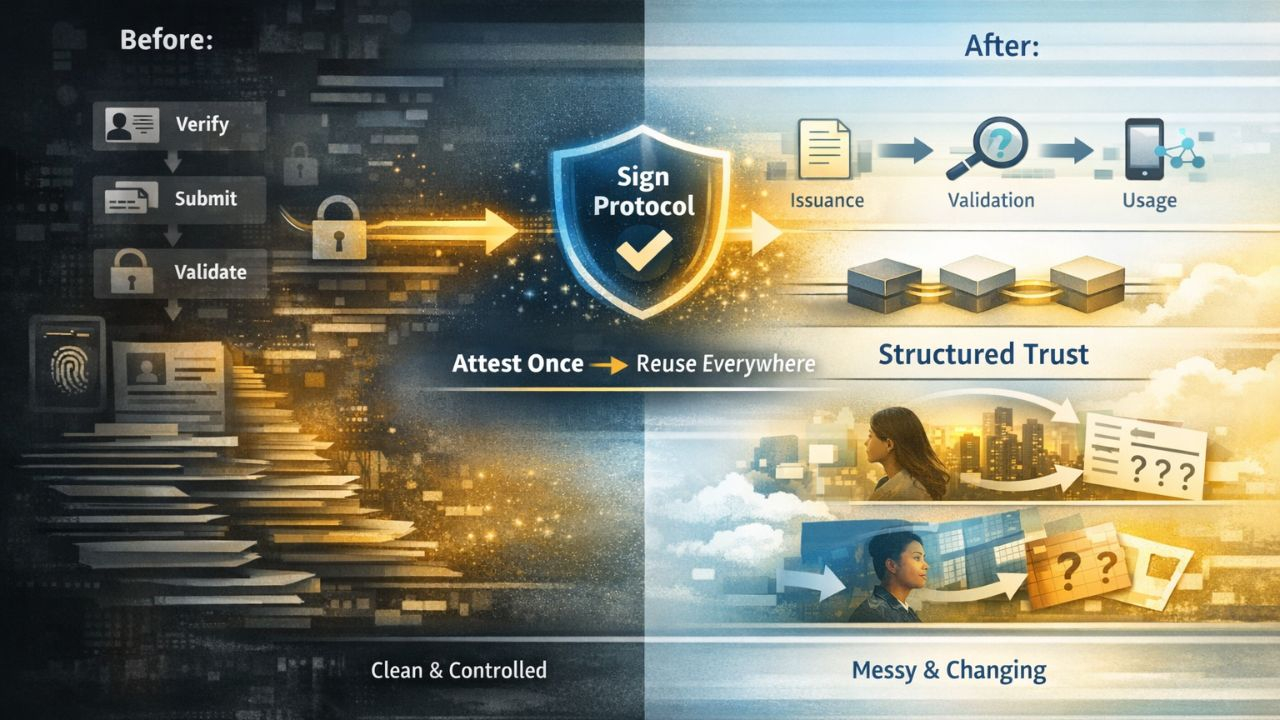
That’s where I started looking at Sign Protocol a bit differently.
At first, I thought it was just another narrative.
“Sovereign infrastructure”… sounds good, but we’ve seen that before.
But the deeper I went, the more I noticed…
they’re not really trying to store data.
They’re trying to structure trust.
And that’s a very different thing.
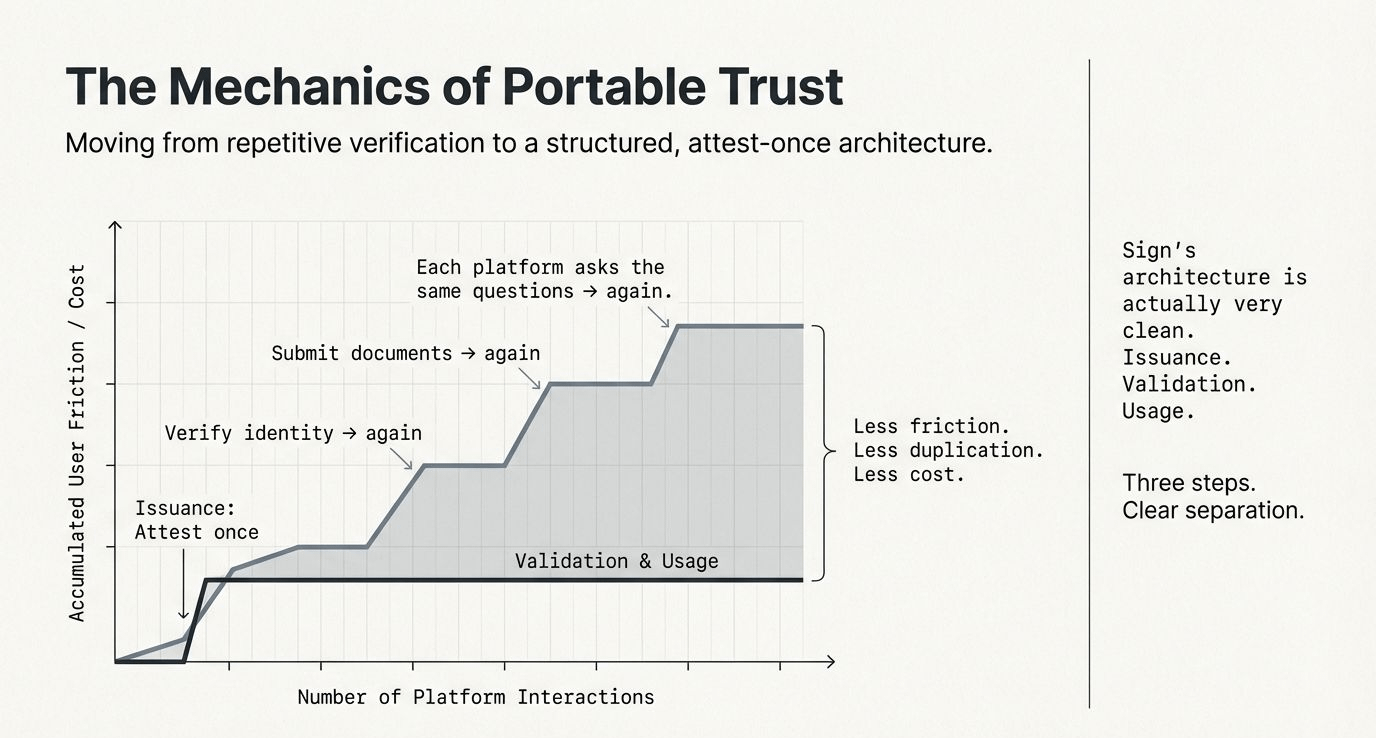
Right now, the way things work is kind of repetitive.
You verify identity → again.
You submit documents → again.
Each platform asks the same questions → again.
It’s inefficient… but we’ve accepted it.
Then Sign comes in with a simple idea:
attest once… then reuse it everywhere.
On one side, this feels extremely clean.
Less friction.
Less duplication.
Less cost.
From a system design perspective… it makes sense.
But on the other side… something feels a bit off.
Because what this really means is…
we’re turning trust into something portable.
Not situational anymore.
Not contextual.
Just… structured.
And that’s where I pause.
Because real life doesn’t work like that.
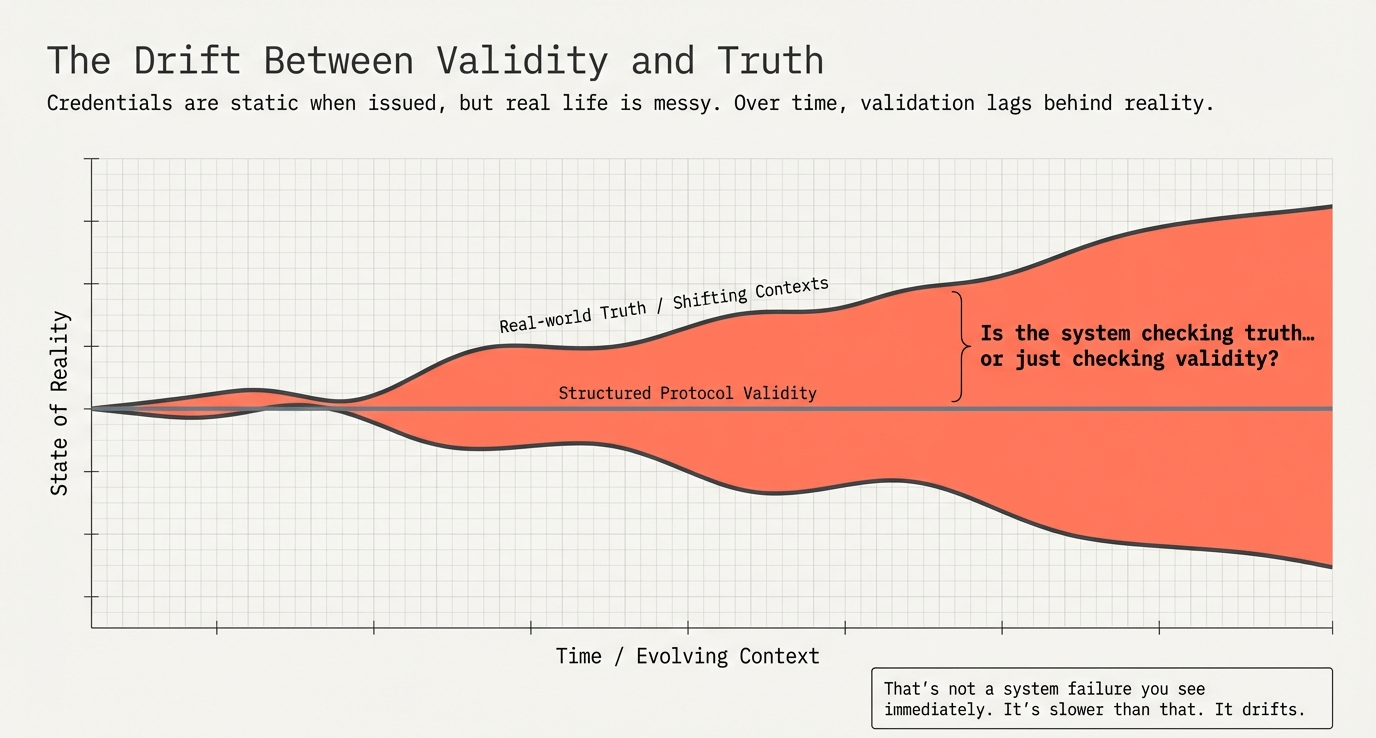
A credential might be valid when it’s issued…
but reality moves.
People change.
Contexts shift.
Situations evolve.
So the question becomes:
Is the system checking truth…
or just checking validity?
Sign’s architecture is actually very clean.
Issuance.
Validation.
Usage.
Three steps. Clear separation.
On one side, this is beautiful engineering.
Everything has a place.
Everything has a role.
But on the other side…
life is messy.
What happens if validation lags behind reality?
What happens if different platforms interpret the same proof differently?
What happens when something is technically valid… but no longer relevant?
That’s not a system failure you see immediately.
It’s slower than that.
It drifts.
And then there’s another layer I can’t ignore.
Control.
Because once you structure trust…
someone has to define what “valid” means.
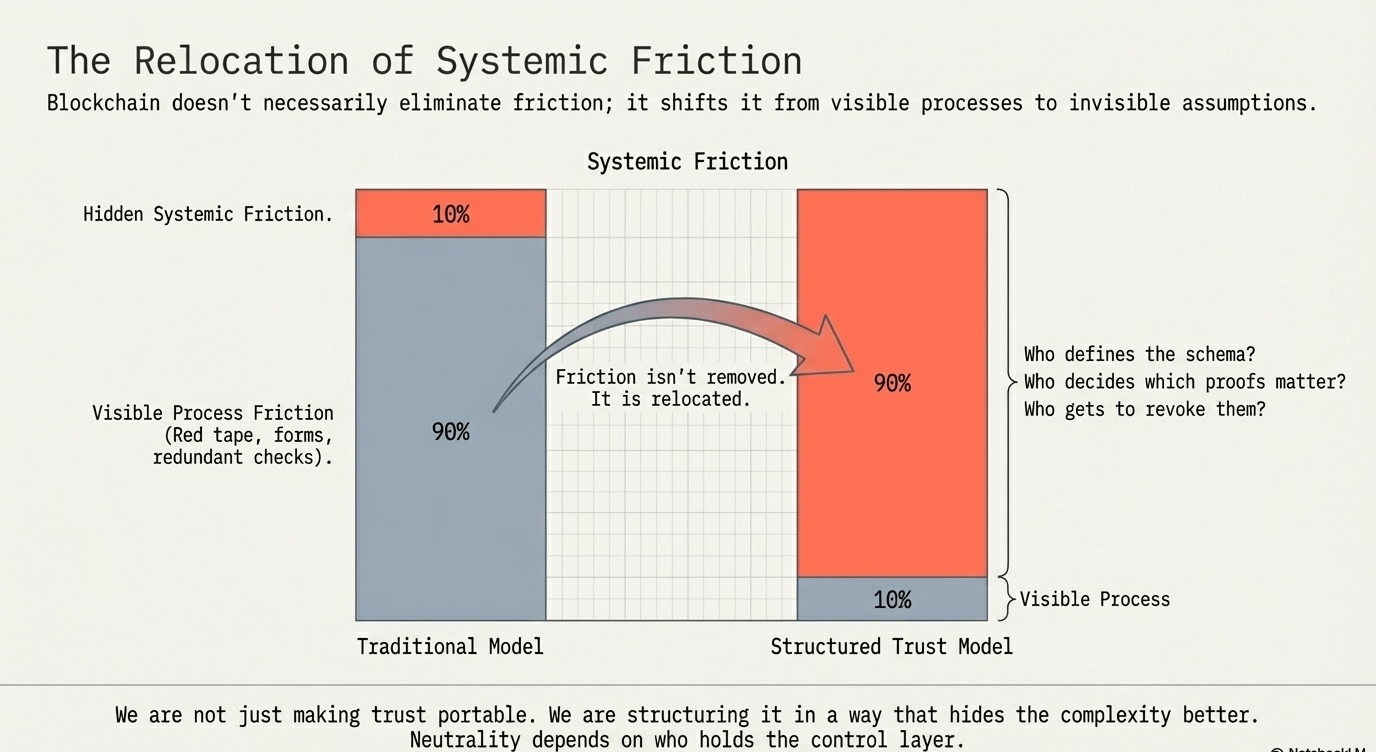
Who defines the schema?
Who decides which proofs matter?
Who gets to revoke them?
On paper, the protocol can look neutral.
But what this really means is…
neutrality depends on who holds the control layer.
And that’s the part that keeps bothering me.
Because systems like this don’t need to break loudly.
They don’t need to stop working.
They just need to shift… slightly.
A rule changes.
A validation condition updates.
A permission gets tighter.
Everything still works.
But not in the same way.
There’s also something else I’ve been thinking about.
We always say blockchain reduces friction.
But what if… it doesn’t remove it?
What if it just moves it?
From something visible…
to something harder to detect.
Because in this case, the friction isn’t in the process anymore.
It’s in the assumptions.
In how we define truth.
In how we maintain relevance.
In how systems stay aligned over time.
I’m not saying this approach is wrong.
Actually… I think it’s one of the more interesting directions I’ve seen.
But I don’t think it’s as simple as it looks either.
So I keep coming back to the same question:
Are we really making trust portable…
or are we just structuring it
in a way that hides the complexity better?
I don’t have the answer yet.
So for now…
I’m just watching how it evolves.
Carefully.
Because this kind of system doesn’t fail fast.
It changes slowly.
And that’s exactly why it’s worth paying attention to. @SignOfficial $SIGN #SignDigitalSovereignInfra