
I was thinking today about how a claim system can feel useful in the moment without actually feeling useful for very long.
A wallet connects, an amount appears, the claim goes through, and at first that seems like enough. For that one moment, maybe it is. But real ecosystems are not built only on moments like that. They are built on whether people can still understand what happened after the claim is already done. That is the part I keep coming back to.
Because a claim is never just a claim.
It is the last visible step of a decision the system already made. Who qualified. What counted. Which rules mattered. Why one person could claim and another one could not. By the time the claim page appears, all of that has already been decided. So if the system only helps people collect value, but leaves nothing solid behind, it may feel smooth without feeling especially useful.
And to me, that is a big difference.
A useful claim system should not only help something happen once. It should help the ecosystem keep making sense of that thing later. That is what makes it feel real. Not just that the claim worked, but that the logic behind it still holds together after the easy moment is over.
I think that matters because real ecosystems are never as simple as the first claim screen makes them look. There are always edge cases. There are always people comparing results. There are always questions that show up later, when the first reaction has already passed. Why did this wallet qualify. Why did this rule matter more than another one. Why did this schedule look like this. If the only answer is a finished claim page, the system starts feeling thinner than it should.
That is where usefulness really gets tested.
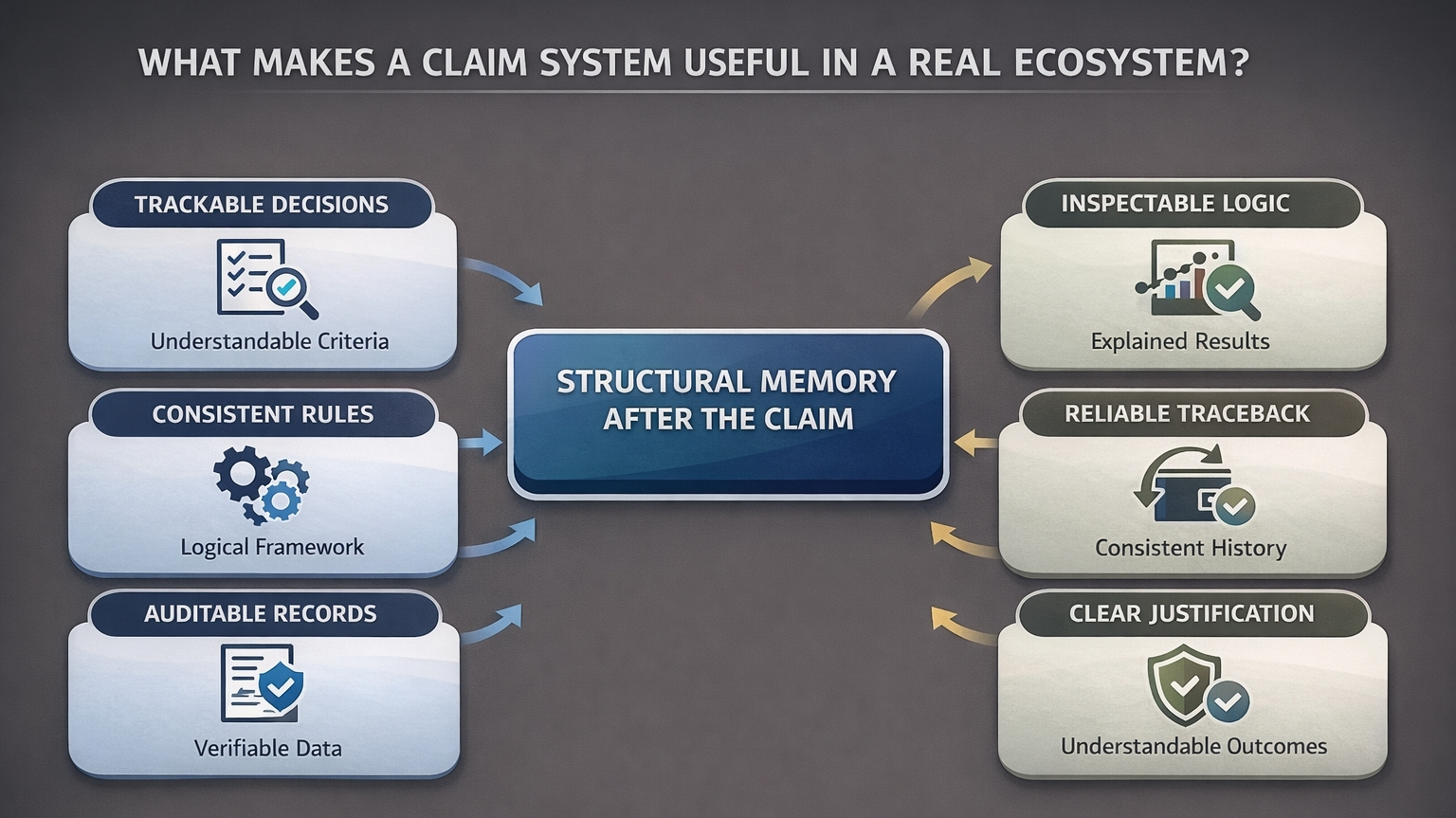
For me, a useful claim system is one that leaves behind something people can come back to. Something that makes the process still feel understandable after the claim is completed. Because once an ecosystem grows, trust starts depending on memory. Not memory in the emotional sense. Memory in the structural sense. The ecosystem needs some way to remember what happened and why it happened like that.
That is why I think the stronger systems always feel a little heavier.
Not louder. Not more complicated on the surface. Just heavier in the sense that they leave more behind. They do not ask people to trust only the result. They give people something firmer to return to later when the harder questions begin.
And those harder questions always begin.
That is why I do not think usefulness is only technical. It is also social. A claim system can work perfectly from a transaction point of view and still leave people uncertain about the process behind it. And once that uncertainty starts building, the ecosystem carries it forward. Into the next reward. Into the next distribution. Into the next decision. Over time, people stop asking only whether they can claim. They start asking whether the whole process can still make sense once it is over.
That is the line that matters to me.
A tool helps something happen. A real system helps that thing keep making sense later.
And in a real ecosystem, that second part is what makes the claim process actually useful. Not only that it delivers value, but that it leaves behind enough structure for the ecosystem to keep trusting what happened after the moment has passed.
@SignOfficial #SignDigitalSovereignInfra $SIGN #SignDigitalSovereignInfra