
In the world of blockchain, we have solved the problem of moving value (tokens) and the problem of executing logic (smart contracts). But we haven't solved the problem of "Verifiable Facts."
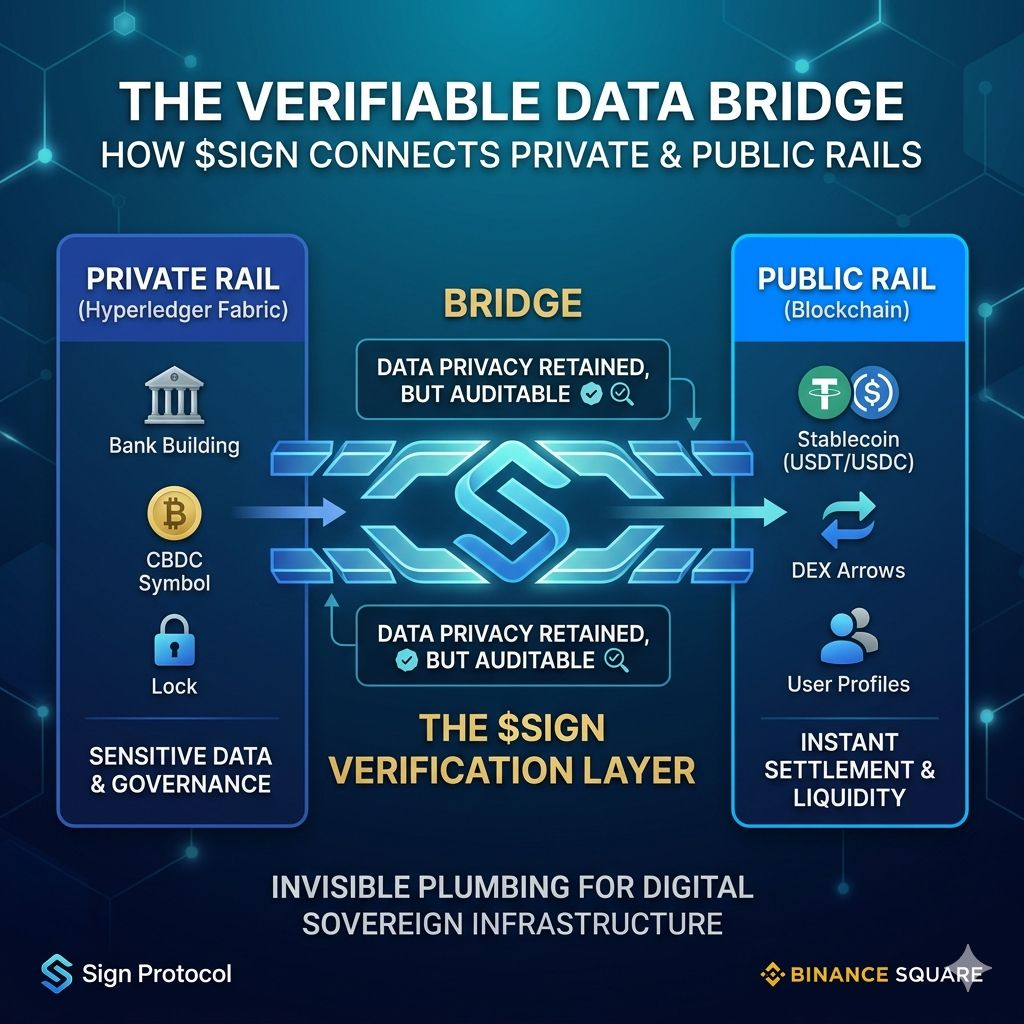
Most data on-chain is either too public to be private, or too private to be useful. This is the fundamental gap that Sign Protocol ($SIGN ) is designed to close.
1. The Attestation Layer: The "Notary" of Web3
Sign Protocol isn't a blockchain; it’s an omni-chain attestation protocol. Think of it as a universal digital notary. It allows anyone—users, dApps, or institutions—to sign a "claim" (an attestation) about a piece of data.
Whether it’s a KYC check, a professional credential, or a contribution record, $SIGN makes that claim portable, verifiable, and permanent across any network.
2. Programmable Privacy with SignPass
One of the biggest hurdles for adoption is the "All-or-Nothing" privacy trap. Traditional blockchains expose everything. SignPass changes the game by allowing "Zero-Knowledge" style proofs.
You can prove you are a human, or that you are over 18, or that you live in a specific region, without ever revealing your actual passport or address. This "Privacy-First" infrastructure is what institutions have been waiting for.
3. TokenTable: Solving the Distribution Crisis
We’ve seen countless projects fail because their token distribution was hijacked by bots. TokenTable, built on Sign Protocol, uses these attestations to ensure that rewards go to real humans based on actual merit. It turns "blind" distributions into "intelligent" ones.
4. The Omni-Chain Advantage
Trust shouldn't be trapped on a single chain. Sign Protocol is built to be infrastructure-agnostic. A proof generated on one network can be verified and acted upon on another. This "interoperable trust" is the glue that will eventually connect the fragmented pieces of the Web3 ecosystem.
The Bottom Line
The value of $SIGN isn't in speculation; it’s in utility. As more dApps and institutions require verifiable data to operate safely, the "Attestation Layer" becomes the most valuable real estate in the digital sovereign infrastructure.
We are moving from a Web3 of "Don't Trust, Verify" to a Web3 where "Verification is Infrastructure."