
The cryptocurrency market has always been highly sensitive to the behavior of large holders, commonly referred to as “whales.” These entities—often early adopters, institutions, or high-net-worth investors—control a significant portion of Bitcoin’s circulating supply. When they move capital, the market reacts.
In recent months, activity from BTC wallets holding over $100 million has intensified, drawing attention to a developing liquidity squeeze. This shift is not just a short-term anomaly; it reflects a structural change in how Bitcoin supply is distributed across exchanges and private storage. For traders and investors, understanding this evolving dynamic is essential for navigating both volatility and long-term positioning.
On-chain analytics platforms such as Glassnode and CryptoQuant provide a deeper look into Bitcoin’s underlying supply mechanics. One of the most notable trends is the steady decline in BTC held on centralized exchanges. Over the past three months, exchange reserves have dropped from approximately 2.5 million BTC to just above 2.1 million BTC—a reduction of roughly 16%.
This trend signals a shift in investor behavior. Rather than keeping Bitcoin readily available for trading, large holders are increasingly moving assets into cold storage. Historically, this pattern is associated with accumulation phases, where investors anticipate higher future prices and prefer long-term holding over short-term selling.
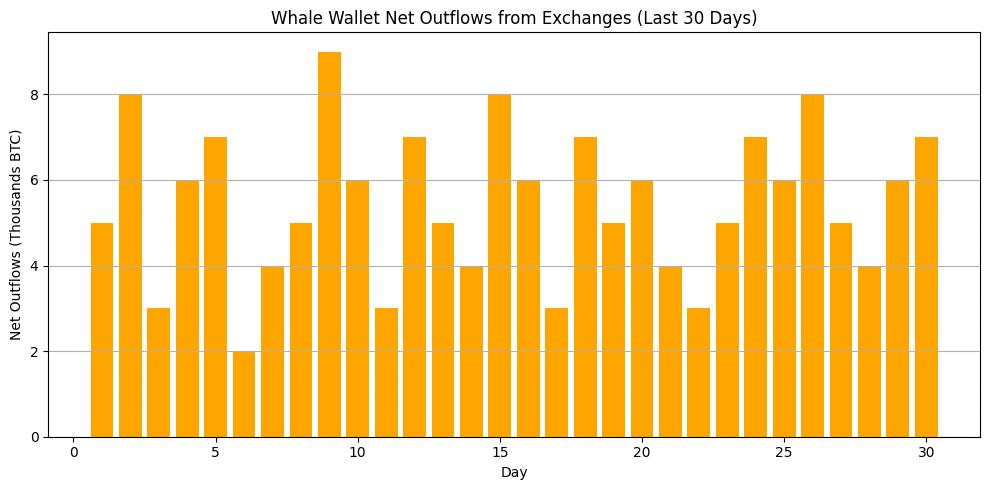
Another key metric reinforcing this narrative is the behavior of whale wallets. Addresses holding substantial $BTC balances have shown consistent net outflows from exchanges, indicating accumulation rather than distribution. This reduces the immediate sell pressure in the market but simultaneously tightens available liquidity.
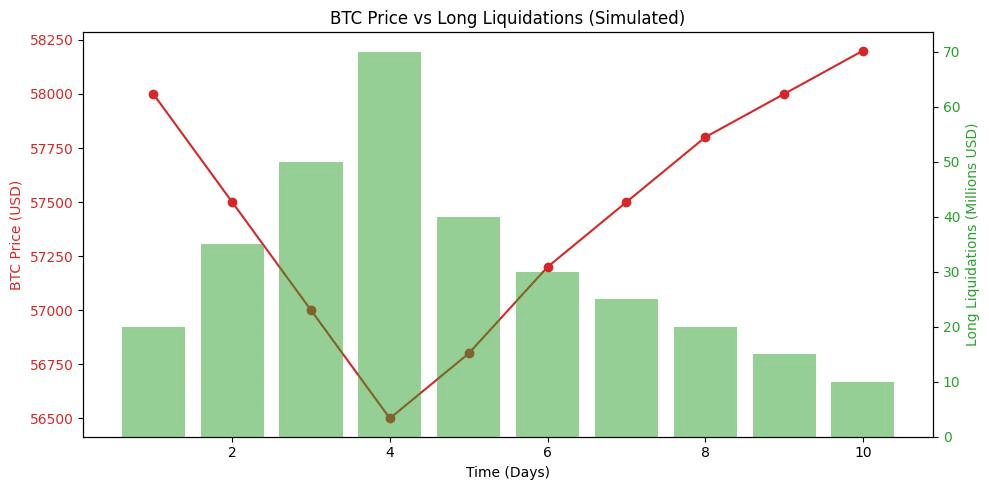
At the same time, the derivatives market presents a contrasting picture. Data from Coinglass highlights that over $300 million in BTC long positions were liquidated within a 24-hour period during a recent volatility spike. This suggests that while whales are steadily accumulating, leveraged traders are being forced out of positions due to rapid price swings.
The divergence between spot accumulation and derivatives instability is a critical signal. It shows a market where long-term conviction is strengthening, but short-term positioning remains fragile and highly reactive.
Derivatives and Liquidity Dynamics
To fully understand the current market structure, it’s important to analyze the role of derivatives. Bitcoin futures and perpetual contracts now account for a significant portion of daily trading volume, often exceeding spot market activity.
Open interest in BTC derivatives has remained elevated, frequently surpassing $20 billion. This indicates that a large amount of capital is tied up in leveraged positions. While this can enhance liquidity under normal conditions, it also introduces systemic risk during periods of volatility.
When liquidity on exchanges is thin and a large order enters the market, price movements can become exaggerated. These sudden moves often trigger liquidations, creating a cascading effect. For example, a sharp downward move can liquidate long positions, pushing prices even lower, while a sudden upward spike can liquidate short positions, accelerating upward momentum.
This interaction between reduced spot liquidity and high derivatives exposure creates a feedback loop. Whales, intentionally or not, can initiate moves that ripple through leveraged markets, amplifying volatility far beyond what would occur in a more liquid environment.
Market Implications
The combination of declining exchange reserves and concentrated whale holdings has several important implications for market behavior.
First, reduced supply on exchanges increases the likelihood of sharp price movements. With fewer BTC available for immediate trading, even moderate buy or sell pressure can lead to outsized reactions. This is often referred to as a “liquidity vacuum,” where the absence of sufficient orders on one side of the market causes rapid price shifts.
Second, the growing dominance of whales means that market direction can be increasingly influenced by a smaller group of participants. While this does not guarantee manipulation, it does mean that tracking large wallet activity becomes more critical for anticipating market trends.
Third, volatility is likely to remain elevated. As long as derivatives markets maintain high leverage levels, sudden price movements will continue to trigger liquidations, reinforcing short-term instability.
However, it’s important to note that historically, periods of declining exchange reserves have often preceded bullish market phases. When supply becomes constrained and demand increases, the resulting imbalance tends to push prices upward over time. That said, these periods are rarely smooth and are often accompanied by sharp corrections along the way.
Analytical Takeaway
For investors and traders, the current environment demands a more data-driven approach. Monitoring key metrics such as exchange inflows and outflows, whale wallet activity, and derivatives open interest can provide valuable insights into market direction.
Short-term traders may benefit from volatility-focused strategies, taking advantage of rapid price swings driven by liquidity imbalances. However, risk management is crucial, as leveraged markets can turn quickly and unexpectedly.
Long-term investors, on the other hand, can view the ongoing decline in exchange reserves as a sign of strengthening fundamentals. Reduced sell-side pressure and increased accumulation by large holders suggest confidence in Bitcoin’s long-term value proposition.
Ultimately, the market is transitioning into a phase where supply dynamics play a more significant role than sentiment alone. Understanding where Bitcoin is held—and how easily it can be sold—offers a clearer picture of potential price movements than traditional indicators.
Bitcoin’s current liquidity landscape highlights a fundamental shift in market structure. Whales and institutional participants are increasingly removing supply from exchanges, tightening liquidity and setting the stage for more pronounced price movements.
While retail sentiment and short-term news cycles continue to influence daily volatility, deeper insights from on-chain and derivatives data reveal a more nuanced reality. The market is becoming more supply-constrained, more leverage-driven, and ultimately more reactive to large capital flows.
In this environment, understanding liquidity is no longer optional—it is essential. Investors who can interpret these underlying dynamics will be better positioned to navigate both the risks and opportunities that lie ahead in Bitcoin’s evolving market cycle.
