
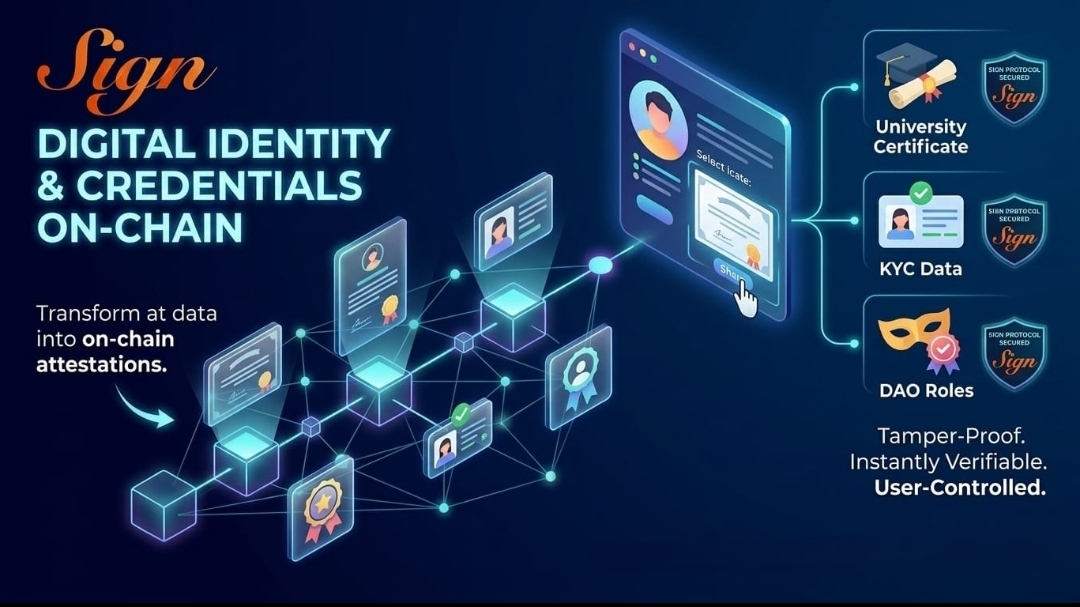
You know how the internet changed the world by connecting people and information? Now imagine the next layer — where not just data, but real things like identity, money, and public programs can be verified and trusted without a middleman. That’s exactly what @SignOfficial is working on with its sovereign‑grade infrastructure powered by $SIGN. Instead of building another flashy token project, Sign is focused on something deeper: a digital backbone that nations and institutions can actually rely on.
Here’s the idea in simple terms: when an identity, a credential, or a payment is recorded through Sign’s system, it becomes a verifiable fact that anyone — from a government auditor to a regular citizen — can confirm without depending on centralized databases. This isn’t just tech jargon. It means things like national identity systems, regulated digital currencies (like CBDCs and stablecoins), and public benefit programs could operate with greater trust, transparency, and resilience.
What I find exciting is how this moves blockchain out of the “speculate on price” mindset and into real‑world impact. In many countries, governments are exploring digital transformation — especially in regions like the Middle East where economic modernization is a priority. Sign’s infrastructure gives them tools to build these systems in a way that’s auditable, secure, and built for the long haul.
And at the heart of all this is $SIGN — not just a token for trading but a utility engine that powers governance, network incentives, and protocol operations across the ecosystem. When infrastructure like this starts to matter more than speculation, projects with real use cases tend to stand out over time.