


Honestly? I’ve been sitting with $SIGN Protocol for a while, and the part that keeps pulling me back is how it quietly redefines what “trust” even means in blockchain systems. Most people think blockchain already solved trust. But that’s not entirely true. It solved transaction integrity, not real-world verification. That gap is exactly where Sign operates.
At its core, Sign Protocol revolves around attestations basically structured, verifiable claims. But what stands out here is how flexible they are. These aren’t just static records; they’re programmable proofs tied to identities, ownership, or actions. And when you combine that with digital identity systems, things get interesting. Instead of relying on fragmented databases, identity becomes something portable and verifiable across systems. That’s powerful… but also a bit unsettling if you think about centralization risks.
Now, the role of Arweave is something I initially overlooked. It’s not just storage. it’s a fallback layer for data availability. When on chain execution becomes expensive or unnecessary, data can live off-chain while still being verifiable. That hybrid approach is clever. It reduces costs and improves scalability. But the tension here is durability versus control. who guarantees that off-chain data remains accessible and correctly indexed over time?
Then there’s $SIGN itself. Most people see it as just another token, but honestly, it behaves more like a coordination mechanism. It powers interactions across the ecosystem verification, distribution, governance. What I kept coming back to is how its value isn’t isolated; it’s embedded in system usage. That’s a stronger foundation than speculation, but it also means adoption directly impacts token relevance.
Where Sign really pushes boundaries is in redefining trust. Instead of trusting institutions blindly, you trust attestations backed by cryptography. But let’s not oversimplify trust doesn’t disappear, it shifts. You’re now trusting schema creators, issuers, and infrastructure layers. That’s a different kind of dependency.
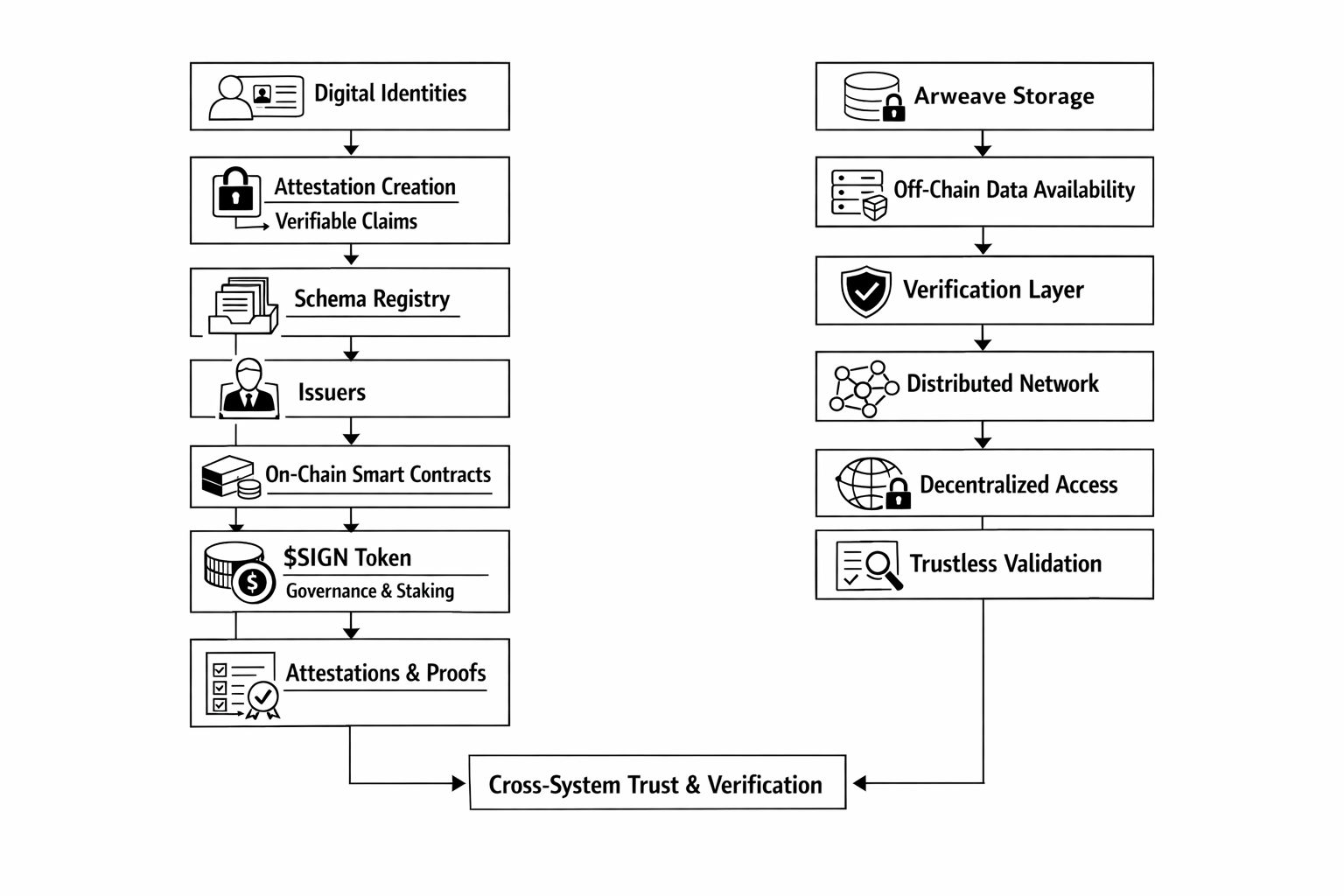
And this is where the bigger question starts forming in my mind. If Sign Protocol becomes a foundational layer for identity and verification across systems, are we actually decentralizing trust… or just rebuilding it in a more complex, harder to see structure?
@SignOfficial $SIGN #SignDigitalSovereignInfra
