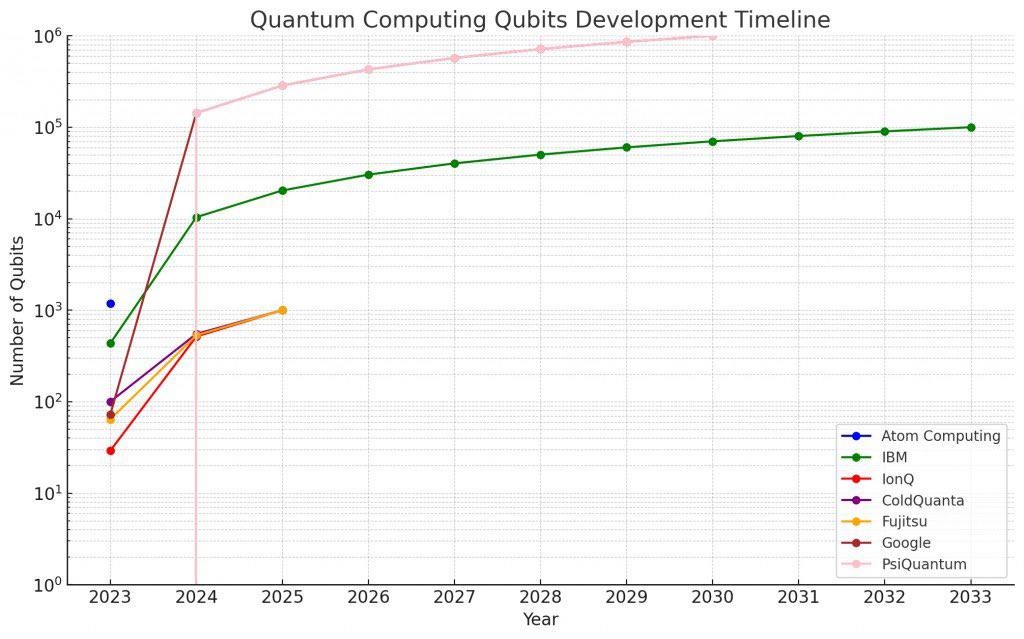
4 years ago, it was 2M qubits, today, Google says 500,000 may be enough.
The math just changed so how long before Bitcoin’s core assumption gets tested? ⏳
——————-
❓ What Google Actually Found
On March 30, 2026, Google published a paper that sharply reduced the resources required to ‘break’ Bitcoin.
🕊️Est. requirement dropped from millions to 1,200–1,450 logical qubits (500,000 physical 🟰 20x reduction in hardware assumptions in attacking Bitcoin’s ECDSA cryptography.
This reframes the risk from theoretical impossibility to engineering problem on a timeline.
———————————-
😐How the Attack Would Work
Bitcoin’s security depends on private keys remaining undiscoverable from public keys 🔑
Quantum computing challenges that via Shor’s algorithm
The critical vulnerability lies in transactions: 👨💻
🕊️Public keys are exposed when transactions are broadcast
🕊️A sufficiently powerful quantum system could derive the private key
🕊️Estimated attack completion: 9 minutes
Bitcoin block time: 10 minutes
This creates a narrow but real attack window with estimates suggesting 41% success probability per attempt under ideal conditions.
——————————
🫣 The Scale of Exposure
The risk is not hypothetical in scope, only in capability.
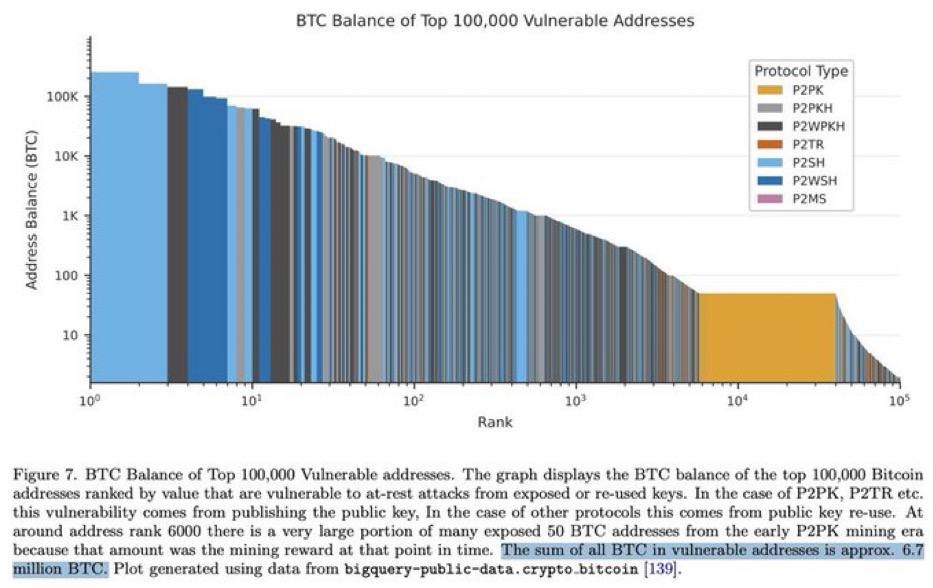
🕊️6.9 million BTC sit in wallets with exposed public keys
🕊️Around 1.7 million BTC from early-era wallets are permanently exposed
These include coins linked to Satoshi Nakamoto
These assets represent a fixed, multibillion-dollar target once quantum capability exists 💰
—————————-
❗️Why This Matters Now
Two shifts brought urgency:
1. Google’s findings lowered the technical barrier significantly
2. Institutional reaction began notably capital rotation away from Bitcoin citing quantum risk
————————————
🚩The Taproot Twist
Bitcoin’s 2021 Taproot upgrade improved efficiency and privacy but may have widened exposure:
🕊️Public keys are revealed more frequently by default.
More addresses may now be vulnerable during transaction activity.
🕊️A rare case where optimization potentially increased future attack surface.
———————————
❗️ Is the Threat Real TODAY?
🕊️No quantum computer today can execute this attack.
🕊️Current systems are far below required scale and stability
🕊️Google’s own migration to post-quantum security is targeted for 2029
The gap remains massive but importantly, it is shrinking.
—————————
🏎 Race Against Time: Can Bitcoin Adapt?
Bitcoin infrastructure is not static, however it is slow to change.
Active developments include:
🕊️BIP-360: quantum-resistant output types (testnet stage)
🕊️Post-quantum signatures optimized for Bitcoin constraints
Migration timelines estimated at 5–7 years
——————————
⚠️ The Real Risk: Technical vs Social Layer
Upgrading Bitcoin raises deeper questions:
🕊️What happens to dormant or lost coins?
🕊️Should vulnerable funds be frozen or recovered?
🕊️Who decides?
At that point, the problem shifts from cryptography to governance, where consensus is far harder than code.
————————-
🔖Final Thoughts
Bitcoin’s margin of safety just narrowed.
The quantum threat still sits in the future, but that future is no longer abstract 💭
Every reduction in qubit requirements pulls the timeline closer, while Bitcoin’s upgrade path moves at human speed 🕐
The real question is whether Bitcoin can evolve faster than quantum computers can break it.
#Bitcoin #QuantumComputing #CryptoNews #Blockchain #CyberSecurity