
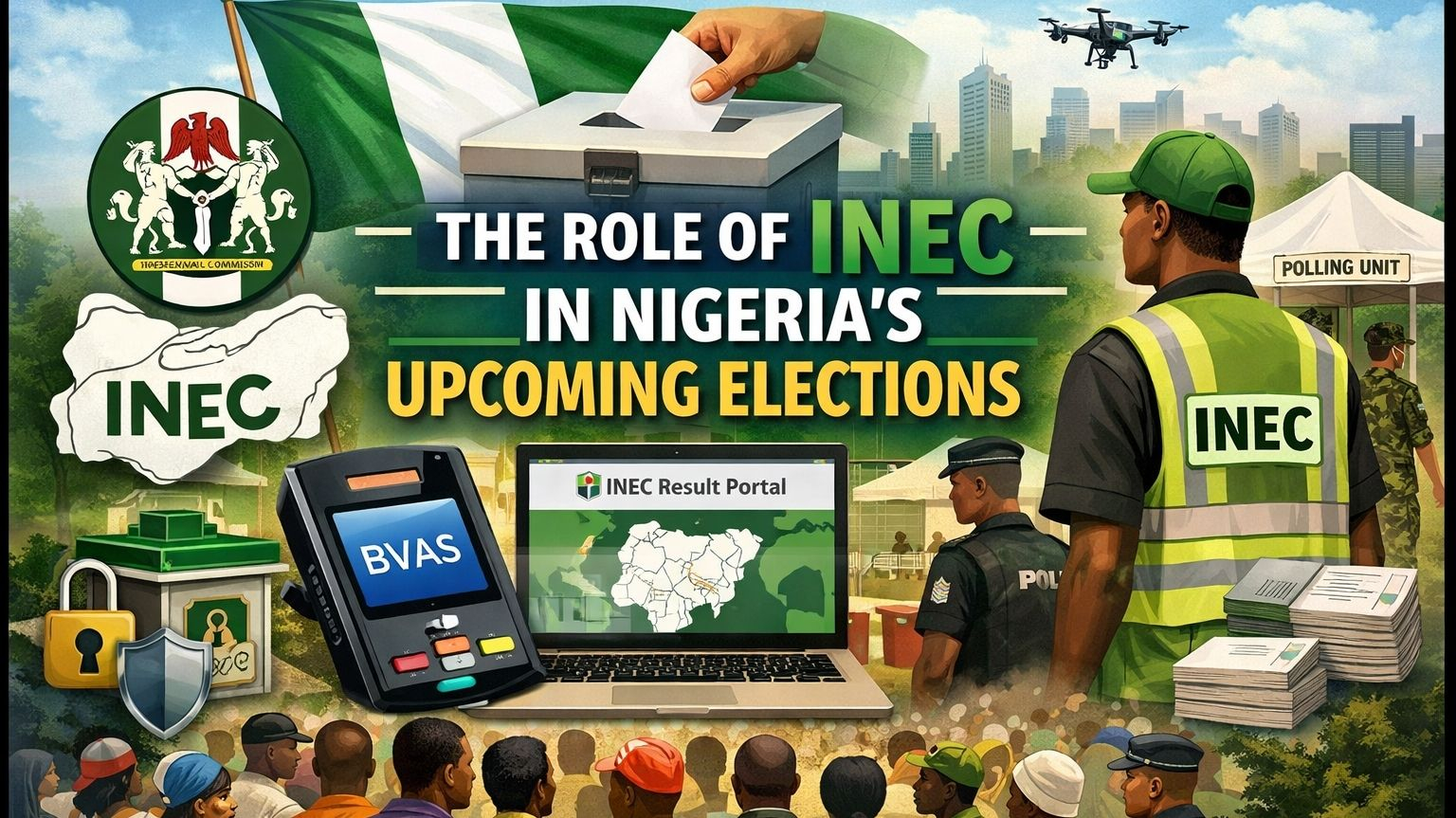


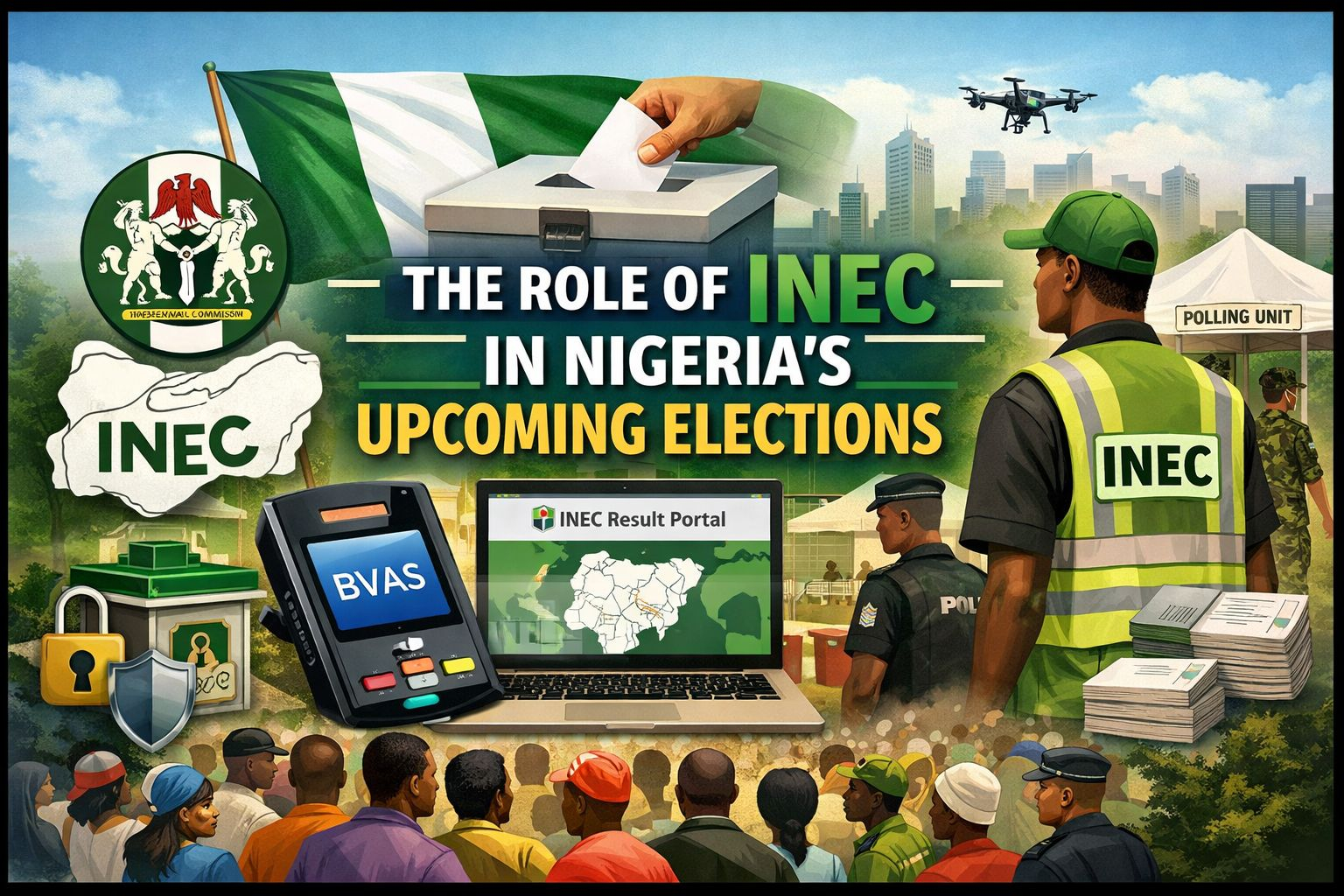
 As Nigeria approaches another election cycle, attention inevitably turns to the Independent National Electoral Commission (INEC), the institution charged with managing one of the most complex democratic processes in Africa. Its role is not just administrative it is foundational to the credibility, stability, and legitimacy of the entire electoral system.
INEC’s primary responsibility is to organize, undertake, and supervise elections at all levels of government. This includes registering voters, verifying candidates, preparing electoral materials, overseeing voting, and managing the collation and announcement of results. Each stage is interconnected, and any weakness along the chain can affect public confidence. In a country as large and diverse as Nigeria, executing these tasks efficiently requires not only planning but precision.
A defining feature of recent elections has been INEC’s adoption of technology to improve transparency. Tools such as the Bimodal Voter Accreditation System (BVAS) and the INEC Result Viewing Portal (IReV) were introduced to reduce fraud and enhance real-time verification of results.
These innovations have raised expectations among citizens, but they have also exposed the commission to greater scrutiny. Technical failures or inconsistencies, even if isolated, can quickly undermine trust in the system. As such, the effectiveness of these tools in the upcoming elections will be closely watched.
Beyond logistics and technology, the question of independence remains central to INEC’s role. Although established as an autonomous body, its leadership appointments and funding mechanisms often bring its neutrality into public debate. For the commission, credibility depends not only on acting independently but also on being widely perceived as impartial. Public trust is built not just through outcomes, but through transparent processes and consistent communication.
INEC is also tasked with ensuring that the electoral process is inclusive. This involves voter education campaigns, continuous voter registration, and efforts to reach marginalized or hard-to-access communities. Addressing voter apathy, particularly among young people, has become increasingly important. An election can only be considered representative if it reflects broad participation across different segments of society.
Security remains another critical factor. While INEC does not control security agencies, it must coordinate closely with them to guarantee a safe voting environment. The protection of electoral materials, officials, and voters is essential to preventing disruptions and ensuring that citizens can exercise their rights without fear. Any lapses in security can have far-reaching consequences on turnout and the credibility of the results.
Ultimately, INEC’s role extends beyond conducting elections it is about sustaining confidence in Nigeria’s democratic process. The upcoming elections will test not just the commission’s operational capacity, but also its ability to reinforce public trust in a politically sensitive environment. How effectively it performs will shape not only electoral outcomes, but also the broader perception of democracy in Nigeria.