
In the crowded crypto market, XRP stands out not as a replacement for banks, but as a highly efficient tool designed to help them move money across borders instantly and cheaply.
What Makes XRP Different?XRP$XRP
Ripple vs. XRP: Ripple is the technology company, while XRP is the actual digital currency used on its network to move funds.
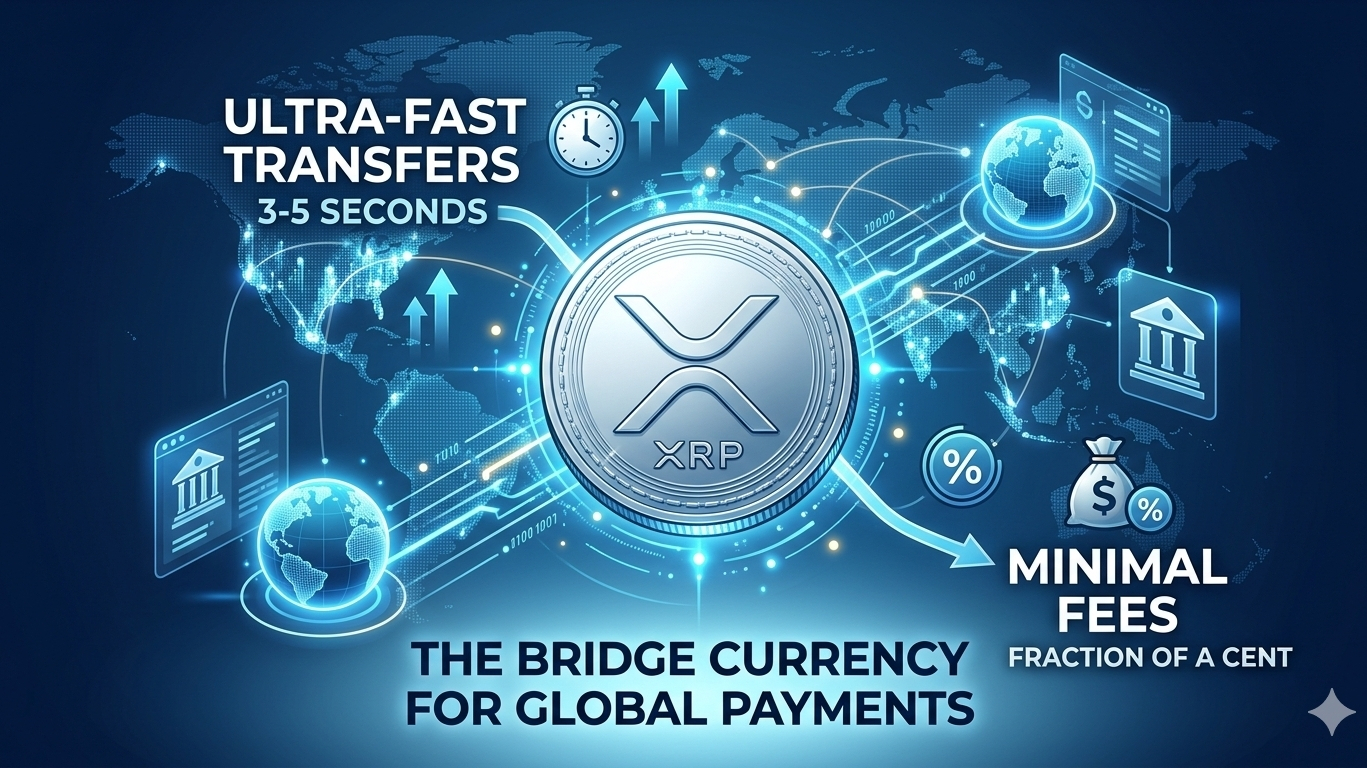
Incredible Speed: While traditional bank transfers take days and Bitcoin takes minutes, XRP transactions settle in just 3 to 5 seconds.
Ultra-Low Fees: Sending any amount of money via XRP costs a fraction of a single cent.
Eco-Friendly: Unlike Bitcoin, XRP cannot be mined. All tokens already exist, making it a green and highly sustainable network.
The Real-World Use Case$XRP
XRP's main job is acting as a "Bridge Currency." If a bank wants to send money from the US to another country, it can convert Dollars to XRP, transfer it in 3 seconds, and convert it into the local currency instantly. This eliminates the need for banks to hold massive amounts of cash in foreign accounts.
The SEC Battle
For years, XRP faced a major lawsuit from the US SEC, which claimed it was an unregistered security. However, Ripple won key legal rulings proving that XRP is not a security, bringing massive confidence back to its investors.
The Bottom Line: XRP is one of the very few cryptocurrencies with a clear, functional, and massive real-world use case in the banki$XRP ng sector.