
Introduction
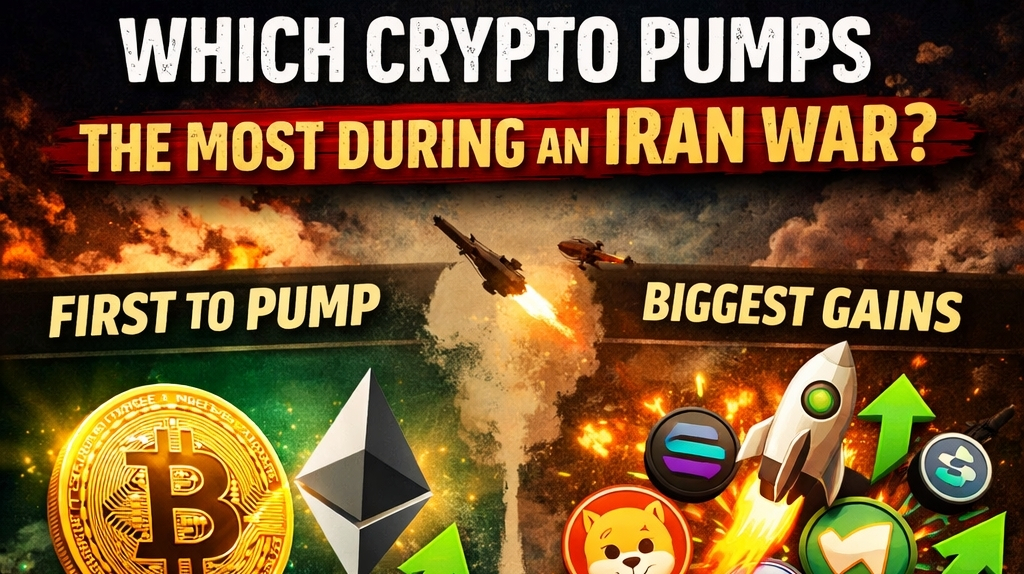
Geopolitical conflicts, especially involving countries like Iran, have a significant impact on global financial markets. The cryptocurrency market, known for its high volatility, often reacts rapidly to such events. Traders and investors frequently ask: Which cryptocurrency benefits the most during times of war?
This article explores how major cryptocurrencies behave during war-like situations and identifies where the biggest opportunities—and risks—lie.
$BTC : The First Reaction Asset
Bitcoin is typically the first cryptocurrency to respond when war-related news breaks.
Due to its reputation as “digital gold,” investors often move into Bitcoin during uncertainty. This leads to a short-term price surge immediately after major geopolitical announcements. However, this rally is usually temporary. As fear spreads across markets, Bitcoin can experience sharp corrections.
Key Insight: Bitcoin leads the initial move but does not guarantee long-term stability during war.
Ethereum: High Volatility, Higher Risk
Following Bitcoin, Ethereum tends to show stronger price swings.
Ethereum reacts with higher volatility, offering bigger upward moves but also faster declines. This makes it attractive for short-term traders, but risky for long-term investors during uncertain conditions.
Key Insight: Ethereum provides greater trading opportunities but comes with increased risk.
Altcoins: Maximum Gains, Maximum Danger
Once $BTC establishes direction, capital flows into altcoins such as $SOL .
These assets often deliver the highest percentage gains during speculative phases. However, they are also the most vulnerable to sudden crashes, especially when market sentiment shifts.
Key Insight: Altcoins offer the biggest profits, but also the highest level of risk.
Stablecoins: The Real Demand Driver
While price-focused traders chase volatility, many participants prioritize capital protection. This is where Tether plays a crucial role.
Stablecoins do not experience price surges, but their demand increases significantly during geopolitical crises. They act as a safe storage of value in uncertain environments.
Key Insight: Stablecoins do not pump, but they dominate real demand during war.
Market Behavior in Three Phases
1. Initial Reaction
Bitcoin rises quickly
#ETH and altcoins follow
Market shows strong upward momentum
2. Fear and Uncertainty
Volatility increases
Market experiences sharp corrections
Risk sentiment declines
3. Prolonged Conflict
Stablecoin demand rises
Crypto market becomes weak or sideways
Traders shift toward safety
Conclusion
During an Iran war scenario, Bitcoin and Ethereum typically lead the initial price surge, while altcoins generate the highest percentage gains. However, as uncertainty grows, the market often reverses, and stablecoins like $USDT become the most demanded assets.