

Disclaimer: This article is written by another person it's not my words.
This memoir, “Binance Life,” records many valuable firsthand accounts of Zhao Changpeng (CZ)’s entrepreneurship and life. Below is a more detailed compilation of key excerpts:
1. Extreme Obsession with Games and Strategy
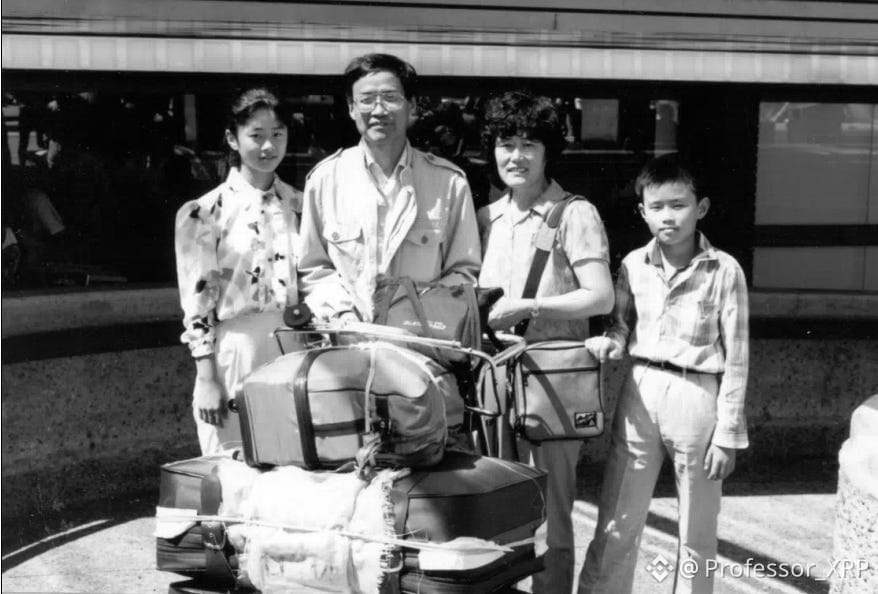
CZ entered school early at the age of five along with his older sister. As their home was in the teachers’ dormitory of Zhonghu Village Middle School in Jiangsu, they were the only two children in the entire school and were locally known as “the two kids of the middle school.” When a hand-operated water pump was installed in his hometown, CZ was amazed by this simple machine that could draw flowing water — this marked the budding of his interest in technology.
After moving to Hefei at age 10, his father took him to visit the computer room at the University of Science and Technology of China. He played a simple computer game where small white dots raced for the first time, leaving a deep impression on him about the power of large computing machines.
In grades 9 and 10, CZ suffered from severe stuttering. Despite being the volleyball team captain, he could not argue with referees. Later, under the free guidance of a retired speech therapist, he largely recovered within four weeks using the “gentle onset” method.
Due to limited family finances, the only toy in his youth was a toy airplane worth 1.99 CAD from Safeway. It was the only time he insisted on his father making an exception to buy him a gift.
At age 13, his father spent 7,000 CAD (equivalent to seven months of his income) to buy an x286 computer. CZ believes that without this “huge investment,” he would not be who he is today.
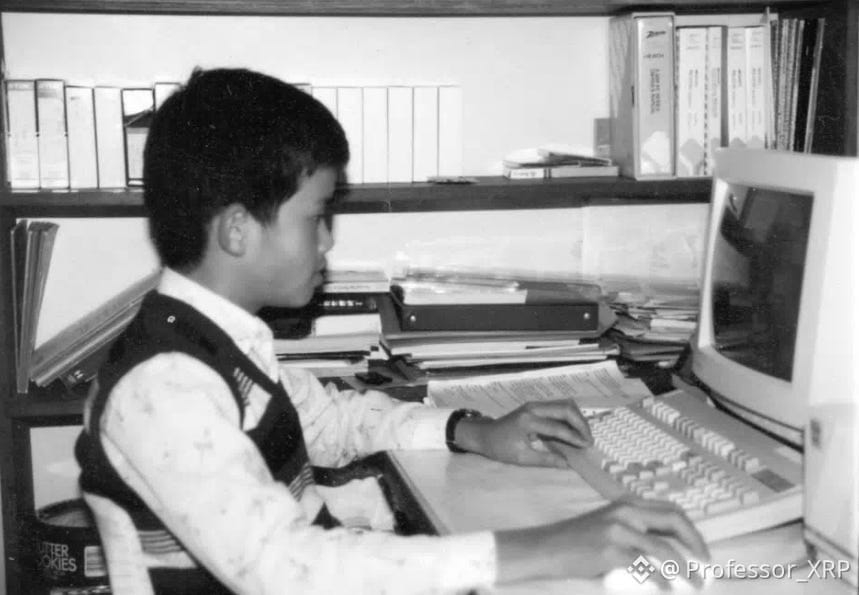
CS obsession: CZ mentioned that during his time in Tokyo, he became extremely addicted to Counter-Strike. He later noted that this obsession somewhat affected the state of his subsequent entrepreneurial projects.
While attending high school in Vancouver, CZ started working early. At 14, he worked at McDonald’s earning 4.5 CAD/hour; at 15, he washed dishes at the PNE amusement park on Hastings Street for 9 CAD/hour; at 16, after getting his driver’s license, he worked night shifts at a Chevron gas station on King Edward Road from 11 p.m. to 7 a.m. for 12 CAD/hour. That same summer, he also obtained a referee certification from the British Columbia Volleyball Association, officiating high school league games for 16 CAD/hour, with each match billed at four hours.
Volleyball had a profound impact on him. The entire school had just over 200 students across five grades, and their team often barely managed to gather six players, with no substitutes. CZ became captain for four years due to his diligence in training. Before grade 10, he couldn’t afford the 90 CAD fee for a UBC training camp and could only watch from the stands, until UBC team captain Conrad invited him to join. In a key match, they were trailing 7–14 when CZ scored eight consecutive points with jump serves, bringing the score to 15–14. However, at match point, he switched to a standing serve out of fear of making a mistake and ultimately lost. Afterward, Conrad told him never to interrupt his momentum. After the city tournament, he received the MVP award — his first trophy.
Poker logic: CZ wrote, “Life is like playing cards. We don’t get to choose the hand we’re dealt; what matters is how we play it.” He viewed poker as the best way to understand risk and probability, a mindset that later permeated his business decisions. Both poker and volleyball taught him a shared principle: “Never interrupt your momentum.” If you’re on a streak, keep “jump serving” or raising bets instead of becoming conservative out of fear of probabilistic mistakes.
During university, CZ briefly maintained a long-distance relationship with his high school girlfriend, which soon ended. He later dated a Taiwanese girl named Amanda. By his own recollection, he was immature at the time, prone to speaking harshly during conflicts and even using breakups as leverage, which ultimately ended the relationship. This experience had a significant impact on him, leading to two simple principles: don’t be a jerk, and don’t issue ultimatums lightly. These habits later extended into his business negotiation style.

During his time in Tokyo, CZ met his future wife Winnie at a Chinese restaurant. Her family ran the restaurant — her father single-handedly cooked all 485 dishes on the menu, her mother handled the front desk, and she helped in the shop. Later, as CZ worked intensively in Beijing and his family relocated to Tokyo, they gradually lived apart and eventually divorced after several years.
2. “Thrilling” Early Entrepreneurial Days
CZ first encountered Bitcoin not at a tech conference or in a coding community, but at a friendly poker game in Shanghai in 2013. The table included both investors and entrepreneurs. Cao Darong first mentioned Bitcoin, and Bobby Lee further discussed it with him, suggesting he allocate 10% of his assets. However, he did not go all in immediately. By the time he decided to heavily invest, the price had already risen significantly.
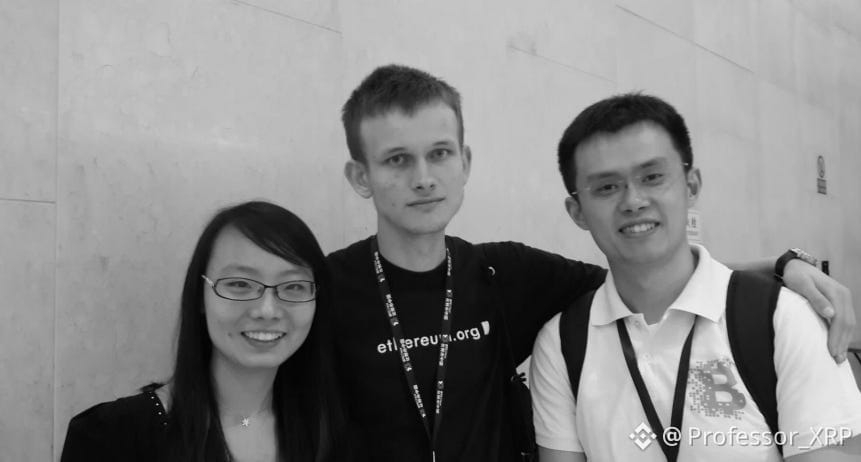
On December 13, 2013, CZ flew to Las Vegas to attend a Bitcoin conference. The entire venue had only about 200 people, but it had a profound impact on him. There he met 19-year-old Vitalik, who was still with Bitcoin Magazine but already speaking about Ethereum. Charlie Lee was also very popular at the event, surrounded by crowds.
In early 2014, CZ nearly joined Mt. Gox China with a 10% equity stake, backed by Mr. Gong, president of Susquehanna’s China division. However, on February 7, 2014, Mt. Gox collapsed and suspended withdrawals. The 100 bitcoins he had on the platform — worth about $50,000 at the time — were lost.
After leaving Fusion Systems, he dealt with the aftermath of worthless equity while selling his long-held apartment in Pudong, converting the proceeds into Bitcoin. As his purchases spanned price ranges of $800, $600, and $400, his average cost settled around $600.
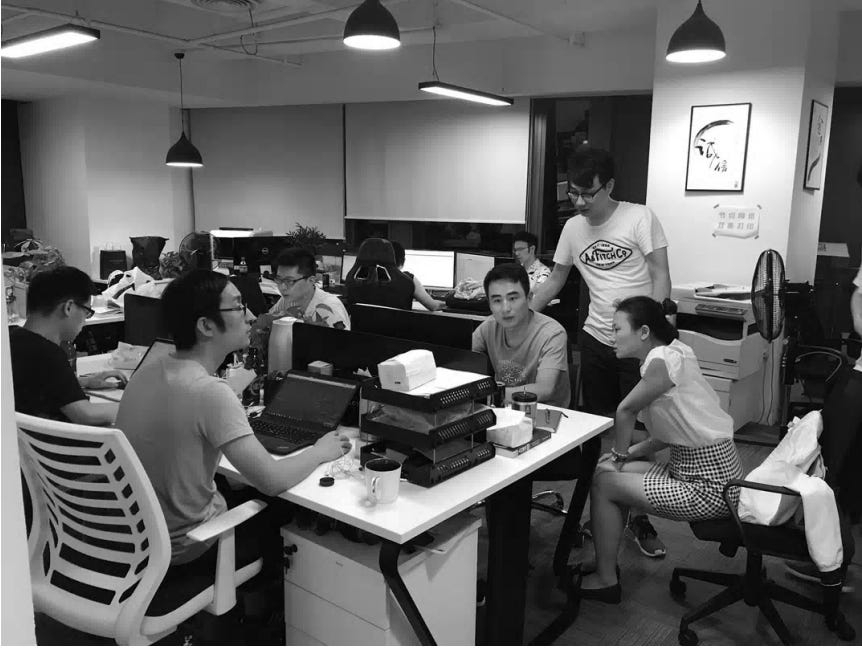
On July 14, 2017, at 12:00 noon, when the platform officially launched, everyone in the office stared at the screen counting down. But as soon as trading opened, the BNB page was flooded with sell orders and almost no buy orders. Just hours earlier, people had been scrambling for allocations, yet once listed, they started dumping. The chat box filled with insults.
Heina’s husband smashing a computer: Heina, an early core member of Binance, had her laptop smashed by her husband during an emotional outburst over her intense work schedule. CZ noted that the laptop contained Binance’s hot wallet. Fortunately, they later retrieved the hard drive and recovered the funds. The office was left in chaos, with the hard drive dislodged from its rack.
He Yi’s “frontline” joining: He Yi was the only advisor who meticulously revised the white paper line by line, while others mainly cared about allocations. She renamed the originally dull name to “Binance.” In August 2017, when BNB fell below its issuance price, the project faced immense pressure. CZ recalled that when news of He Yi joining Binance was announced, BNB immediately stopped falling and began a sustained surge.
3. “United 93”: The Race Against Time Shutdown
On the eve of China’s ban on September 3, 2017, the Shanghai office was still operating at full intensity. It was a Sunday, and the team worked until around 11 p.m. On his way home, CZ heard rumors of a major crackdown the next day, while He Yi received similar information through other channels. At 12:30 a.m., the core team held an urgent call and decided that CZ, He Yi, and Heina would leave China first, while others temporarily stayed in Shanghai.
The evacuation was rushed. He Yi had just moved to Shanghai with her mother less than a month earlier, and her mother had recently injured her tailbone and couldn’t walk. Nevertheless, she woke her mother in the middle of the night to say she had to fly to Tokyo immediately. Heina had it even harder — without a Japanese visa, she could only fly to Thailand. Her two-year-old son was still asleep when she woke her husband at 2 a.m. to take her to the airport. Around 2:30 a.m., CZ was reminded to remove the hard drive from the office desktop computer, so he returned at 3 a.m. to retrieve it.
Removing the SIM card: Before flying to Tokyo on September 3, 2017, He Yi advised CZ to remove his SIM card and turn off his phone to avoid potential tracking.
Returning to Shanghai: However, he soon returned. After landing in Tokyo on September 4, Binance received a call from Shanghai authorities requesting a meeting the next day. That evening, CZ flew back to Shanghai and met with officials on the morning of September 5. He described it as one of the longest 24 hours of his life.
4. Legal Disputes and the “Avengers Alliance”
The consequences of rejecting Sequoia: Due to valuation disagreements, Binance declined Sequoia Capital’s investment. Later, one morning, four large boxes of legal documents were delivered directly to CZ’s office desk — his first direct encounter with cross-border legal disputes. He later learned that the lawsuit was mainly driven by Sequoia’s U.S. legal team, with a well-coordinated pace; journalists had already learned of it before the complaint even reached him.
The lawsuit lasted two years. By 2019, the court dismissed all of Sequoia’s claims, and Binance won. Binance later countersued, ultimately settling for only symbolic compensation. By 2022, when preparing the second fund of YZi Labs, Sequoia even participated again as an LP. In 2023, they met again in Abu Dhabi and formally reconciled.
James Hofbauer (Zhou Wei): After leaving his position as CFO, he created a group called “Binance Avengers,” gathering former employees who had left for various reasons to discuss and criticize Binance.
“Dislike list”: CZ openly expressed his dislike for SBF (calling him a “sophisticated opportunist”) and Xu Mingxing.
Before FTX’s collapse in 2022, CZ said in an internal meeting: “If we save FTX, we save the industry and help ourselves.” However, he later found SBF’s team management extremely chaotic. CZ recalled that within 24 hours, SBF’s team couldn’t even produce a complete balance sheet, and core members were resigning, making him realize the situation was far worse than expected.
In September 2018, introduced by investment lead Zhang Ling, CZ first had a video call with Gary Gensler, then former chairman of the U.S. CFTC. On March 29, 2019, they met at the “Yamazato” restaurant in the Okura Hotel Tokyo, discussing crypto, Binance, and the U.S. market over sushi. CZ even tentatively invited Gary to be a Binance advisor, but he declined. Gary also hinted that if Democrats returned to power, he aimed to become SEC chairman. The meeting had a friendly atmosphere, and they took photos together.
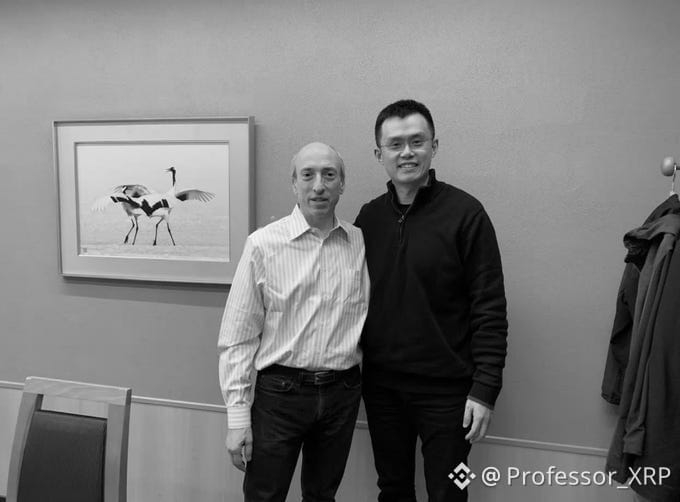
In May 2019, Gary forwarded him a student paper titled “Feasibility and Valuation Analysis of BNB (MIT Project).” On July 15, he shared his prepared testimony for a House Financial Services Committee hearing in advance; two days later, he invited CZ for an interview for MIT crypto course material, which they recorded on July 24. The real turning point came after Gary took office. CZ wrote that “19 months later, Gary made a 180-degree shift.” On June 6, 2022, Bloomberg reported that the SEC was investigating Binance, focusing on whether BNB’s issuance violated securities laws.
5. Family Regrets and a Prison Ordeal in the U.S.
The passing of his father: CZ’s father was a university professor. After being diagnosed with leukemia in 2020, he downplayed his condition, only mentioning ongoing treatment and frequent transfusions. When CZ offered financial or other help, his father refused, saying he was already receiving the best care. In spring 2021, he revealed the condition had worsened, with doctors estimating 12 to 18 months remaining.
At the time, his father was in Toronto while CZ was in Singapore. His father had not yet met his two youngest children, so CZ immediately proposed bringing him to Singapore, knowing it would likely be a one-way journey. However, due to pandemic border restrictions, Singapore was closed to non-citizens. CZ had to seek humanitarian approval through friends, consult top leukemia specialists, and arrange remote consultations, hospital care, and quarantine plans. Everything was ready by July, but his father said he wanted to stay in Toronto for two more weeks. Just one week later, CZ received news from his father’s partner that he had passed away.
In November 2023, CZ voluntarily flew from the UAE to the U.S. to plead guilty; he was not arrested. At court, he had a mugshot taken and filled out forms. Absurdly, the form didn’t even include “Bank Secrecy Act violation,” so staff casually checked “financial fraud,” ignoring his attempts to explain.
In the first weeks of prison, he couldn’t even buy a toothbrush. Two hundred inmates shared six phones and four computers, requiring long waits. Each session lasted only 15 minutes before automatic disconnection. The computers were locked terminals that could only send and receive messages, costing five cents per message, subject to review, with a two-hour delay. No images, attachments, or links were allowed — and most frustratingly, no copy-paste. Under these conditions, CZ began writing the first draft of this book, typing whatever he could in each 15-minute slot and sending it to his assistant for saving.
Later in his sentence, he was transferred to a halfway house with much looser conditions: unlocked doors, daytime permissions for volunteering, classes, and gym access, easier communication with family and friends, and even food delivery and receiving items from family. Staff behaved more like service personnel than prison guards. CZ quickly applied for volunteer and fitness privileges and became involved with programs like Michael Santos’s “Prison Professor,” which helps inmates reintegrate into society.
Second detention over “visa overstay”: He entered the U.S. on November 21, 2023, with a Canadian passport, originally allowed a six-month stay. He expected to return to the UAE shortly after pleading guilty, but due to prosecution appeals, delayed sentencing, and ICE denying his extension after just three months, he was classified as “overstaying” during his sentence. For this reason, with only 14 days left in his sentence, he was shackled and taken away again. After being transferred to the Santa Ana detention facility, ICE lifted the hold three days later, but he remained detained in worse conditions — no yard, no gym equipment, and no computer access.#CZReleasedMemeoir
Please trade here 👇 👇 👇
$JOE


