Sharks have no single bone in their body?
Sharks do not have a single bone in their body because their entire skeleton is made of cartilage, a strong yet flexible connective tissue. Sharks belong to a group of fishes known as cartilaginous fishes, which evolved much earlier than bony fishes—over 400 million years ago. At that stage of evolution, cartilage provided sufficient structural support without the need to develop true bones.
This cartilaginous skeleton offers several biological advantages. Cartilage is lighter than bone, which helps sharks maintain buoyancy in water since they lack a swim bladder. It is also more flexible, allowing sharks to swim efficiently, make sharp turns, and absorb sudden shocks during high-speed movement or while attacking prey.
Although sharks have no bones, their cartilage is often partially calcified, especially in the jaws and spine, making it strong and durable. Their teeth are also not bones; they are made of dentin covered with enamel and are continuously replaced throughout life.

Articol
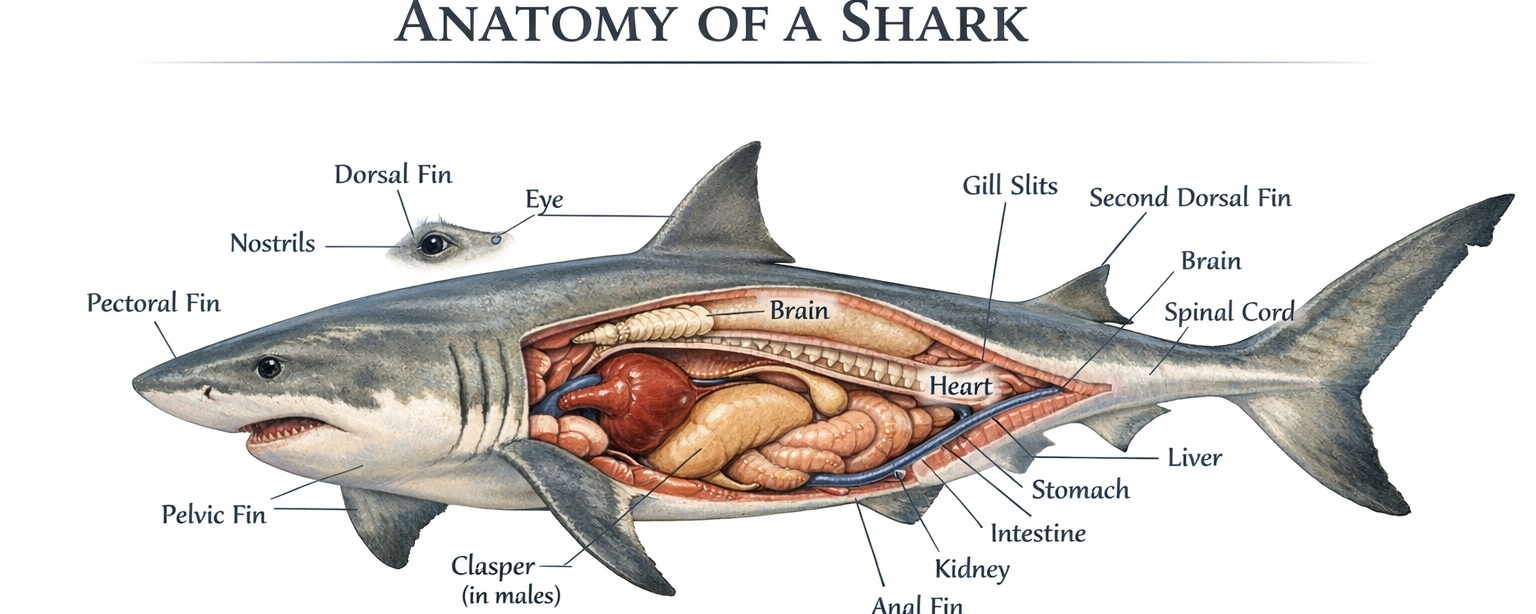
Anatomy Of A Shark
Declinarea răspunderii: Include opinii ale terților. Acesta nu este un sfat financiar. Poate include conținut sponsorizat. Consultați Termenii și condițiile