
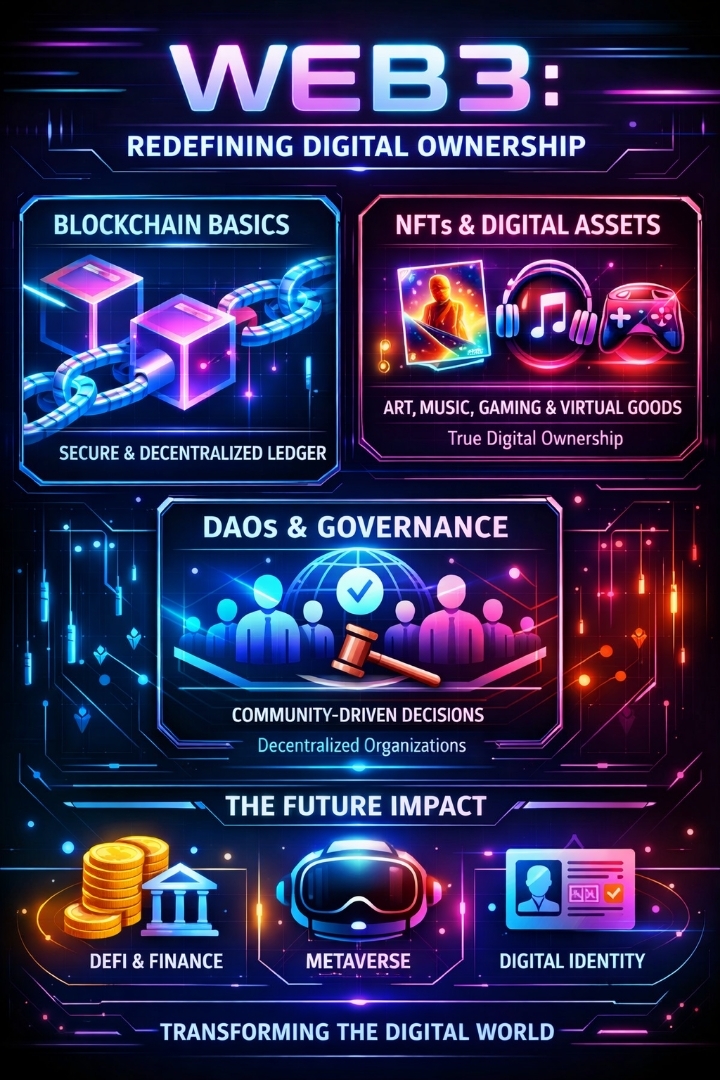
Most people still use the internet the same way every day:
Scrolling.
Posting.
Liking.
Sharing.
It feels normal.
But behind that familiar experience, a major shift is unfolding — one that is quietly redefining who controls value on the internet.
This shift is called Web 3.
Let’s break it down in a simple way.
The Hidden Reality of Web 2
In today’s internet (Web 2):
You create content
You build followers
You spend years growing your online presence.
But the platform still controls the system.
- Your account can be restricted.
-Your reach can change overnight.
- Your data belongs to the platform.
In simple terms:
You participate, but you don’t fully own.
What Web3 Changes?
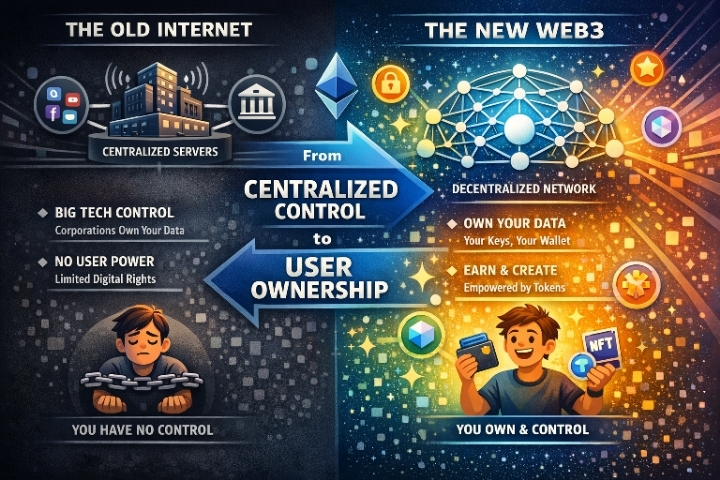
Web 3 introduces a different structure. Instead of platforms controlling everything, ownership moves closer to the user.
Key ideas behind Web 3 include:
• Digital ownership = Assets like tokens and NFTs belong to users, not platforms.
• Decentralization = Systems run on distributed networks instead of a single company.
• User-controlled identity = Wallets can represent your identity across multiple platforms.
This means your presence online can become portable and verifiable.
A Simple Comparison
Web2
Platforms own the infrastructure
Users generate value
Revenue flows mostly to companies
Web3
Infrastructure is decentralized
Users participate in the ecosystem
Value can be shared among participants
This doesn’t mean Web 3 replaces everything overnight. But it introduces new economic models for the internet.
Three Important Shifts in Web 3
1. Identity Becomes Portable
Instead of being locked into one platform account, your wallet can act as your identity across multiple applications.
2. Value Becomes Shared
Communities, contributors, and early participants can receive tokens or incentives for their participation.
3. Ownership Becomes Default
Digital assets, whether tokens, NFTs, or on-chain data, are held in user wallets rather than stored entirely by platforms.
Why This Matters
The internet is gradually evolving from:
Platforms you use
to
Ecosystems you participate in.
This transformation is already visible in areas like:
Decentralized finance (DeFi)
NFT ecosystems
On-chain communities
Token-based governance
Each represents a step toward user participation in digital economies.
The Key Idea to Remember
You don’t need complex technical knowledge to understand Web 3.
Just remember this:
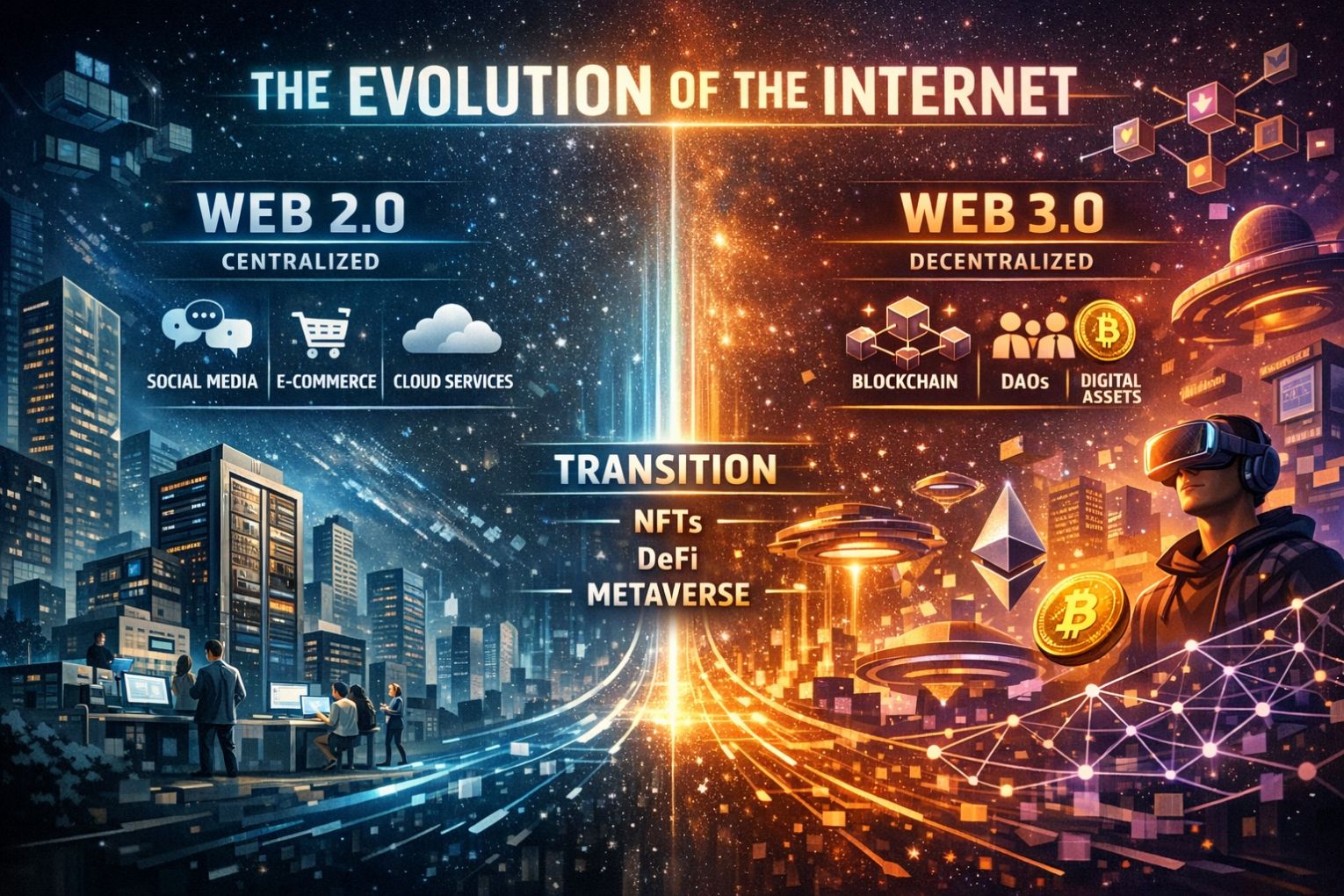
Web3 is about shifting parts of the internet from centralized control to user ownership and participation.
And as this model grows, understanding how it works may open new opportunities in the digital economy.
In simple terms:
The internet is evolving from a place where users only create value… to a place where users can also own part of that value.