
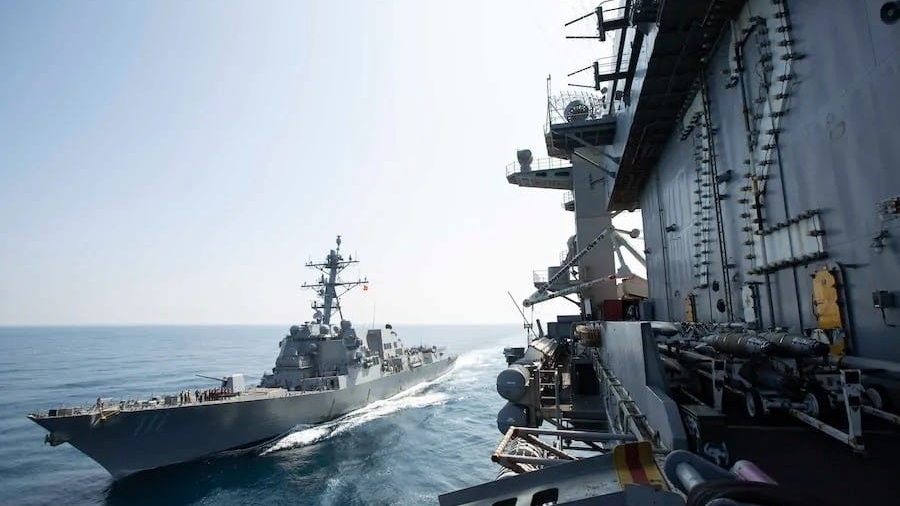
The friction between the President’s Truth Social posts and the operational orders on the water is creating two different versions of reality for the markets.
Trump’s Position (The "Toll" Interdiction): The President’s threat to pursue ships that paid tolls to Iran is the most legally aggressive move. In his view, paying a toll to the IRGC constitutes "material support for terrorism" or a violation of emergency war powers. If the Navy actually begins boarding third-party tankers in international waters based on past financial transactions, it effectively turns the entire Gulf into a "hot" zone.
CENTCOM’s Position (The Targeted Blockade): Operational orders (effective 10:00 AM ET today) focus strictly on geographic access. By declaring a blockade on "maritime traffic entering and exiting Iranian ports," they are utilizing a traditional (though still escalatory) naval blockade. This allows them to tell China, India, and the EU: "Your ships can pass through the Strait to reach Iraq, Kuwait, or the UAE. Just don't touch an Iranian pier."
Strategic Calculation: The "Hostage" Swap
You hit the nail on the head regarding the leverage. For decades, Iran’s "nuclear option" has been closing the Strait to crash the global economy.
Neutralizing the Threat: The U.S. is betting that if they leave the Strait "technically" open for neutral shipping, Iran loses its moral and legal pretext for a full-scale retaliation.
Economic Asymmetry: The U.S. can sustain a blockade of Iranian ports indefinitely with carrier strike groups. Iran, however, cannot survive long with zero maritime exports (oil/gas) and zero imports.
The "Dark Fleet" Factor: This blockade is specifically designed to kill the "dark transits" that have bypassed sanctions for years. Under these rules, "dark" tankers aren't just sanctioned; they are now subject to physical interception.
The Immediate Risks (Next 24 Hours)
Despite the "meaningful distinction," the situation remains a powder keg for three reasons:
The "Toll" Grey Area: If a Japanese or Indian tanker is intercepted in the Arabian Sea because they paid an Iranian toll last week, CENTCOM’s "freedom of navigation" promise becomes moot.
IRGC Decentralization: As you noted, the IRGC Navy operates with significant autonomy. They have already warned that "no port in the region is safe." This suggests they may not retaliate in the Strait, but rather via drone/missile strikes on port infrastructure in Saudi Arabia or the UAE to "equalize" the economic pain.
The Minefield: Trump’s directive for the Navy to begin de-mining the Strait is a direct challenge to Iranian sovereignty. If U.S. minesweepers enter waters Iran claims as their own to "clear" them, the "port blockade" distinction won't matter—the shooting starts there.
The Bottom Line: We are seeing a shift from diplomatic pressure to physical containment. The U.S. is trying to prove it can choke Iran without choking the world. Whether the global insurance markets (and the IRGC) agree with that distinction will be clear by the time the sun rises over the Gulf tomorrow.


#JustinSunVsWLFI #USMilitaryToBlockadeStraitOfHormuz #USDCFreezeDebate