
When people talk about Web3 gaming, they often focus on the obvious things first: the token, the hype, the activity, the attention. But those things alone do not tell us whether a project is actually building something durable. In my view, the real difference appears in how a project understands incentives, and that is one of the main reasons Pixels keeps standing out.
A lot of blockchain games were built around the wrong idea from the start. They assumed rewards alone could create loyalty. Attract users with incentives, encourage repetitive activity, and hope the economy sustains itself. But that model has already shown its limits. When rewards become the only reason to stay, players behave more like extractors than participants. They arrive, collect value, and leave as soon as the loop weakens.
That is why smarter player incentives matter.
Strong ecosystems are not the ones that simply distribute more. They are the ones that create reasons for people to return, participate, and care over time. Incentives should not only push activity. They should support retention, improve the quality of participation, and strengthen the link between the player and the world they are spending time in. That is where @Pixels feels more interesting than many projects in the space.
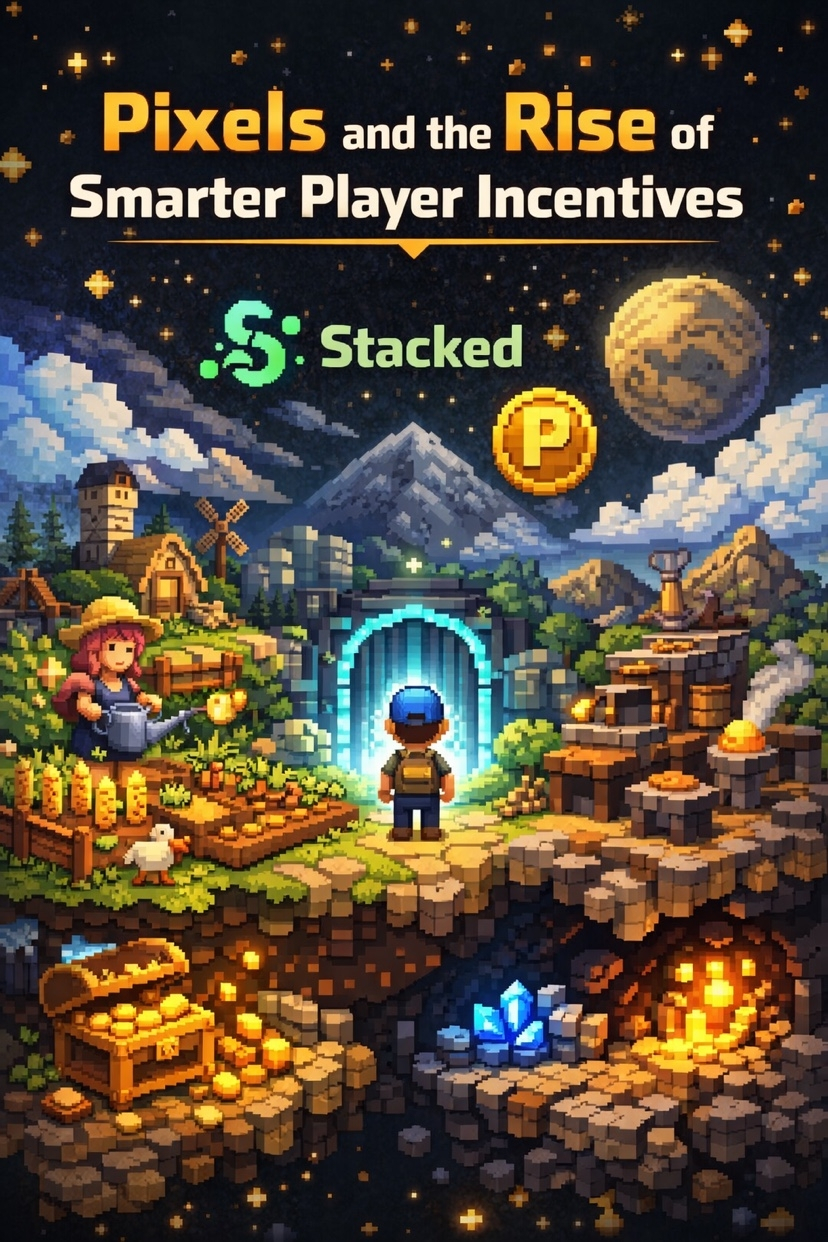
The game already offers something important that many Web3 teams underestimated for too long: a familiar and accessible loop. Farming, crafting, progression, resource management, and social interaction make the experience easier to enter and easier to stay with. That matters because long term ecosystems are not built only through rewards. They are built through habits, comfort, and engagement.
What makes the project even more worth watching is the rise of the Stacked ecosystem. To me, Stacked represents a smarter direction for Web3 gaming because it suggests a model where incentives are not treated as a blunt instrument. Instead of simply emitting value, the system points toward a more adaptive structure where rewards can better connect with behavior, engagement, and long term ecosystem health. That shift is important because it changes what incentives are meant to do.
This also gives $PIXEL a more meaningful position. Many gaming tokens struggled because they were expected to do everything at once: attract attention, reward activity, support the economy, and maintain confidence under pressure. A smarter ecosystem gives the token a stronger role because it becomes part of a broader structure rather than the only pillar holding everything together.
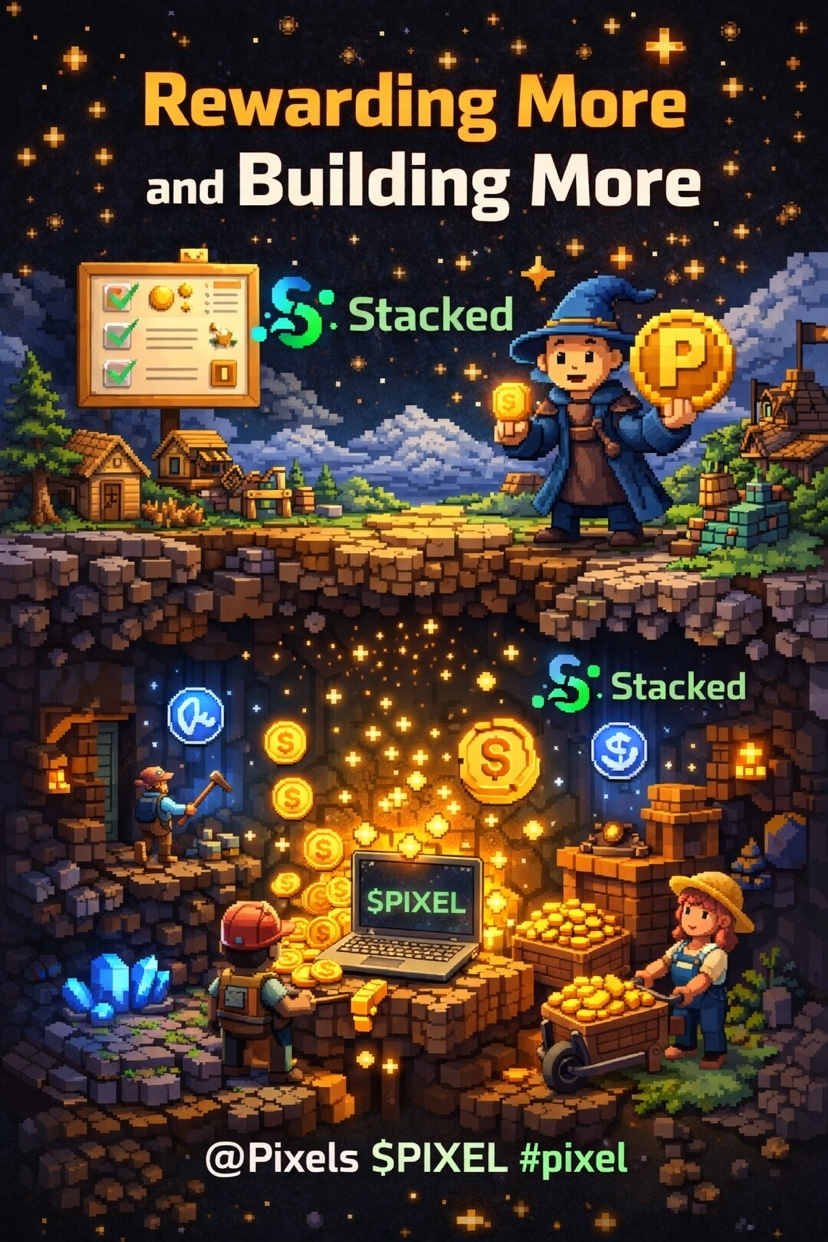
That is one of the biggest reasons I keep watching Pixels. The project seems to understand something many teams learned too late: a token cannot create a healthy game by itself, but a healthy game and a better designed ecosystem can give a token real meaning. When player incentives are structured more intelligently, value starts to connect less with empty hype and more with actual participation.
I also think Pixels reflects a broader idea about where Web3 gaming may be heading. The projects that last will probably not be the loudest ones. They will be the ones that make blockchain feel natural inside the experience instead of forcing every moment to revolve around extraction. That is what makes @Pixels feel relevant. It is trying to build an environment where incentives support the experience instead of replacing it.
For me, that is the real strength behind the project. Pixels is not only trying to reward activity. It is trying to create a stronger relationship between players, incentives, and long term ecosystem value. And in a sector where many systems broke because they rewarded too much without building enough, that approach feels far more sustainable.