
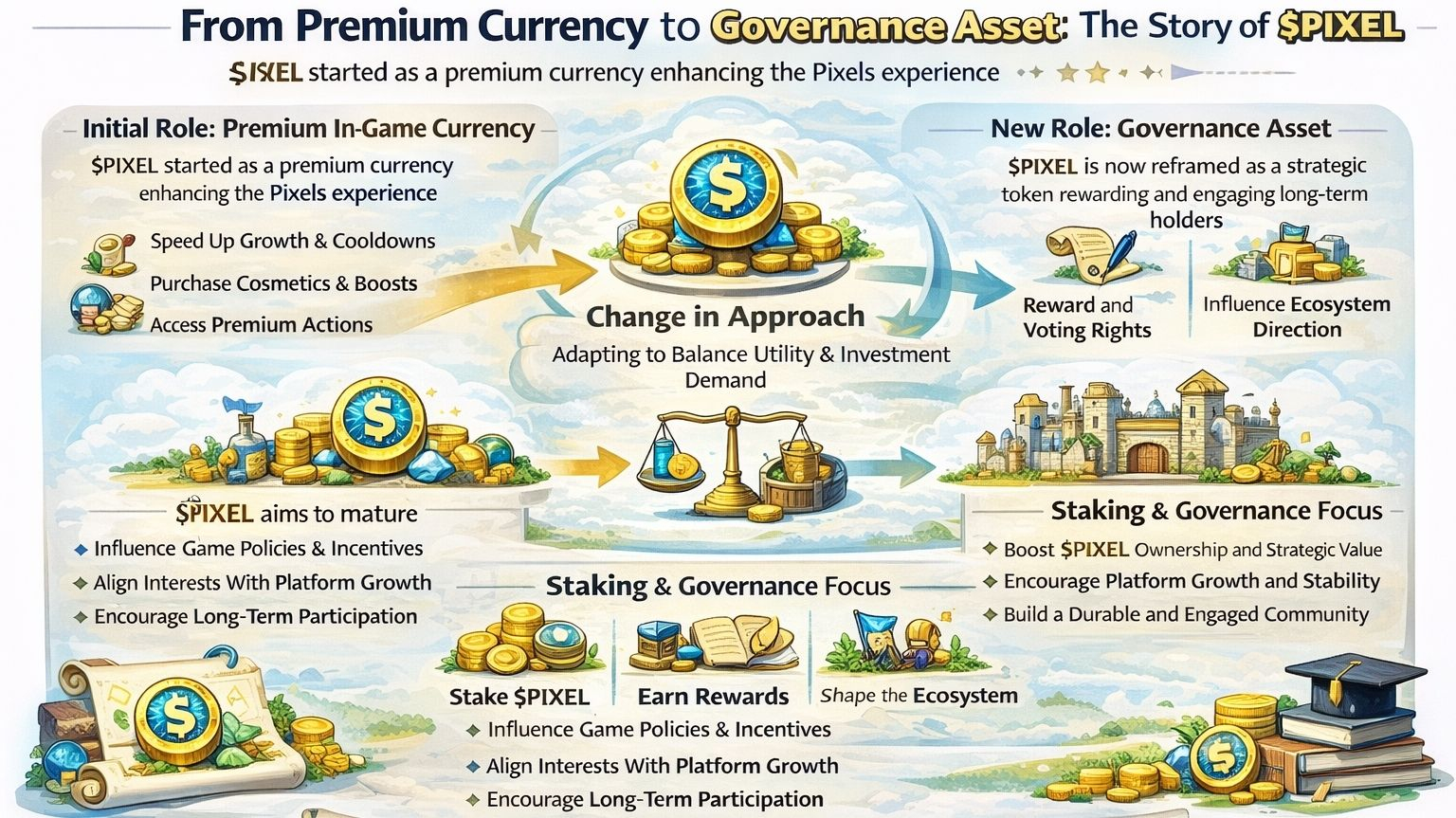

@Pixels I think the market has been reading PIXEL too narrowly. Most people still frame it as a gaming token that surged on narrative then collapsed under pressure and is now looking for a second chance. I see something more meaningful happening because PIXEL is not just trying to recover from a weak chart. It is being reshaped because the old model behind many game tokens was flawed from the start and was always going to struggle once a single token had to serve too many purposes at once.
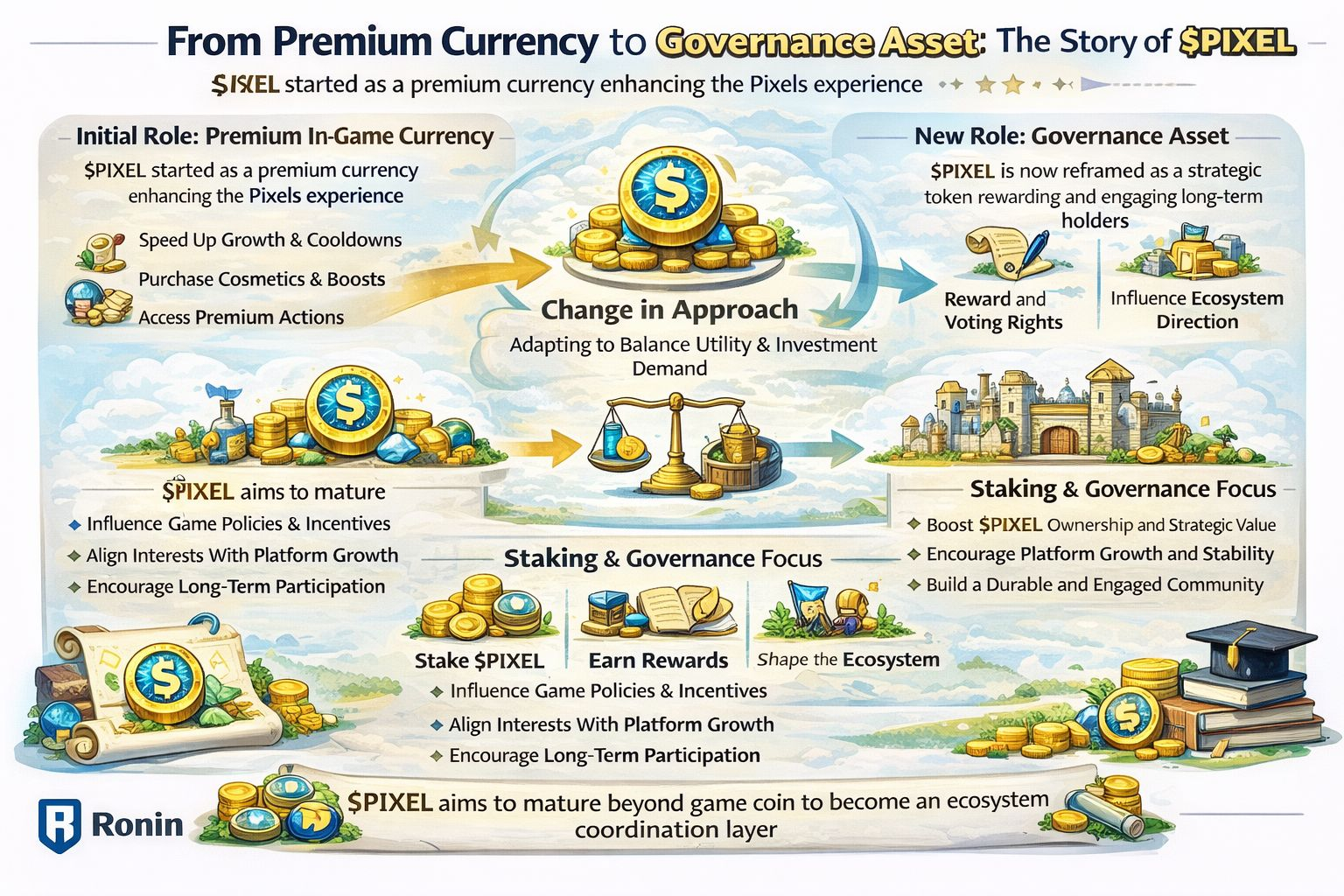
At the beginning the token’s role was fairly straightforward. PIXEL functioned as a premium in game currency that was tied to upgrades boosts cosmetics and optional actions that made gameplay smoother or more expressive without becoming the full backbone of progression. That design made sense because a premium token can enhance an experience without distorting it. The problem emerged when the market started treating these tokens as both utility instruments and long term financial assets at the same time. That tension is hard to manage because players want rewards they can use or cash out while traders want scarcity and upside and the token ends up being pulled in opposite directions until the system starts leaking value faster than it creates it.
What makes PIXEL more interesting to me today is that the project seems to have recognized that tension and responded to it in a serious way. The token is no longer framed mainly as something to spend and is increasingly being positioned as something to stake hold and use to influence how value moves through the ecosystem. That is a much more ambitious role because a spend token is transactional while a governance asset is strategic and carries meaning beyond the moment of use. One is consumed in the present while the other matters because it sits closer to future incentives future allocation and future direction. In that sense PIXEL is moving from being a premium currency toward becoming a coordination layer for the broader economy around it.
I think that distinction is the part the market still underestimates. Too many people judge token utility only by what it buys today while I care more about the role it plays in keeping an ecosystem coherent over time. If routine gameplay relies too heavily on the same token that speculators are trading then every reward becomes future sell pressure and every push for engagement risks becoming another source of dilution. That cycle has damaged a lot of crypto gaming economies and it is one of the clearest reasons many of them never became durable. So when a project starts separating daily in game activity from the scarcer asset above it I pay attention because that is not cosmetic utility expansion. It is a monetary redesign.
From my perspective PIXEL now looks more like a claim on participation than a simple game currency. Staking is central to that shift because once a token begins to matter by supporting growth aligning users with the health of the product and shaping where incentives flow the whole conversation changes. The question stops being only whether players will spend it and becomes whether they will hold it because ownership gives them a meaningful stake in what the ecosystem becomes. That is a much stronger foundation than the old play to earn reflex where value was often extracted faster than it was built.
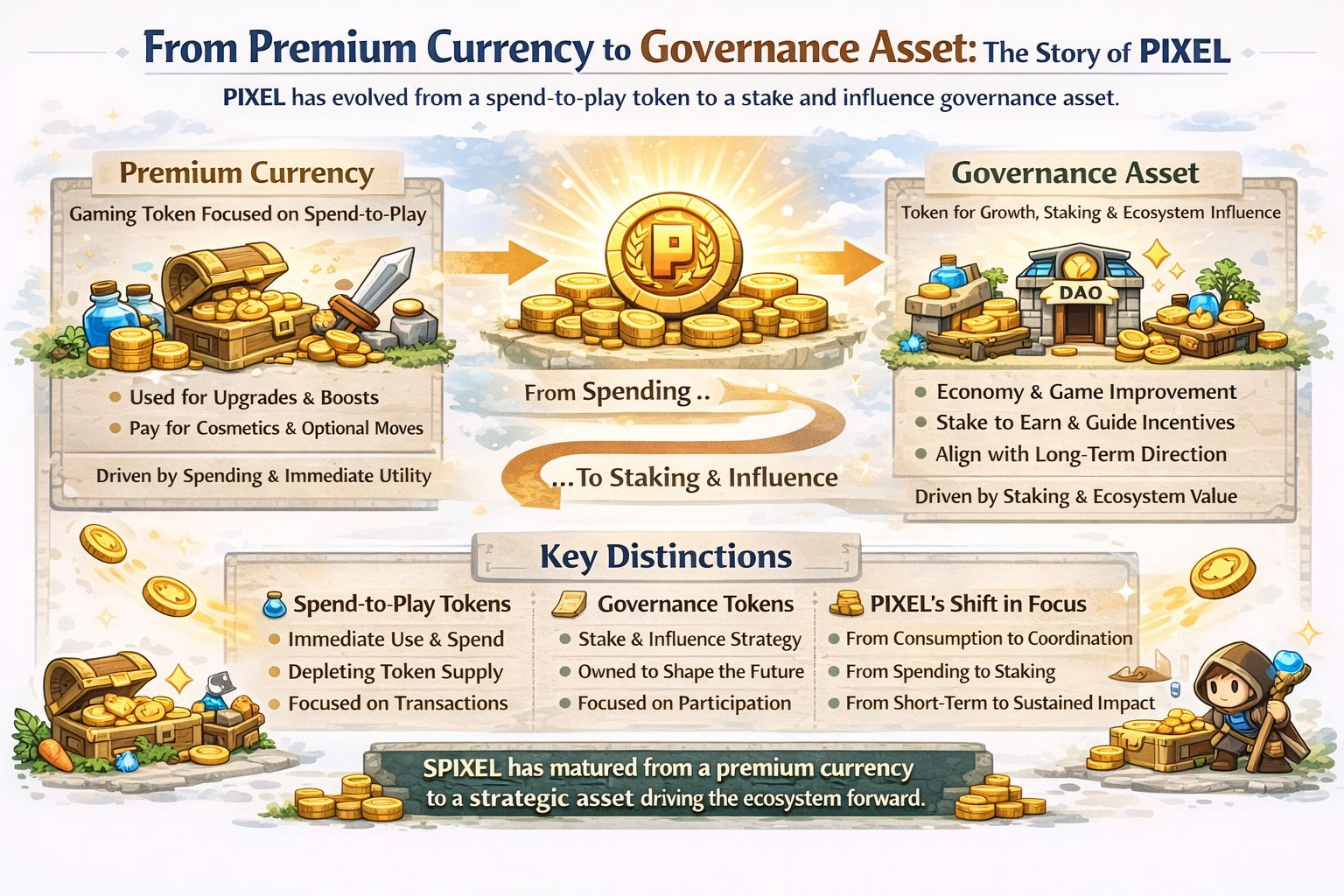
Still I would not confuse a better design direction with guaranteed success. Governance is easy to describe and much harder to make real in a way users can feel. For PIXEL to mature into a genuine governance asset the underlying product has to stay alive relevant and worth organizing around. Players need reasons to remain engaged and staking has to feel connected to real outcomes rather than passive waiting. Incentives also have to stay tight enough that the token is not constantly weakened by emissions or by shallow demand. If those pieces do not come together then governance becomes more branding than substance and the market will see through it.
That is why I look at PIXEL in two layers. In the short term it is still a volatile narrative sensitive token that can move fast on sentiment product updates and trading flows which makes it attractive to traders but also dangerous because sharp moves can distract from structural weakness. In the long term though I think PIXEL is more interesting as a design bet than as a rebound bet because it represents a test of whether a gaming token can grow beyond its original premium currency role and become a real economic asset inside a live ecosystem.
My conclusion is simple. I no longer think the most useful way to judge PIXEL is to ask whether it can reclaim old price levels or recreate its launch narrative. The better question is whether it can become something more durable than what it was designed to be at the start. If Pixels can keep shifting the token toward ownership alignment and ecosystem direction without losing relevance in actual play then PIXEL may end up being remembered less as a faded gaming coin and more as an example of a token trying to mature. To me that is the real story and it is far more interesting than a temporary bounce.