
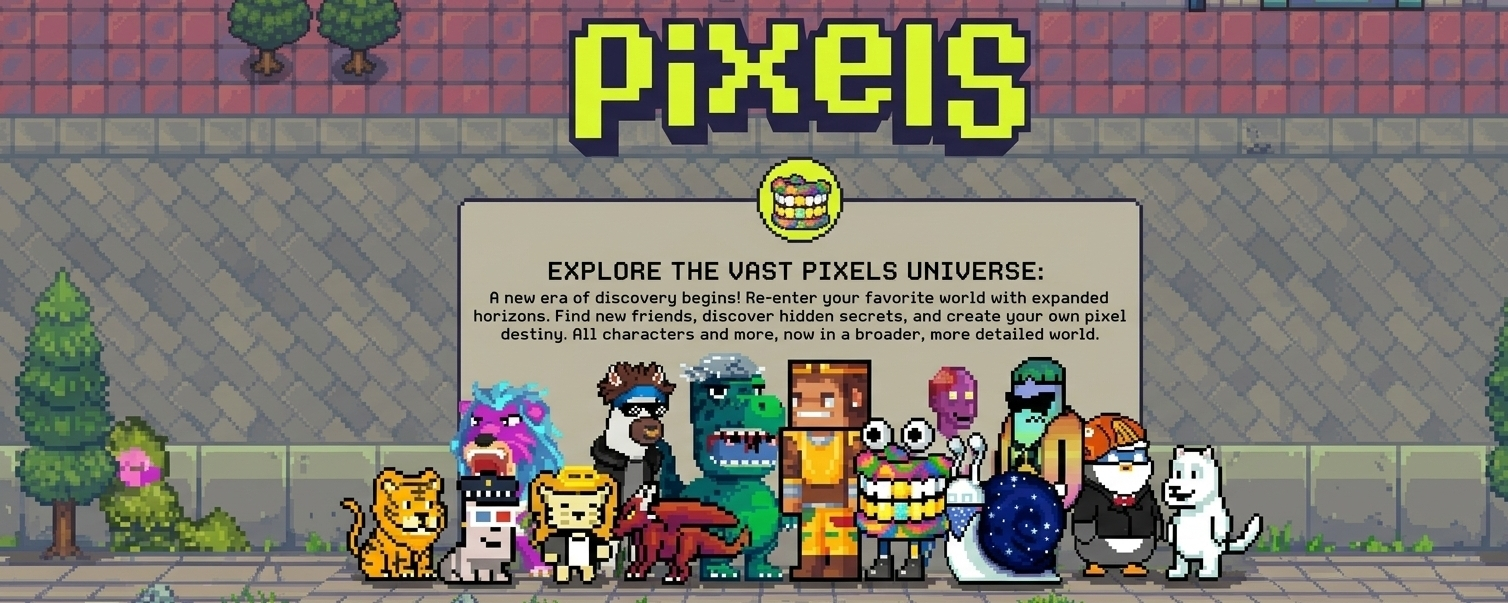

I remember in traditional mobile or PC gaming, when we purchase an in-game item, we are essentially only buying a temporary license to use it. If developers shut down the servers or change the game’s rules, that investment becomes worthless in an instant. The limitations of this conventional system have given rise to blockchain-based gaming, or GameFi, where Pixels has emerged as a formidable example. It is not just a simple farming game; it is a revolutionary attempt to establish true ownership and utility within digital assets.
Traditional Gaming vs. Decentralized Ownership...
No matter how much time or money a player spends in a standard game, their earned assets remain trapped within that specific ecosystem. Pixels is transforming this concept through the Ronin network. Here, your earned land, farming tools, or rare seeds are actually NFTs or on-chain assets. This means that even the game developers cannot take your assets away. You have the freedom to sell your digital equipment to other players or trade them on open marketplaces. In this model, the gamer is not just a customer, but a stakeholder in the entire ecosystem.
Interoperability The True Key to the Metaverse...
One of the most compelling aspects of Pixels is its interoperability. While many projects use the word "metaverse" simply as a marketing buzzword, Pixels has practically demonstrated how a game asset can be moved to other platforms or games. When your digital identity or skins can roam across different gaming worlds, you experience the true essence of the metaverse. This grants gamers a new kind of freedom where hard work in one place carries value elsewhere.
The $PIXEL Token and Economic Stability...
The backbone of any blockchain game is its token economy. In the case of Pixels, the $PIXEL token is more than just a reward; it governs the functionality of every level of the game. This token’s utility is essential for unlocking special recipes, crafting rare items, or gaining access to exclusive areas within the game map.
However, this model is not without its risks. If the token price fluctuates excessively, the entry cost for new players could become prohibitive. Furthermore, if the game becomes solely a medium for earning money and loses its entertainment value, sustaining it in the long run will be difficult. Therefore, Pixels must aim for a balance where gameplay and economy act as complements to each other.
The future of digital gaming no longer depends solely on graphics or storytelling; it is being built on how much value and agency players are given. Pixels has shown that gaming assets are not just "decorative JPEGs," but functional infrastructure. Although this technology is still in its early stages and many challenges remain, it represents a massive step toward giving gamers the rights they deserve ensuring that the owner of your in-game hard work and investment is, ultimately, you.