Bitcoin’s Surge as a Neutral Settlement Asset in the Face of Geopolitical Conflict Recent market activity has highlighted a significant shift in the global perception of Bitcoin, which has surged by 12 percent following the escalation of the Iran conflict in April 2026. While traditional assets often fluctuate based on immediate risk appetite, analysts are increasingly characterizing this rally as a fundamental reevaluation of the network’s utility. Rather than being treated as a speculative trade, Bitcoin is being recognized as a neutral, permissionless settlement layer that remains functional when traditional financial architectures face geopolitical fragmentation. This perspective was underscored by reports of unconventional proposals, such as potential digital asset tolls for shipping routes, which signaled to the market that Bitcoin could serve as an apolitical financial rail for sovereign and commercial settlement when legacy systems are restricted by sanctions or physical blockades. By operating outside the control of any single nation-state, the network provides a borderless and decentralized fallback that maintains liquidity and value transfer capabilities during periods of intense systemic stress, effectively bridging the gap between local currency instability and the need for a global reserve asset.

Articol
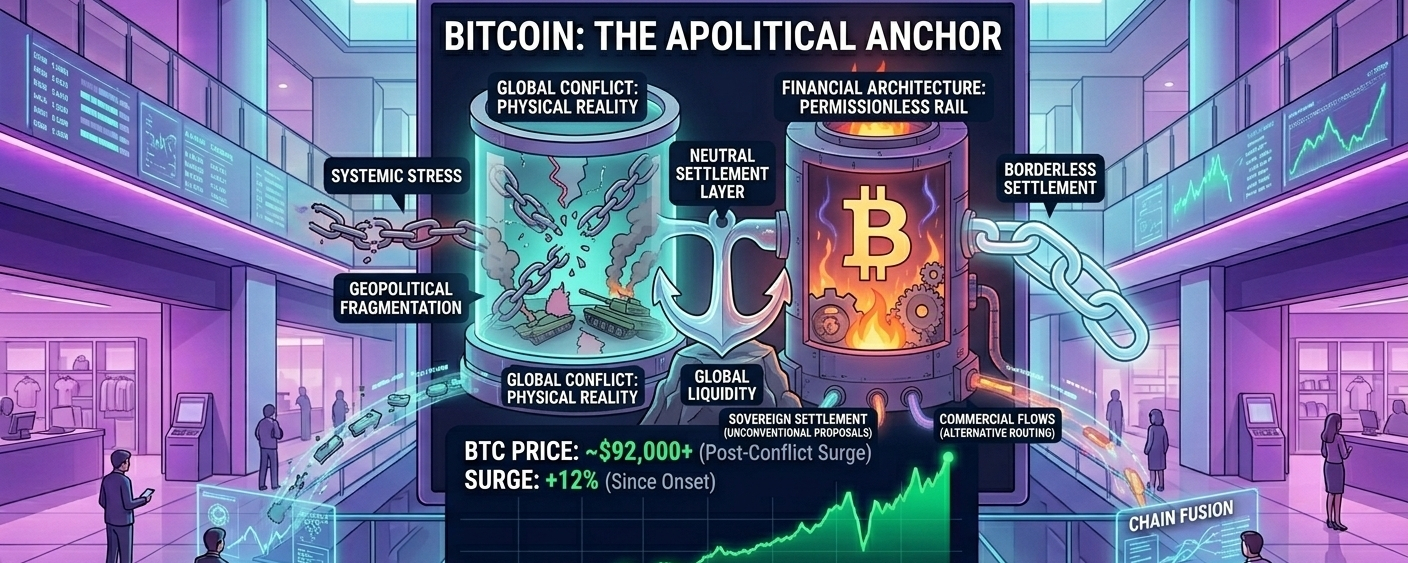
THE APOLITICAL ANCHOR:
Declinarea răspunderii: Include opinii ale terților. Acesta nu este un sfat financiar. Poate include conținut sponsorizat. Consultați Termenii și condițiile